





Regency Wardrobe
A regency wardrobe brings architectural presence and rich timber figure to a bedroom, offering substantial storage disguised as classical furniture.
Regency Wardrobe
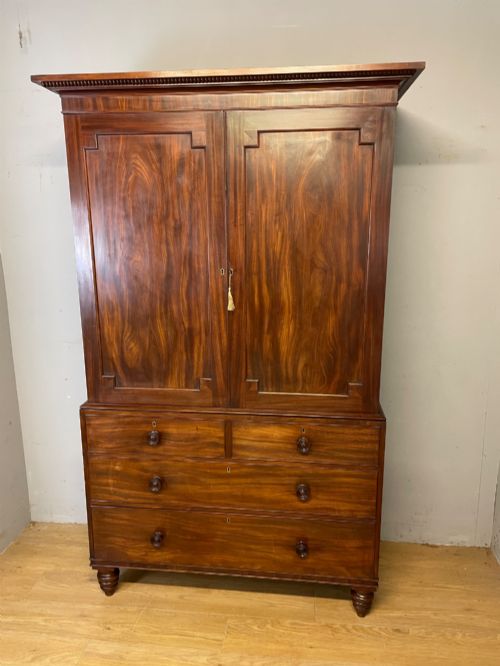
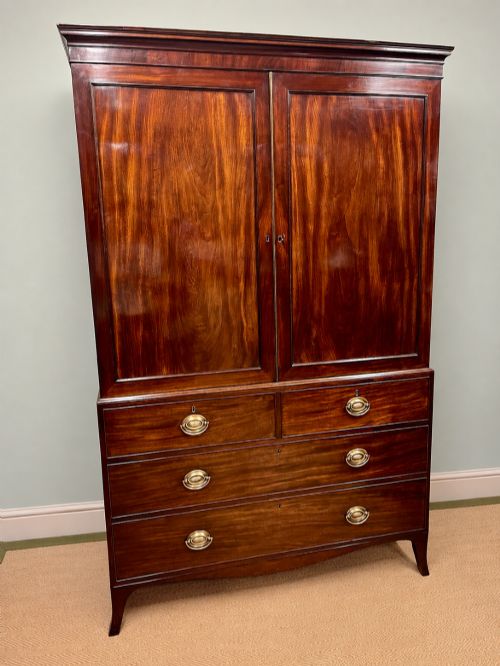
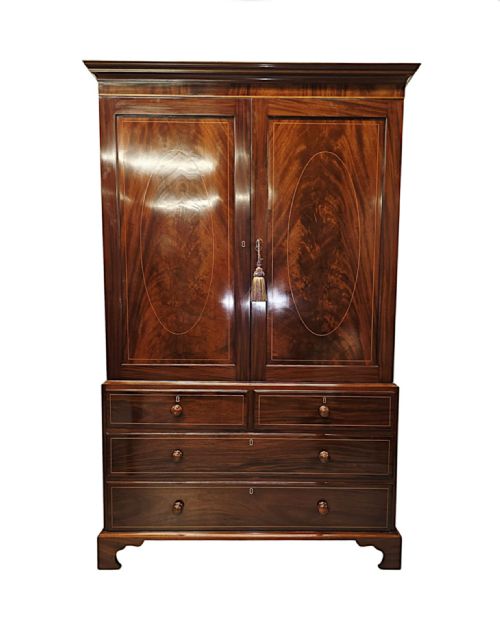
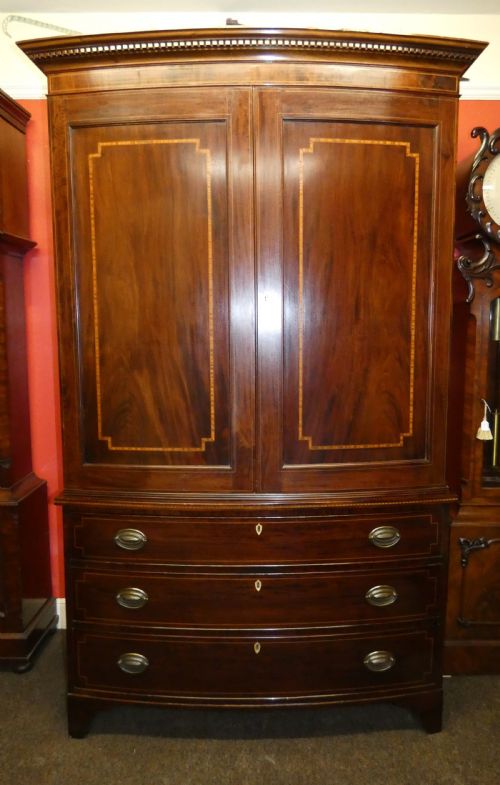
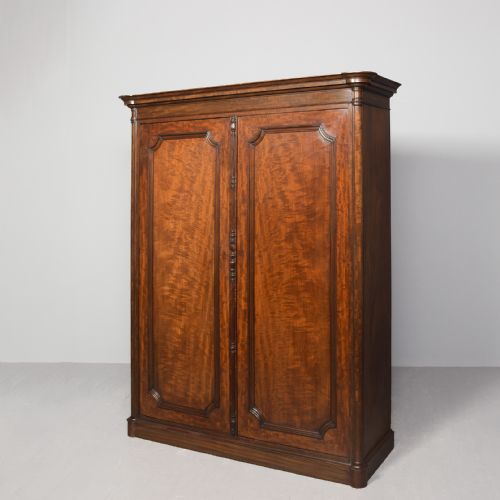
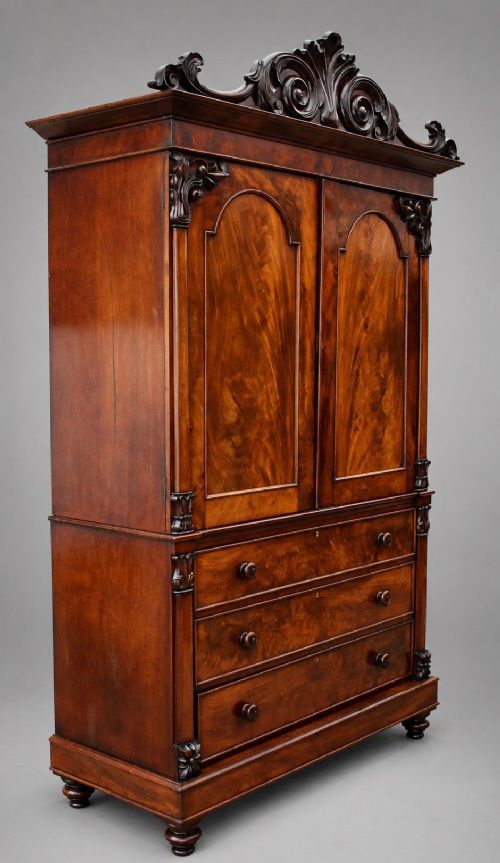
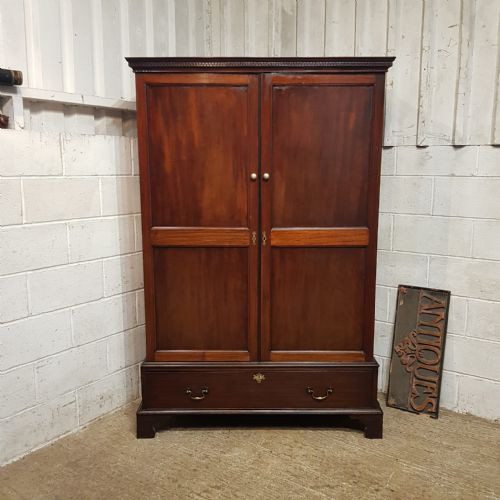
When you search for a regency wardrobe, you enter a category dominated by large timber storage pieces, most frequently encountered here as linen presses and traditional mahogany wardrobes from the nineteenth century.
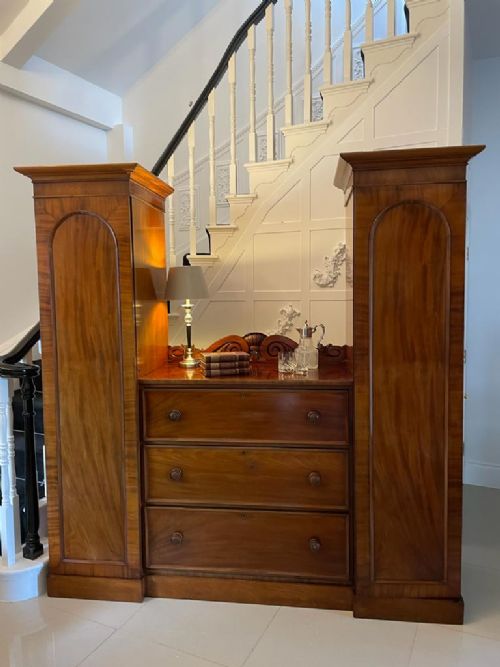
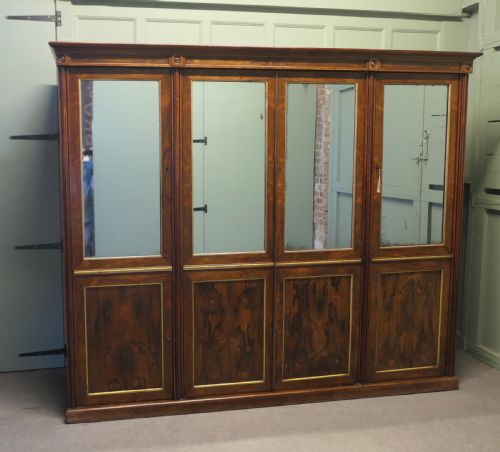
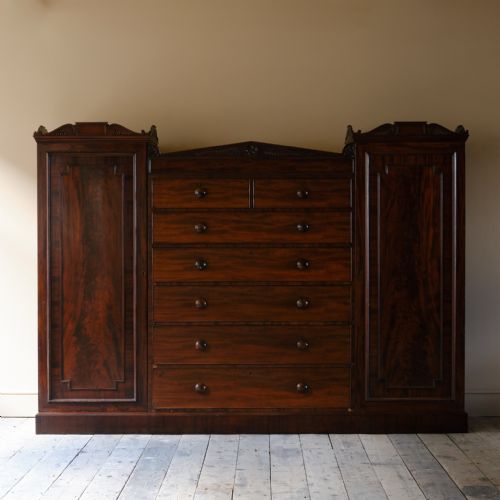
The pieces span Georgian, Regency, and William IV periods, often taking the form of breakfront cupboards, double wardrobes, or compactums designed to hold linens and garments in grand domestic spaces.
Alongside standard double and four-door formats, the selection includes related timber storage such as corner cupboards and specialised campaign pieces dating from around eighteen hundred to eighteen thirty.
How they were made
Cabinetmakers built these large carcasses primarily from solid mahogany and pine, frequently applying figured flame mahogany veneer to the principal doors and drawer fronts for visual depth.
Details such as brass hardware, inlaid stringing, and painted finishes or Chinoiserie lacquer enhance the primary timbers, while internal sliding trays and drawers organise the storage space.
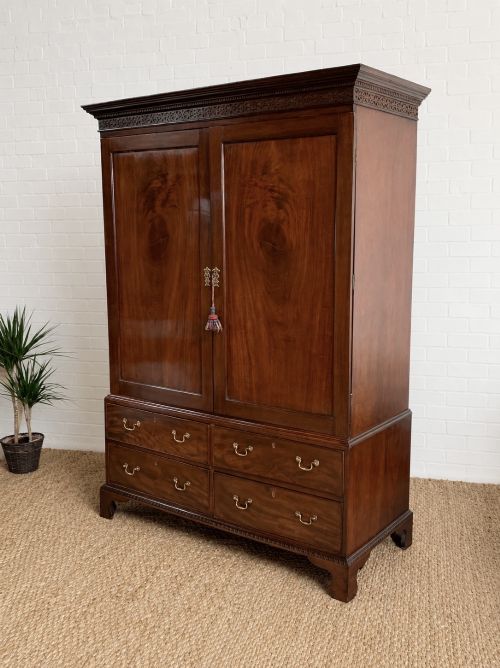
Construction techniques include blind fretwork cornices and breakfront configurations that demonstrate advanced nineteenth-century joinery and timber selection.
Regency Wardrobe Retail Price Guide 2026
Typical asking prices for regency wardrobe among the pieces listed under this phrase on Sellingantiques today, from the lower quarter to the upper quarter. They describe what is for sale here now, not the wider market.
Storage forms span traditional wardrobes, linen presses, compactums, and corner cupboards originating from English, Irish, and Channel Island workshops.
What varies in quality
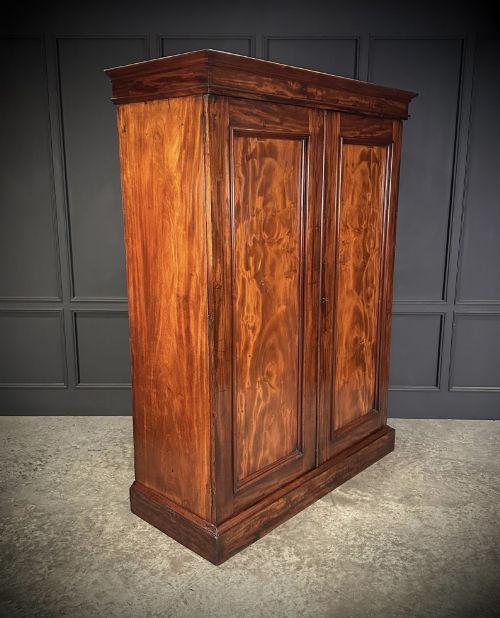
Quality rests in the choice of timber figure, where standard mahogany gives way to striking flame or curl mahogany veneers that catch the light across large cupboard doors.
The refinement of secondary details - such as inlaid stringing, carved cornices, and matching drawer linings - separates standard utility pieces from grand country house examples.
Proportion and scale dictate the success of the piece, with breakfront and four-door iterations requiring precise symmetry and balanced grain matching across multiple panels.
S and H Jewell
The Regency Wardrobe Glossary
- Linen Press
- A large storage piece featuring upper cupboard doors enclosing sliding trays for folded textiles, placed above a base of lower drawers. These items formed an essential part of period bedroom furniture.
- Flame Mahogany
- A highly figured timber veneer cut from the branch forks of the mahogany tree, creating a distinctive flame-like pattern. Cabinetmakers reserved this prized material for prominent door panels.
- Compactum
- A multi-compartment wardrobe designed to offer hanging space, drawers, and shelf storage within a single unified piece. This form maximised domestic storage efficiency in the nineteenth century.
- Breakfront
- A cabinet design where the central section projects forward from the flanking outer sections. This architectural arrangement creates depth and shadow on large wardrobes.
- Blind Fretwork
- Carved ornamental patterning applied to a solid background so that the design appears pierced or flat-carved without cutting through the wood. It often decorates the cornices of fine linen presses.
Regency Wardrobe: Frequently Asked Questions
What is a regency wardrobe?
A regency wardrobe is a large nineteenth-century timber storage piece, frequently combining hanging space or linen slides with lower drawer sections.
These pieces reflect classical architectural proportions and utilise rich timbers like mahogany to anchor a bedroom scheme.
How do I use a linen press?
Historically designed for storing household linens on internal sliding trays, modern owners often utilise these interior spaces for folded clothing or bedding.
The lower drawer sections accommodate bulkier items while the upper cupboards keep garments neatly organised behind closed doors.
How do I date a nineteenth-century wardrobe?
Dating relies on examining the primary timber figure, structural hardware, and stylistic details such as cornices and bracket feet.
Earlier pieces from around eighteen hundred lean towards Georgian austerity, while William IV and mid-century examples display heavier proportions and flame mahogany veneers.
Where were these wardrobes placed?
These substantial storage pieces belonged in principal bedrooms, dressing rooms, or country house chambers where grand scale was appropriate.
Corner cupboards served secondary reception rooms or bedchambers to utilise difficult wall angles effectively.