


Regency Wall Shelves
Regency wall shelves are timber hanging tiers built to display books and small ornaments without occupying floor space.
Regency Wall Shelves
Regency wall shelves are hanging timber tiers and corner brackets designed to hold books and ornaments off the floor.
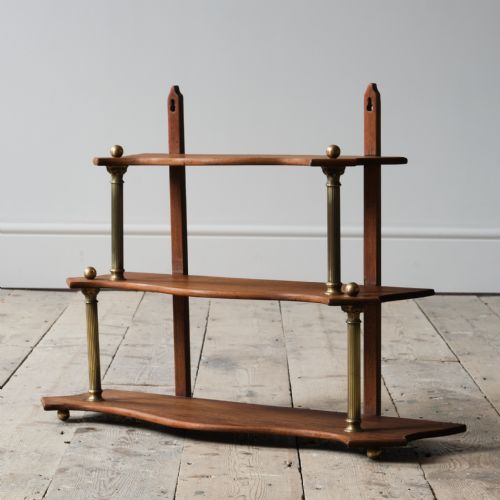
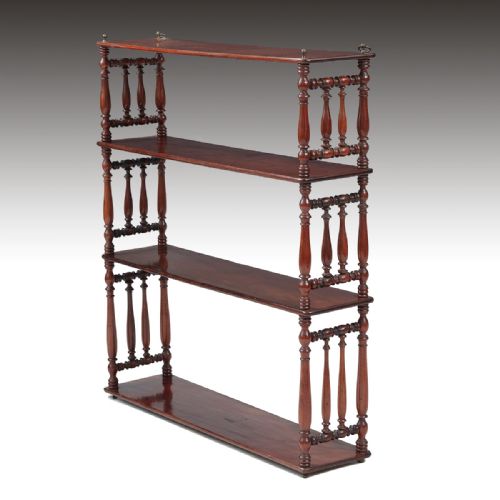
The pieces on this page appear in various forms, including bow-fronted corner shelves, portable bookshelves, and multi-tier hanging units.
Mahogany and rosewood dominate the material record, frequently accompanied by brass details and mirrored backs.
Materials and Construction
Cabinetmakers constructed these shelves using dense tropical hardwoods such as mahogany and rosewood, often pairing them with carved giltwood or gesso elements.
Metal components like brass rods and brackets provide structural support and decorative contrast to the dark timber boards.
Surfaces receive polished finishes that accentuate the natural grain of the wood, while some examples incorporate mirrored glass panels.
A few clever examples include adjustable boards, proving that nineteenth-century readers also suffered from ever-changing book sizes.
Assessing Quality
The standard of a set of shelves depends on the choice of timber and the precision of the joinery connecting the tiers.
Superior examples show careful attention to subsidiary woods and consistent patination across all matching shelves.
Subtle details such as brass inlays, shaped gallery rails, and integrated mirrored backs elevate the finish of finer pieces.
Strahan of Dublin·Town and Emanuel
The Regency Wall Shelves Glossary
- Bow Front
- A convex curved front on a cabinet or set of shelves. This shape softens the corners of a room when placed in a corner.
- Giltwood
- Timber that has been coated with gold leaf or gold paint. It provides a bright reflective surface on decorative brackets and frames.
- Gesso
- A plaster-like mixture applied to wood surfaces as a base for gilding or painting. It allows craftsmen to carve intricate relief ornaments.
- Rosewood
- A heavy, dark timber with distinct figuring and a rich reddish-brown colour. Cabinetmakers selected it for high-status furniture during the nineteenth century.
- Bracket
- A supporting member projecting from a wall to carry a shelf or clock. These items often feature carved scrollwork or architectural mouldings.
Regency Wall Shelves: Frequently Asked Questions
How were these shelves hung on walls?
These hanging units typically feature brass mounting plates or sturdy hanging loops integrated into the backboards or upright supports.
Installers secured them to wall studs using appropriate fixings to support the weight of the timber and the books placed upon them.
Where were wall shelves used in period homes?
Homeowners placed these shelves in libraries, parlours, and drawing rooms to keep reference books and decorative objects within easy reach.
Corner versions made efficient use of awkward wall junctions in smaller sitting rooms.
How do I distinguish Regency from Victorian shelves?
Regency pieces lean towards cleaner architectural lines, subtle brass inlay, and restrained mahogany or rosewood surfaces.
Later Victorian and William IV iterations often display heavier proportions, darker finishes, and more exuberant carved decoration.
Can these shelves hold heavy books?
Most surviving hanging shelves suit lighter volumes, pamphlets, and small decorative ornaments rather than massive folios.
Portable bookshelves and larger multi-tier units provide sturdier storage for regular reading material.