


Regency Wall Sconces
Regency wall sconces bring focused candle or electric light to a room through gilded wood, brass, and reflecting glass.
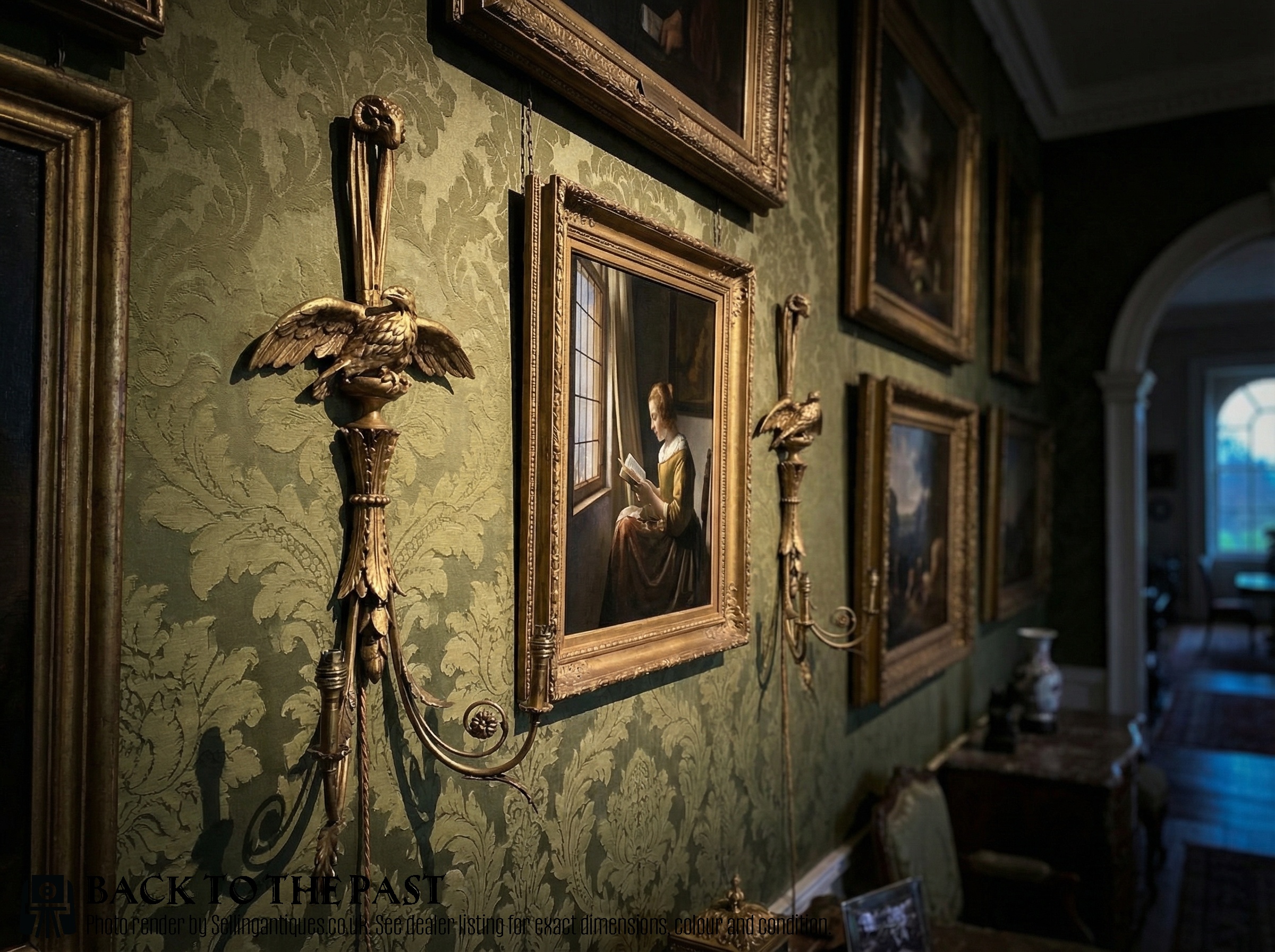
Regency Wall Sconces
Regency wall sconces comprise candle brackets, girandoles, and convex mirrors designed to mount directly onto vertical surfaces. When buyers search for regency wall sconces, they encounter authentic period pieces alongside later revivals from the nineteenth and twentieth centuries.
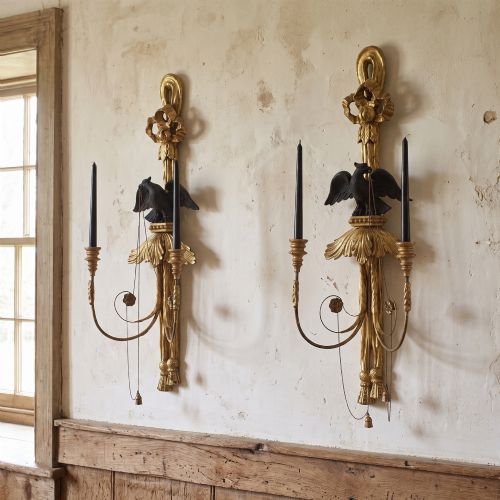
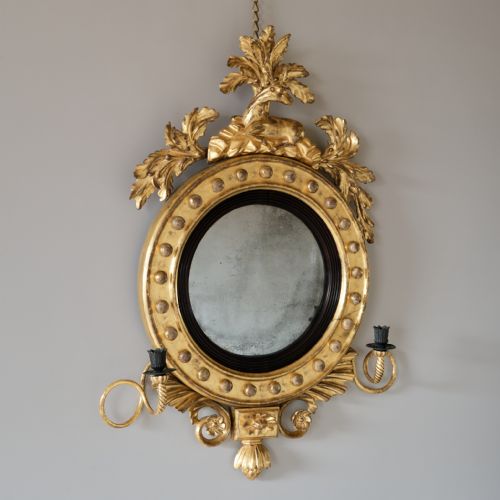
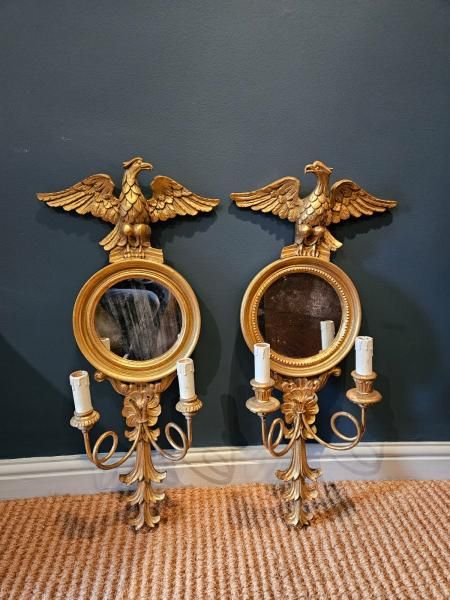
The selection ranges from simple brass twin-arm brackets to elaborate giltwood girandoles framed by carved eagles or candle arms. Many surviving examples emerge as pairs, suited for flanking doorways, mantelpieces, or pier mirrors.
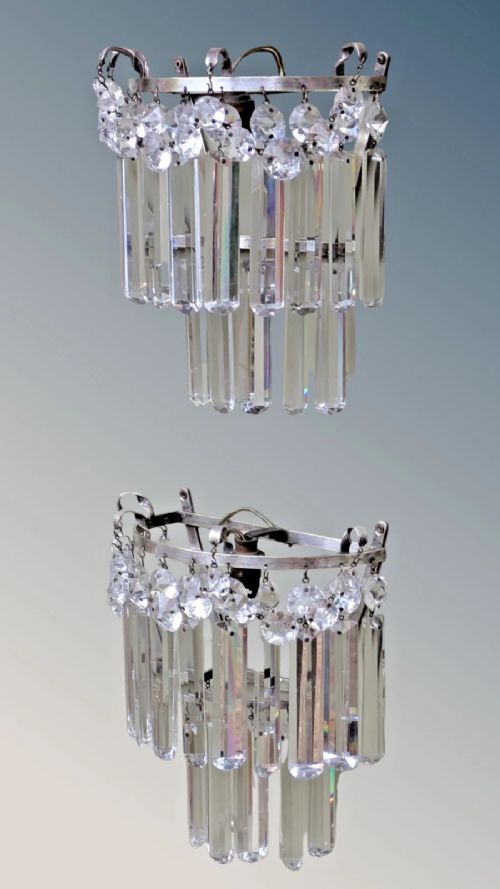
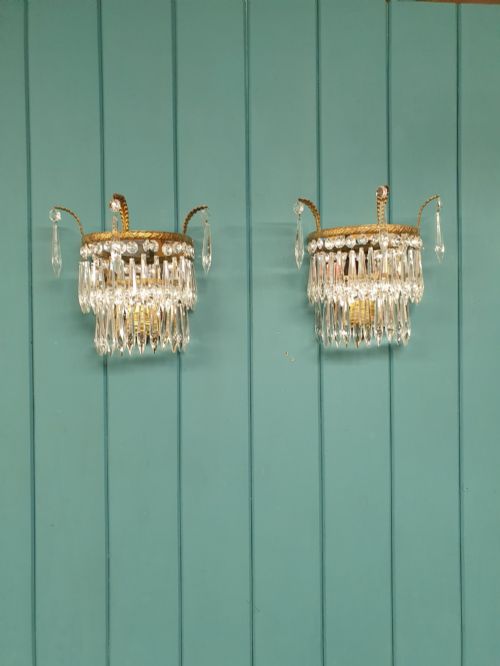
While genuine period pieces date from the early nineteenth century, the inventory also includes revival interpretations from the Edwardian era and the nineteen-twenties. These later pieces adopt the neoclassical motifs, gilt finishes, and glass drops of the original Regency aesthetic.
Materials and Construction
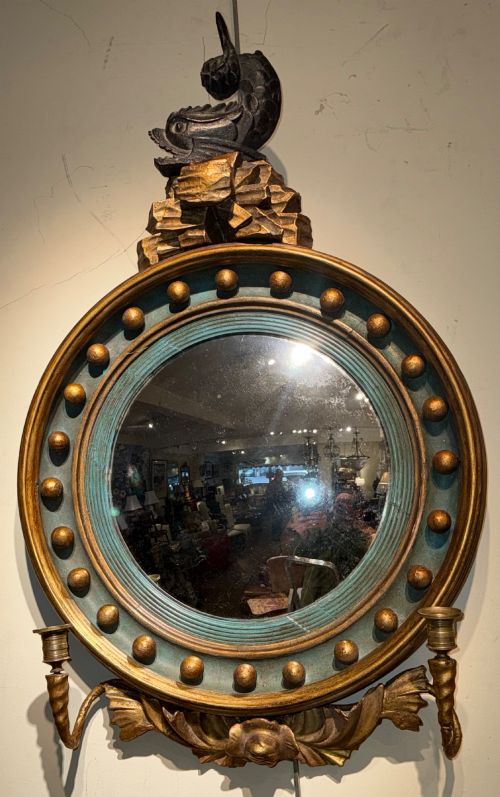
Giltwood and carved wood form the foundation of many decorative sconces and convex mirrors in the evidence. Artisans applied thin layers of gold leaf over gesso and timber bases, often incorporating ebonised details or japanned finishes.
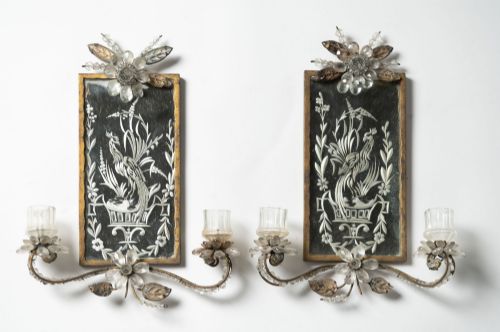
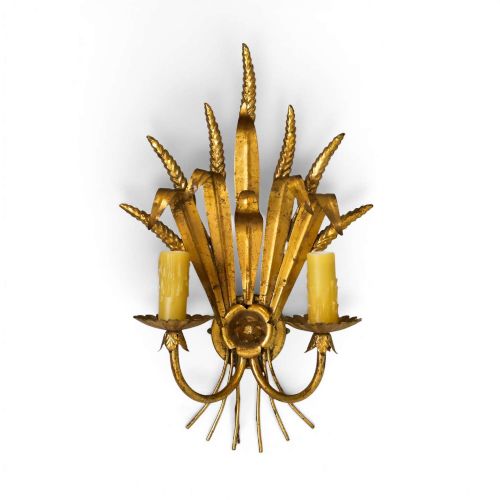
Metalworking defines the structural wall lights, utilising brass, bronze, silver plating, and gilt metal. Twin-arm and multi-branch brackets are cast or assembled from shaped metal components, supporting glass shades, crystal drops, and candle pans.
Reflective elements rely on cut crystal, mirrored glass backplates, and convex glass discs. These glass components catch and amplify candle or electric illumination within the room.
Listings span from the early nineteenth-century Regency period through Edwardian revivals up to mid-century electric wall lights.
Assessing Quality and Craft
The precision of the carving and the depth of the gilding set the standard for decorative wall sconces. Finer examples display crisp detail in wooden motifs like eagles, acanthus leaves, and reeded frames, whereas simpler pieces show softer moulding.
The integrity of the metalwork and glass elements distinguishes standard brackets from exceptional examples. Heavy cast brass, genuine cut crystal drops, and intact antique mirror plates indicate superior original manufacture compared to later mass-produced replacements.
Maison Baguès
The Regency Wall Sconces Glossary
- Girandole
- A branched wall light or sconce, frequently incorporating a mirror to reflect the illumination. These fixtures often feature candle arms extending from the base of a gilded frame.
- Giltwood
- Timber that has been coated with a thin layer of gold leaf. This technique was widely utilised on Regency frames and mirrors to create a bright, reflective surface.
- Neoclassical
- A style drawing inspiration from classical antiquity, prominent in Regency design. It relies on symmetrical forms, urn motifs, and clean architectural lines.
- Convex mirror
- A round mirror with a bulging glass surface that provides a wide-angle reflection of the interior. They frequently appear in Regency interiors surrounded by gilt balls and eagle crests.
- Japanned
- A European imitation of East Asian lacquerwork, created using layers of varnish and heat curing. This dark or coloured finish appears on specific period wall lanterns.
Regency Wall Sconces: Frequently Asked Questions
How do I install antique wall sconces?
Many vintage and antique wall sconces require professional electrical wiring if converted from candle use. Ensure the mounting wall can support the weight of heavy brass or giltwood frames.
Secure the fixture to a wall stud or use appropriate cavity anchors. Position them at eye level or slightly above to optimise both illumination and visual balance in the room.
Were these sconces originally for candles or electricity?
Period pieces from the Regency era and nineteenth century were designed exclusively for wax candles. Many surviving examples retain their original candle pans and drip pans.
Later twentieth-century versions, along with Edwardian and mid-century items, were frequently manufactured or subsequently adapted for electric lighting. Check the internal wiring and bulb holders to determine the current operational status.
How do I tell a true Regency piece from a revival?
Genuine Regency items date from the early nineteenth century and show distinct signs of age in the wood grain, gesso shrinkage, and mercury silvering on mirrors. Construction methods often rely on hand-cut fixings and older joinery techniques.
Revival pieces from the nineteen-twenties or nineteen-thirty periods emulate the neoclassical style using machine-tooled components and modern wiring. Examining the backboards, screws, and metal composition helps clarify the actual age of the fixture.
Can I clean giltwood and brass sconces safely?
Giltwood requires gentle dusting with a soft, dry brush to protect the delicate gold leaf layer. Avoid using water or chemical cleaners on antique gilded surfaces, as moisture strips the finish.
Brass and bronze components tolerate mild metal cleaners, though many collectors prefer to leave an aged patina untouched. Test any cleaning method on a hidden area before proceeding across the entire piece.