

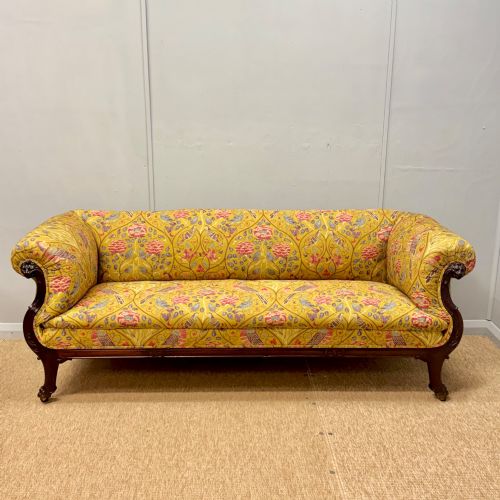





Regency Upholstered Settee
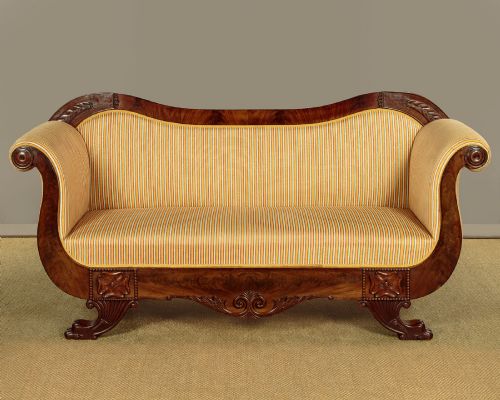
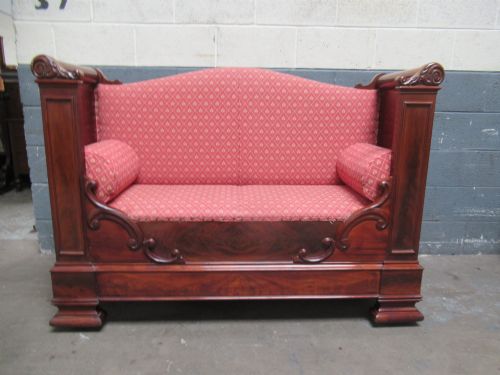
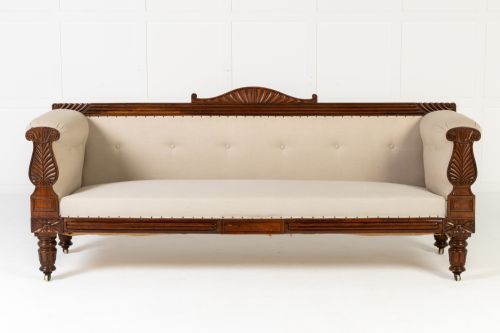
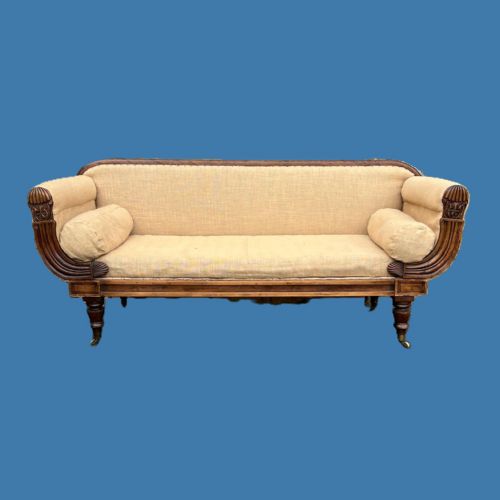
A regency upholstered settee brings architectural presence and classical proportion to a drawing room, offering scrolled arms and deep seating.
Regency Upholstered Settee
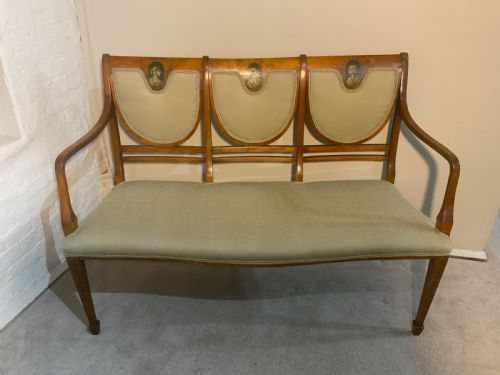
A regency upholstered settee is a formal seating piece combining classical lines with generous proportions, typically designed for principal reception rooms. The pieces gathered under this phrase span the early nineteenth century and later revival periods, adopting forms from chair-back settees to grand scroll-end couches.
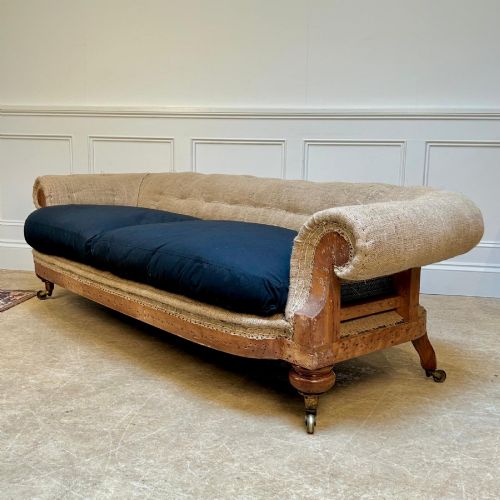
Buyers will most frequently meet mahogany and rosewood frames featuring double-ended scrolls, exposed show-frames, and upholstered surfaces ready for finishing or covered in modern fabric. Variations stretch from compact bench seats to large country house sofas spanning several feet.
Origins include English workshops influenced by classical antiquity and French Empire taste, alongside Irish pieces of substantial scale. The vocabulary of the form draws on lyre shapes, campaign construction, and bold library designs.
How they were made
Cabinetmakers constructed the foundational frames from dense timbers such as mahogany, rosewood, and satinwood, occasionally employing simulated grain or ebonisation to mimic rarer materials. Giltwood finishes provided gilded opulence for principal reception spaces, while brass details accented foot mounts and castors.
Traditional upholstery techniques relied on webbing, springs or stuffing, and hessian support layers beneath top fabrics. Frames combined structural joinery with carved show-wood elements, particularly along the crest rails, scrolled arms, and show-frames.
Regency Upholstered Settee Retail Price Guide 2026
Typical asking prices for regency upholstered settee among the pieces listed under this phrase on Sellingantiques today, from the lower quarter to the upper quarter. They describe what is for sale here now, not the wider market.
Listings feature primary frames in mahogany, rosewood, satinwood, and giltwood, alongside foundation materials including hessian and upholstery fabric.
What varies in quality
The architectural ambition of the frame dictates much of the distinction, separating simple bench forms from sculptural scroll-end couches with lyre supports or extensive carved detail. Timber selection plays a primary role, with figured rosewood, satinwood, and rich mahogany indicating higher ambition than utilitarian secondary woods.
Execution of the joinery and the crispness of the carved elements determine the refinement of the piece. Grand country house proportions and balanced double-ended symmetry separate ordinary output from distinguished examples.
Thomas Hope
The Regency Upholstered Settee Glossary
- Scroll end
- A sweeping terminal to the arm or back of a sofa that curves outward in a tight volute. This characteristic shape defines much of the classical silhouette.
- Show-frame
- A wooden structural framework left exposed around the upholstered elements of a seat. It displays the grain and carving of the timber.
- Double ended
- A sofa design featuring identical or matching scrolled ends at both sides, allowing a person to recline from either direction.
- Campaign sofa
- A portable seating form designed for travel or military use, often featuring dismantling frames and robust joints. These pieces combine practicality with classical elegance.
- Lyre shaped
- A central back support or arm terminal formed in the outline of an ancient stringed musical instrument. This motif draws directly on classical Greek and Roman design.
Regency Upholstered Settee: Frequently Asked Questions
Where did they place these settees?
These seating pieces occupied principal reception rooms, drawing rooms, and libraries in large country houses and town residences. Their generous scale suited them to formal entertaining and relaxed lounging.
Positioned centrally in rooms or against panelled walls, they acted as primary focal points for interior schemes inspired by classical antiquity.
How do I spot a genuine period piece?
Examine the timber density, construction joints, and hand-carved details on the exposed show-frame. Period pieces display natural material ageing and traditional joinery methods rather than modern fixings.
The proportions follow classical design rules established in the early nineteenth century, distinguishing them from later revival copies.
Can I use them for daily seating?
Many examples provide sturdy construction suited for everyday use in a modern living space. However, historic frames require careful weight distribution and periodic checks of internal webbing and upholstery.
Choosing pieces with solid mahogany or rosewood frames ensures structural longevity for active households.