
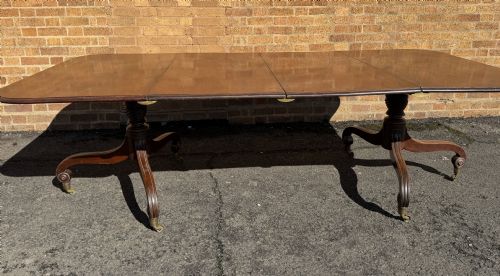
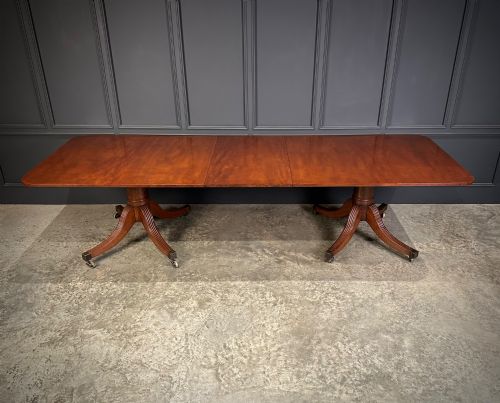
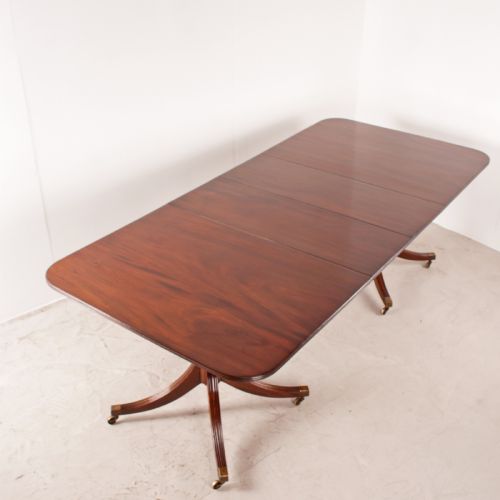
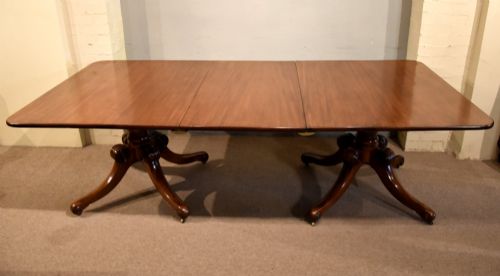



Regency Twin Pillar Table
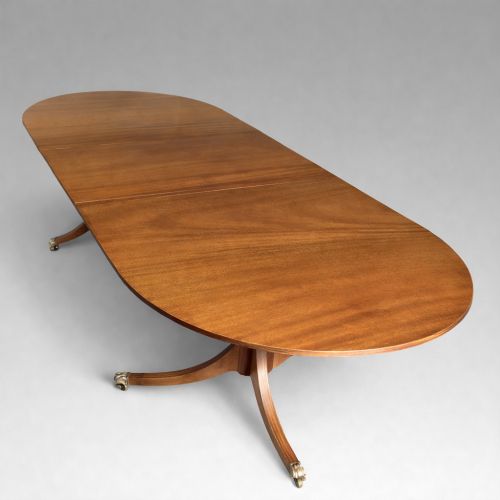
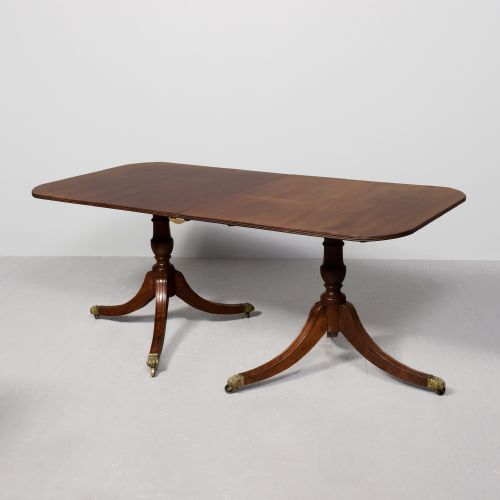
A regency twin pillar table brings formal dining presence into a room, offering modular flexibility with its dual pedestals and optional leaves.
Understanding the Regency Twin Pillar Table
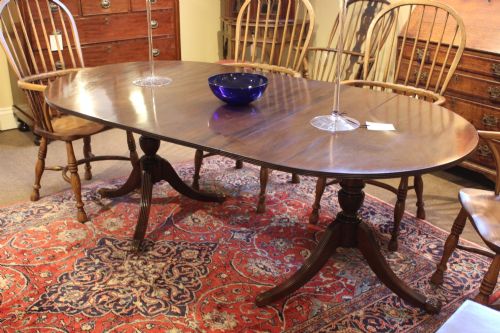
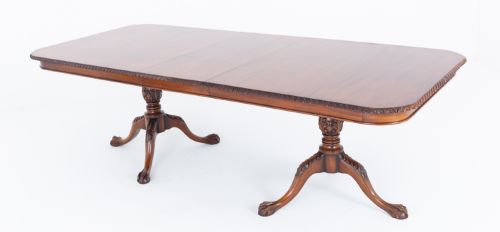
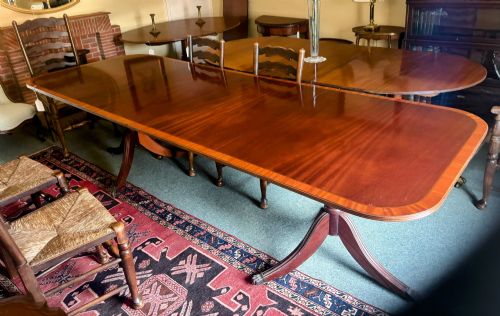
A regency twin pillar table functions as a grand dining surface supported by two distinct pedestals rather than four corner legs. This architectural arrangement provides ample legroom for diners seated along the length of the board.
Most examples encountered here span the nineteenth century or appear as later revivals from the early twentieth century. These dining tables frequently incorporate extra leaves to extend their length for larger gatherings.
Materials and Construction
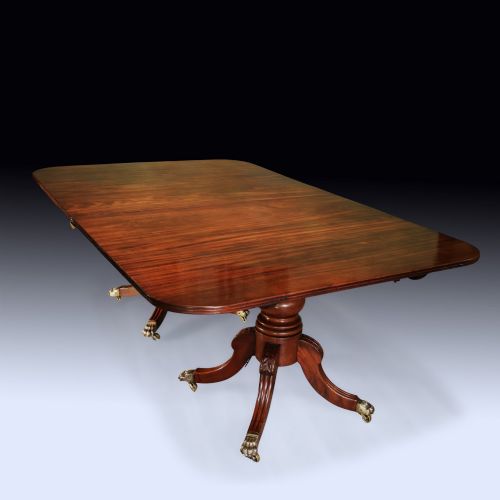
Cabinetmakers built these tables predominantly using solid and figured mahogany, occasionally selecting flame mahogany or recycled Georgian timber for the top surfaces. The rich grain of the wood forms the primary visual impact of each piece.
Brass fittings frequently appear on the castals and claw feet of the pedestals, adding metallic contrast to the timber. Joinery methods allow the two pillars to support extending leaves securely without sagging.
Retail Price Guide 2026
Typical UK retail prices for regency twin pillar table, calculated from the Sellingantiques database of over a million retail prices indexed since 2003. This retail price guide relies exclusively on Sellingantiques data; no external sources or auction records are used, so the figures do not describe the wider market.
Dining tables form the exclusive object type represented in this selection of twin pillar furniture.
Judging Quality and Execution
Superior examples display finely figured mahogany timber paired with crisply turned or carved pillar supports. The integration of extra leaves demonstrates careful matching of the wood grain across the entire extended surface.
Heavier proportioning and cabinetmaker execution distinguish the more ambitious nineteenth-century pieces from later revival items. The stability of the twin pedestals under extended loads reflects the underlying structural integrity.
The Regency Twin Pillar Table Glossary
- Pedestal
- The central vertical column supporting the weight of the table top. It typically terminates in tripod or quadrupod legs.
- Flame mahogany
- A veneer cut from timber where the grain resembles flickering flames. This decorative wood was favoured for high-status table tops.
- Parcel-gilt
- Woodwork partially decorated with applied gold leaf or gilt paint. This technique highlights carved details on finer Regency furniture.
- Extension leaf
- A removable board inserted into the centre of the table to increase its seating capacity. Twin pillar tables often accommodate two or more such leaves.
Frequently Asked Questions
How many people do these tables seat?
Most standard twin pillar tables comfortably seat eight diners without extension leaves. Inserting additional leaves expands the capacity to accommodate ten or twelve people.
Room dimensions dictate the maximum practical length when fully extended. Owners typically adjust the size according to daily use versus formal dining occasions.
How do I distinguish original period pieces from revivals?
Original nineteenth-century pieces exhibit construction methods, timber patination, and wear consistent with early construction dates. Later revival examples from the twentieth century often use different secondary woods and lack deep historical patination.
Examining the underside of the top and the joinery around the pillars reveals the age of the materials. Cabinetmaker marks or specific brass hardware styles also help pinpoint the exact era.
Can I use daily protection on the mahogany surface?
Polished mahogany benefits from gentle cleaning using traditional beeswax rather than modern silicone sprays. Felt-backed mats protect the timber from heat and moisture during meals.
Positioning the table away from direct sunlight prevents uneven fading of the figured mahogany grain over time. Regular gentle buffing maintains the warm natural sheen of the wood.
How do the twin pillars affect seating arrangements?
The dual pedestal design places structural supports near the ends of the table rather than the corners. This layout prevents corner legs from obstructing the legs of diners.
Guests can sit along the entire length of the flanks without interference from the base mechanism. The central gap between pillars leaves ample knee room for side chairs.