
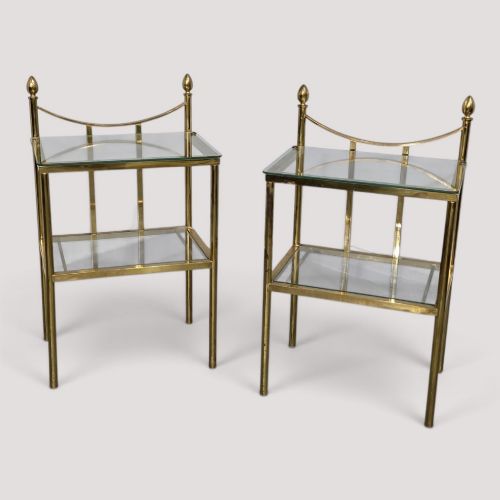
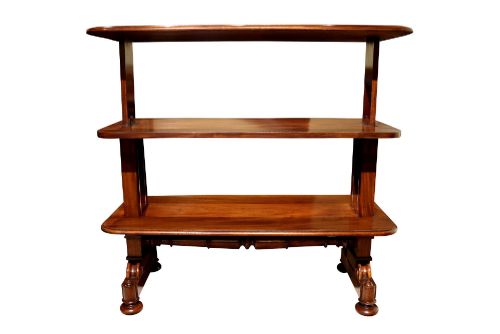
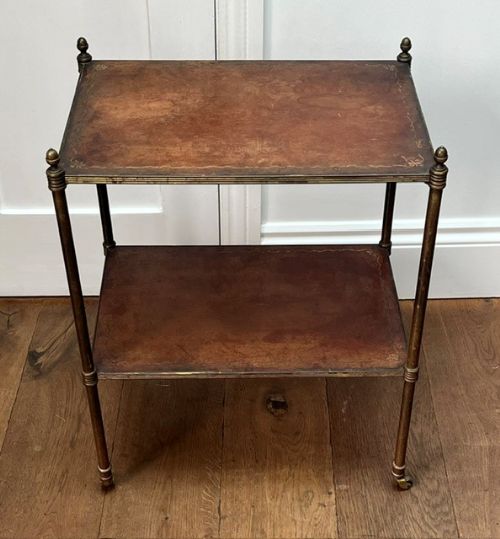
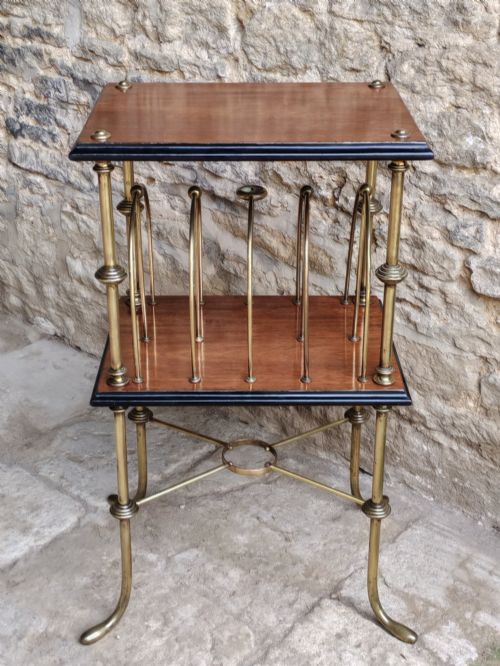

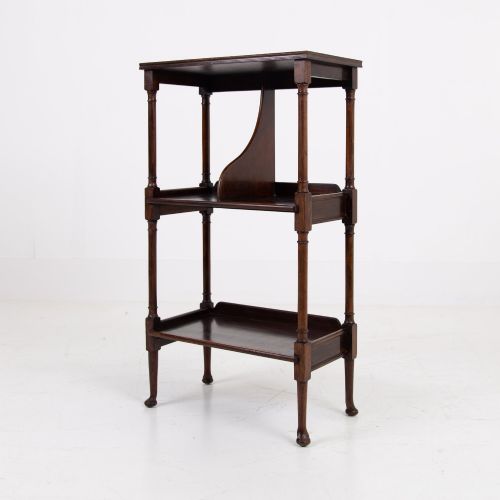
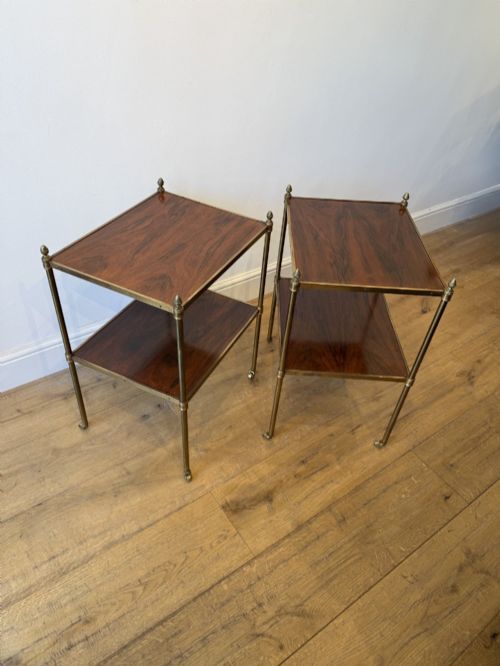
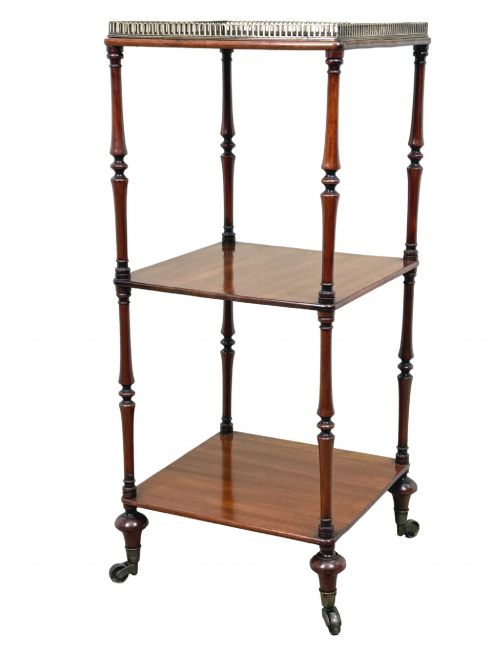
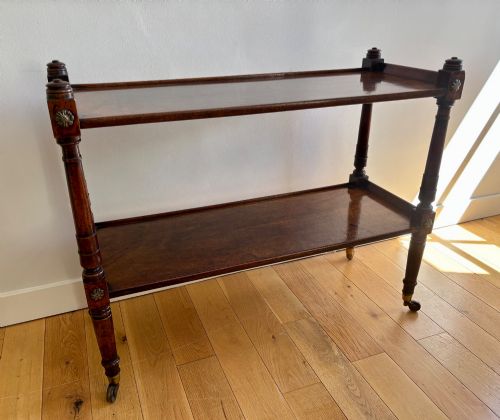
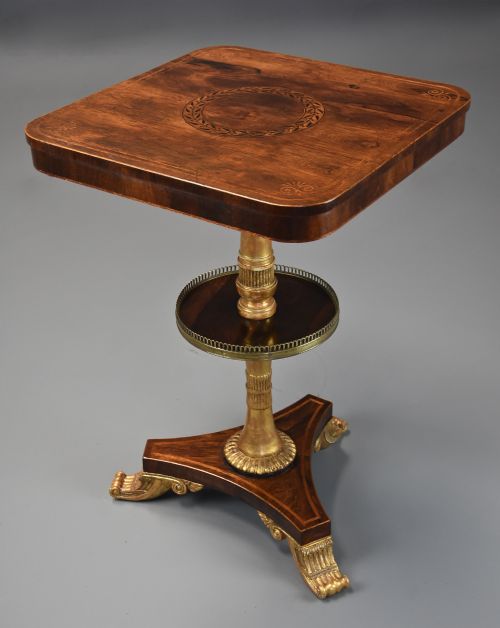


Regency Tiered Side Table
A regency tiered side table offers multi-level surface space with architectural precision, uniting practical utility and decorative elegance in any room.
Regency Tiered Side Table
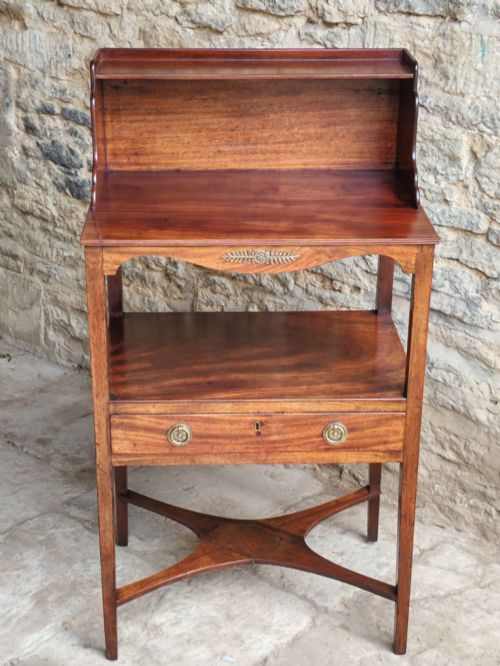
A regency tiered side table encompasses multi-tiered occasional furniture designed for display and utility, frequently taking the form of a whatnot, etagere, or dumb waiter. These pieces distribute surface area across stacked shelves supported by slender uprights, fulfilling the nineteenth-century demand for specialised household furnishing.
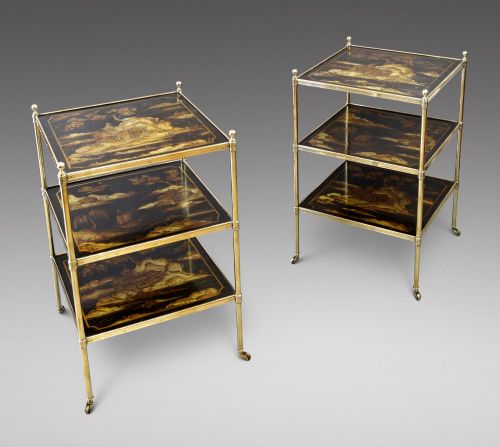
The materials and styles span the core Regency era alongside later revivals, featuring periods from the nineteenth century into the twentieth century. Mahogany dominates the records, accompanied by rosewood, oak, and yew wood, while brass and glass integrations point toward twentieth-century interpretations.
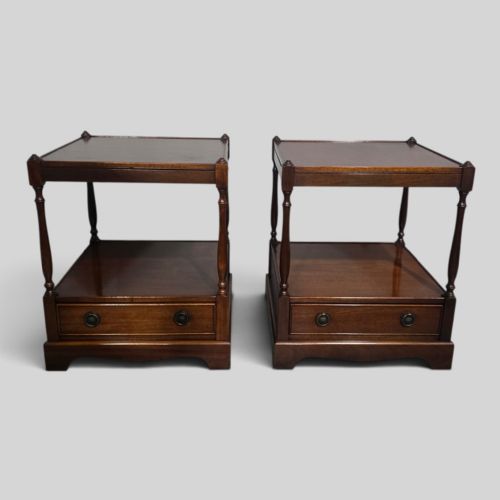
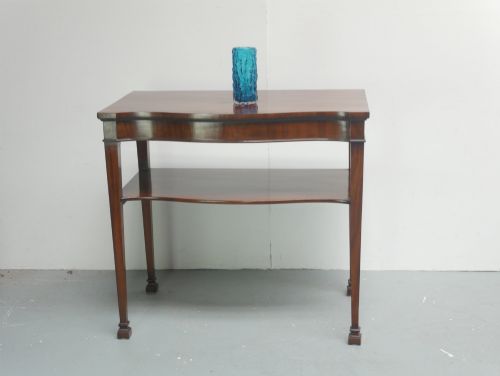
Proportions vary from neat bedside formats to substantial three-tier buffets and serving tables. Buyers frequently encounter two-tier and three-tier iterations intended for reading materials, lamps, or serving refreshments.
Materials and Construction
Cabinetmakers utilised dense native and exotic hardwoods such as mahogany and rosewood, chosen for structural stability and rich grain patterns. Timber selection dictated whether the piece was finished with polished French polish or left with a natural sheen.
Metal elements including brass castors, galleries, and upright supports provided structural reinforcement and visual contrast against dark wood. Leather insets appeared on certain top surfaces, adding a tactile writing or reading panel to the design.
Object configurations range from compact bedside lamp tables and magazine racks to grand three-tier dumb waiters and reading tables.
Evaluating Execution
The refinement of joinery and turning dictates the integrity of upright supports and tier attachments. Superior examples demonstrate tight joints and proportional balance across multiple stacked surfaces.
The choice of timber grain, such as fiddleback mahogany or figured rosewood, separates standard production from elevated cabinet work. Subtle brass detailing and precise edge moulding indicate attentive workshop execution.
Mallett of London·George Bullock·Gillows of Lancaster and London
The Regency Tiered Side Table Glossary
- Etagere
- An open piece of furniture with multiple tiers for displaying small objects or books. It provides tiered storage without enclosed cupboards.
- Dumb waiter
- A freestanding tiered stand used historically for serving food or holding tableware without servant assistance. Each circular or square shelf is supported by a central column or corner posts.
- Rise and fall
- A mechanical mechanism allowing a shelf or tier to adjust in height. This engineering feature is found on specific reading and serving tables.
- Cellarette
- A fitted compartment or drawer within a piece of furniture designed to hold bottles. It appears in lower sections of serving tables and side pieces.
Regency Tiered Side Table: Frequently Asked Questions
What is a regency tiered side table?
A regency tiered side table is a multi-level piece of furniture designed to hold lamps, books, or serving items across stacked wooden or metal shelves. These tables include whatnots, etageres, and dumb waiters from the nineteenth century and later revival periods.
The design emphasises vertical display and economy of floor space. Makers utilised hardwoods like mahogany and rosewood alongside brass fittings to construct sturdy, functional surfaces for domestic interiors.
How were dumb waiters used?
Dumb waiters served as mobile or stationary side stands in dining rooms to hold dishes, glasses, and wine bottles during meals. They allowed diners to access items without domestic staff present.
The stacked tiers permitted systematic organisation of tableware from top to bottom. By the nineteenth century, these versatile stands transitioned into general living spaces as side tables and plant stands.
How do I style an etagere?
An etagere accommodates books, ceramics, and small lamps across its open tiers by balancing weight distribution and visual proportion. Placing heavier items on lower shelves maintains stability while top tiers hold lighter decorative objects.
The open structure allows light to pass through, making these tables suitable for corners or beside seating arrangements where solid furniture would feel heavy.
What is the difference between an etagere and a whatnot?
An etagere and a whatnot both provide multiple open tiers for display, though terminology varied across different manufacturing periods. Etageres frequently highlight decorative metal or glass alongside timber framing.
Whatnots typically lean toward robust wood construction with straightforward upright supports. Both forms served similar utility in period homes for holding portable possessions.