


Brass Mahogany Tier Table
A brass mahogany tier table brings multiple stacked surfaces and metal detailing together, offering functional display space with distinct period character.
Brass Mahogany Tier Table
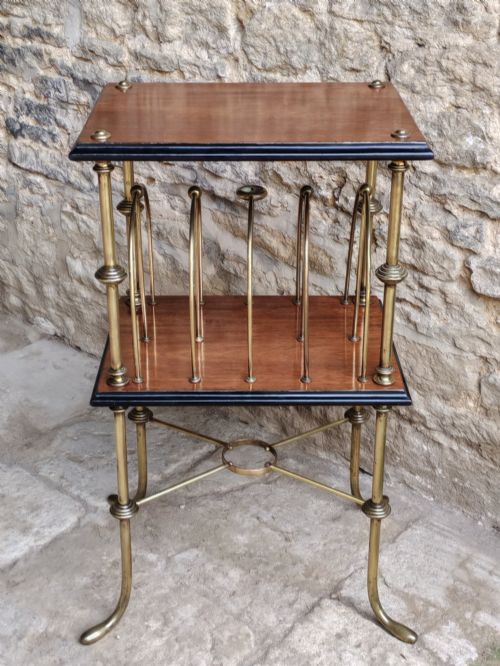
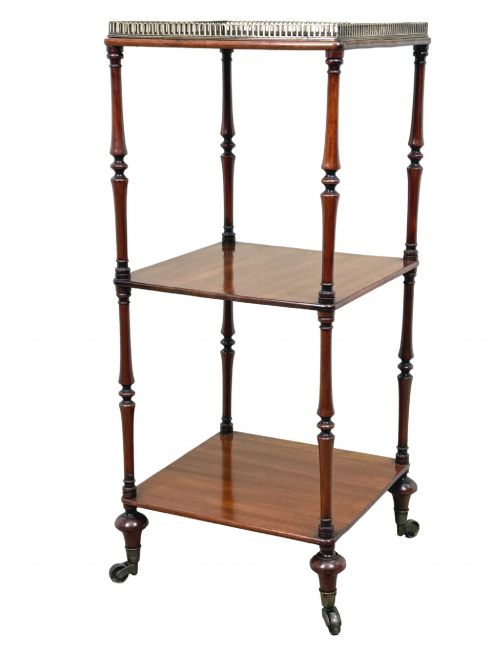
A brass mahogany tier table combines stacked wooden surfaces with metallic mounts, galleries, or supports. When searching for a brass mahogany tier table, buyers encounter forms ranging from compact occasional pieces and side tables to multi-level étagères, whatnots, and dumb waiters.
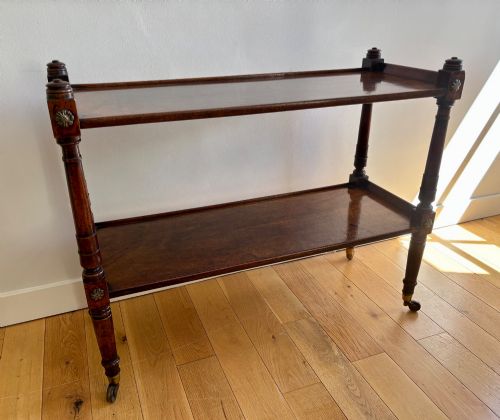
The selections span the Regency and Victorian eras through to Edwardian and later Revival styles, including French influences such as Louis XV and Louis XVI. Occasional tables and two-tier or three-tier tea and wine stands dominate the forms seen here, frequently incorporating auxiliary materials alongside the primary timber.
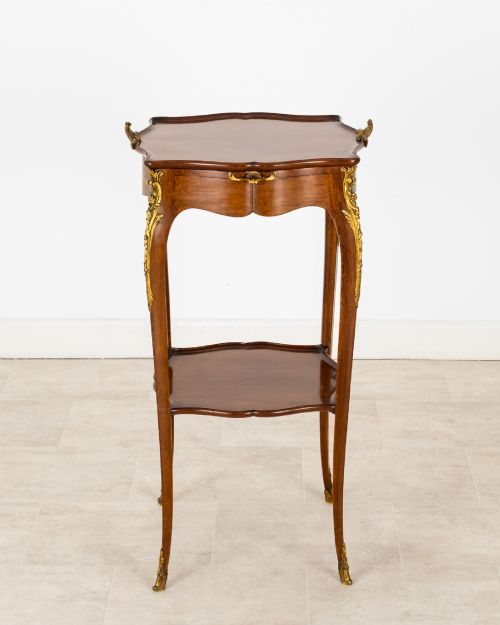
Origin points diverge between English workshops and French ateliers, yielding distinct stylistic vocabularies. English examples often favour clean structural lines reflecting Regency or Georgian proportions, whereas continental pieces lean into ornate ormolu mounts and marquetry.
How they were made
Makers constructed these tiered surfaces primarily using solid and veneered mahogany, frequently accented with contrasting woods such as satinwood and rosewood. Structural integrity relied on traditional joinery techniques suited to supporting multiple graduated platforms.
Cast brass, gilt bronze, and ormolu form the principal metallic components, appearing as gallery rails, column supports, mounts, and drop handles. Marble inserts also feature across specific French and English side tables, adding weight and a smooth top surface to the tiered construction.
Object forms in the inventory include occasional tables, étagères, dumb waiters, washstands, and campaign pieces outfitted with brass mounts.
What varies in quality
Quality rests on the crispness of the brass castings and the precision of the timber work. Finer items exhibit sharply chased ormolu mounts and seamless inlay, whereas simpler iterations rely on standard brass gallery wire and plain mahogany boards.
The choice of secondary woods and the sophistication of the tier framing dictate the distinction between standard production and workshop-attributed pieces. Details like matched grain patterns, heavy marble tops, and integrated brass accents elevate certain tiered tables above standard utilitarian examples.
François Linke·W. Turner Lord & Co·John MaClean·Haentgos Freres·Gillow
The Brass Mahogany Tier Table Glossary
- Étagère
- A set of open shelves or tiers designed for displaying small objects, books, or tea wares. These pieces often feature slender vertical supports.
- Ormolu
- Gilt bronze mounted onto furniture, popular in French furniture making. The technique involves applying a gold amalgam to bronze to achieve a rich metallic finish.
- Dumb waiter
- A tiered freestanding piece of furniture used for serving food or holding tableware without requiring a servant present. They typically feature rotating or fixed circular tiers on a central column or tripod base.
- Whatnot
- A piece of furniture consisting of multiple open shelves for storage and display. They appeared frequently in 19th-century interiors.
- Marquetry
- Decorative veneer work arranged in pictorial or geometric patterns using various coloured woods. Craftsmen cut precise shapes to fit flush within the primary surface.
Brass Mahogany Tier Table: Frequently Asked Questions
What is a tier table used for?
Tiered tables provide stacked surfaces for displaying decorative items, holding tea wares, or organising books in living spaces. The multiple levels multiply the usable surface area without demanding extra floor space.
Historically, specific variations like dumb waiters or wine tables served dining rooms and parlours, while smaller occasional versions functioned beside seating areas.
How do I identify a Regency tier table?
Regency pieces often display classical proportions, dark mahogany surfaces, and restrained brass detailing such as column supports or thin gallery rails. Look for clean architectural lines influenced by classical antiquity.
Cabinetmakers working in this period favoured symmetry and architectural forms, distinguishing them from the more ornate floral marquetry of later revival styles.
Are brass and mahogany tables French or English?
They originate from both traditions, with distinct characteristics separating the two origins. English examples tend to prioritize structural timber work with functional brass handles or casters.
French pieces frequently incorporate heavier ormolu mounts, marble tops, and intricate marquetry in the manner of Louis styles or specific continental makers.
How do I care for a mahogany and brass table?
Maintain the mahogany with appropriate furniture wax to preserve the grain and prevent the timber from drying out. Avoid excessive moisture on both the wood and any marble inserts.
Keep brass components unpolished unless necessary, using soft cloths to remove dust without disturbing the natural patina accumulated over the decades.
What is the difference between an etagere and a whatnot?
Both terms describe tiered shelving furniture, but etagere frequently implies a lighter, French-influenced display piece often associated with tea or salon use. Whatnot is a traditional English term for multi-tiered stands utilised across various rooms.
In practice, makers used both designations interchangeably for freestanding open-shelf furniture throughout the 19th century.