





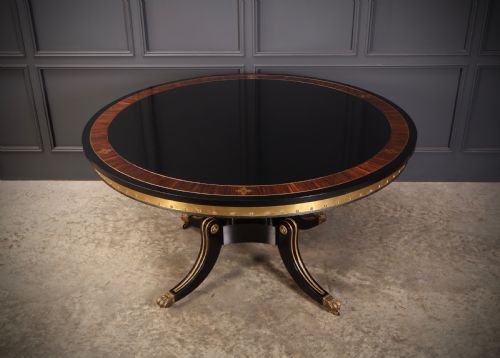


Regency Style Rosewood Table
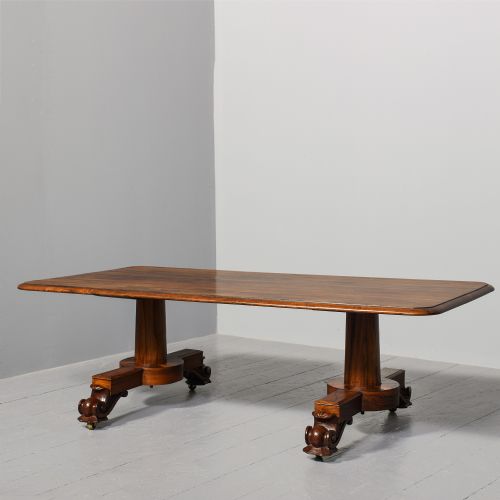
When you search for a regency style rosewood table, you are looking at formal tables shaped by nineteenth-century cabinet-makers using dense tropical timbers.
Regency Style Rosewood Table
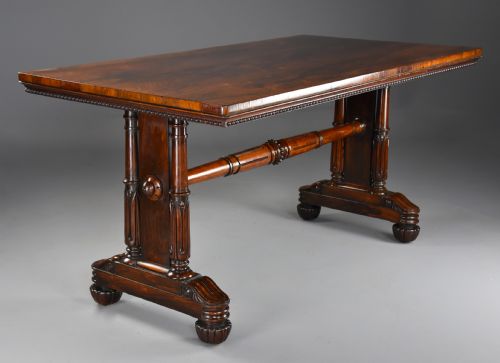
A regency style rosewood table encompasses a variety of forms designed for domestic use, from large library and dining tables to smaller occasional pieces, coffee tables, and work tables. The selection ranges from nineteenth-century originals to later revivals, reflecting classical proportions and refined craftsmanship.
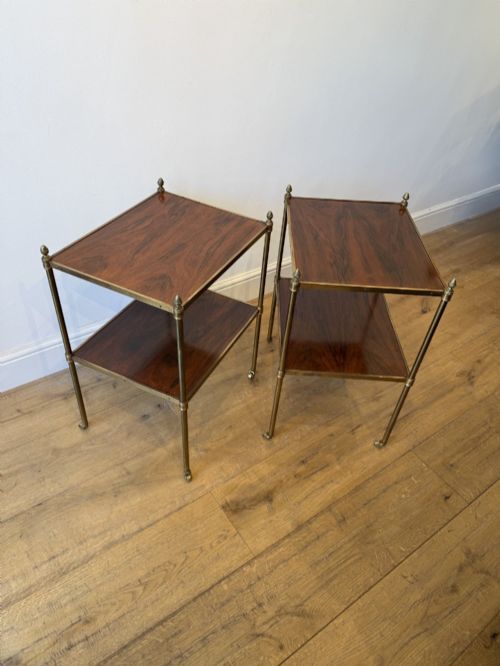
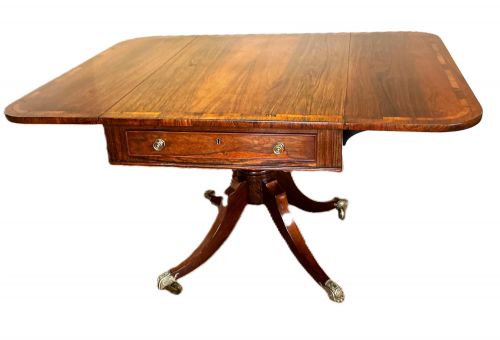
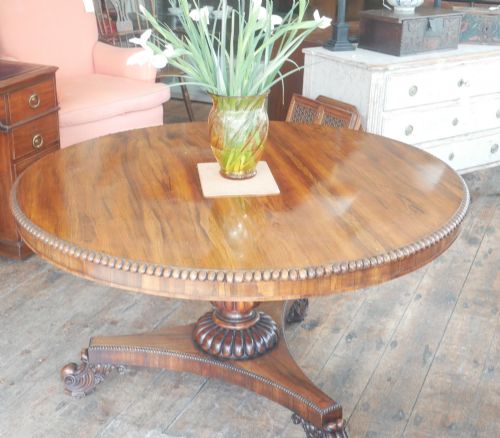
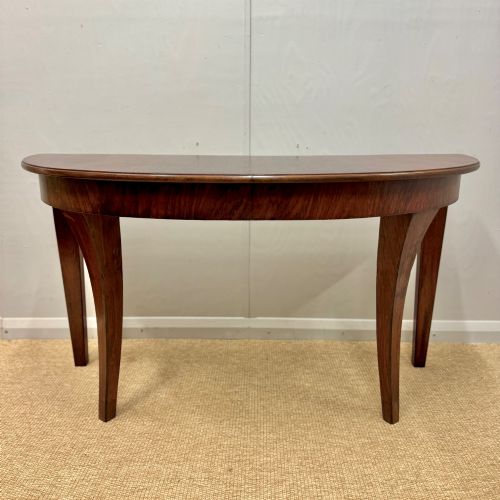
You will frequently encounter side tables, centre tables, and card tables bearing the characteristic deep grain of rosewood. Many pieces show the influence of prominent workshops, featuring architectural bases, column supports, or crisp brass inlay.
The periods represented span the early nineteenth century through to later revivals, capturing shifts in taste from strict classical restraint to more exuberant Victorian and Edwardian interpretations. Each form serves a specific domestic function, whether for writing, card games, or display.
Materials and construction
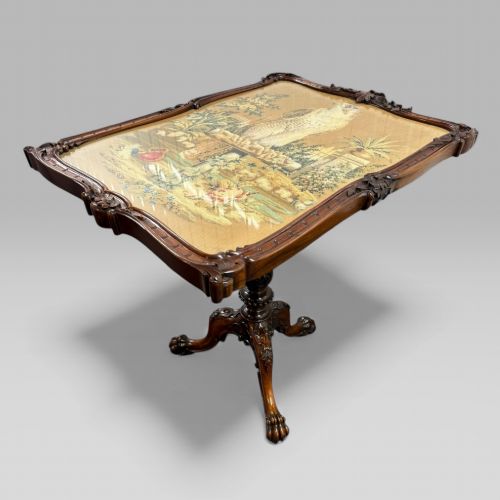
Makers utilised dense rosewood, often applied as fine veneers over stable secondary timbers to display rich, figured grain patterns. Solid sections were reserved for turned columns, tripod legs, and carved mouldings.
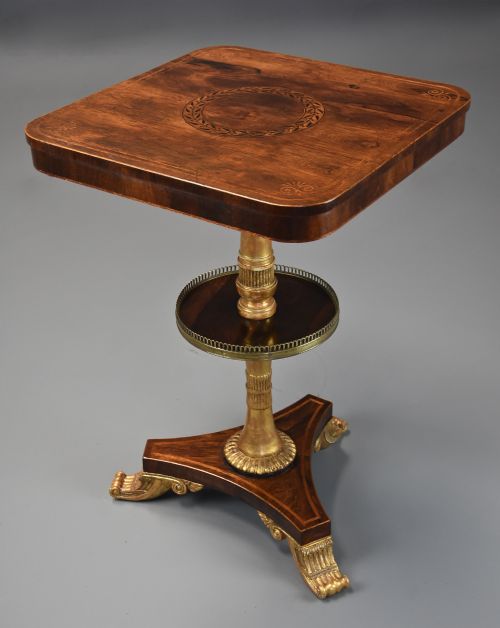
Brass inlay and ormolu mounts provide sharp contrast against the dark timber, frequently set into precise channels cut into the surface. Secondary woods such as mahogany or pine appear in the internal framing of drawers and structural carcases.
Several tables include hidden compartments designed specifically for holding counters and cards during evening games.
Distinctions in quality
The hierarchy of quality rests on the precision of the cabinet-work and the choice of veneers. Superior examples display meticulously matched grain patterns across expansive table tops and structural symmetry in pedestals and bases.
Refinement in secondary details, such as finely cast brass mounts, crisp wood inlay, and smoothly functioning mechanism drawers, separates standard workshop production from pieces associated with premier makers.
George Bullock·Gillows·John McLean·William Trotter·George Smith·Mallett
The Regency Style Rosewood Table Glossary
- Rosewood
- A dense, heavily figured tropical hardwood prized for its dark purple-brown colour and contrasting black grain lines. It takes a high polish and was extensively utilised for high-status furniture.
- Ormolu
- Gilded bronze used for decorative mounts and feet on formal furniture. It adds metallic contrast to dark timber surfaces.
- Tripod Table
- A small occasional table supported by a central pillar resting on three spreading feet. This form allows stability on uneven floors.
- Work Table
- A specialised small table fitted with compartments or a fabric bag for sewing and needlework. These pieces often feature hinged lids and delicate proportions.
Regency Style Rosewood Table: Frequently Asked Questions
How do I identify a genuine period table?
Examine the construction methods beneath the top and inside the drawers, looking for hand-cut joints and timber shrinkage consistent with age.
Compare the secondary woods and finishing techniques against known examples from the early nineteenth century to verify period authenticity.
Where should I place a centre table?
Centre tables are designed to stand free in the middle of a room rather than against a wall, allowing access from all sides.
Ensure there is sufficient clearance around the piece for movement and seating.
How do I care for rosewood surfaces?
Keep timber furniture away from direct sunlight and heat sources to prevent the rosewood veneer from drying and splitting.
Apply traditional wax polish sparingly and buff with a soft cloth to maintain the natural sheen of the wood.
What is the difference between a work table and a side table?
A work table contains internal compartments, drawers, or suspended fabric bags specifically designed for needlework and domestic crafts.
A side table has a plain surface intended for display or holding lamps and decorative objects against a wall.