


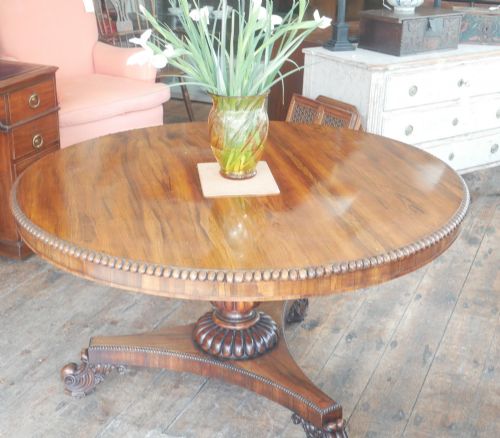


Regency Style Loo Table
A regency style loo table is a pedestal table designed for evening games, offering rich timber surfaces and sturdy central pillars.
Regency Style Loo Table
When you search for a regency style loo table, you are looking at pedestal tables that span the Georgian, Regency, Victorian, and 1920 periods. These pieces take the form of centre tables, dining tables, and tilt-top tables designed for domestic use.
The versions you are most likely to meet on this page include circular and oval formats resting on central pillars. They emerge from historical styles such as Regency, Grand Regency, George III, Regency Revival, and William IV.
Makers and designers referenced in the tradition include Gillows, George Bullock, William Trotter of Edinburgh, and George Smith. Their influence shapes the pedestal forms and top designs seen across the inventory.
How They Were Made
These tables utilise solid woods and veneers of mahogany, rosewood, yew, burr yew, satinwood, and lacewood over structural carcases. Ebonised hardwood and blackened finishes provide darker tones, whilst brass elements appear on mounts or fittings.
Construction relies on pedestal bases supporting tilt-top mechanisms or fixed tops. Carved details define the wooden pillars and legs, combined with banded inlay work using contrasting timbers like lacewood.
Regency Style Loo Table Retail Price Guide 2026
Typical asking prices for regency style loo table among the pieces listed under this phrase on Sellingantiques today, from the lower quarter to the upper quarter. They describe what is for sale here now, not the wider market.
Tables tilt upward so players could hide their cards more easily from lingering household pets.
What Varies in Quality
Quality rests in the choice of timber figurations, such as figured rosewood, burr yew, and decorative lacewood banding. Superior examples show careful selection of grain patterns across the top surface.
The standard of carving on the pedestal base and the crispness of brass detailing separate standard pieces from finer interpretations. Attribution to known workshops like Gillows or George Bullock elevates the standing of a table.
Gillows·George Bullock·William Trotter of Edinburgh·George Smith
The Regency Style Loo Table Glossary
- Tilt-top table
- A table with a mechanism allowing the top to pivot vertically for storage against a wall. This format saved space in period interiors when the table was not in use.
- Centre table
- A freestanding table designed to be viewed from all sides rather than pushed against a wall. These pieces typically sit in the middle of a room.
- Pedestal table
- A table supported by a single central column resting on a platform or feet. This design allows maximum legroom for seated occupants.
- Banded
- A border of contrasting timber veneer applied around the edge of a table top. It creates a decorative frame using materials such as lacewood.
- Ebonised
- Wood treated with a finish to imitate expensive ebony. It provides a deep black surface seen on nineteenth-century pieces.
Regency Style Loo Table: Frequently Asked Questions
What is a loo table?
A loo table is a large round or oval pedestal table traditionally used for the nineteenth-century card game loo. The tilt-top feature allowed the table to be stored upright against the wall when the game finished.
Today, these pieces function well as central display tables or informal dining tables in larger rooms.
How do I spot a tilt-top mechanism?
The mechanism sits beneath the top, allowing the wooden surface to release and pivot ninety degrees. This engineering made storage straightforward in period homes.
When lowered, a brass catch or wooden wedge secures the top horizontally.
What woods were used?
Cabinet makers utilised dense hardwoods including mahogany, rosewood, and yew. Exotic timbers and lighter veneers such as satinwood and lacewood provided contrast.
Some examples feature blackened or ebonised hardwood surfaces.
How do I style one in a modern home?
Place the table centrally in a room to showcase the pedestal base and timber grain. A large floral arrangement or heavy ceramic bowl works well on the circular top.
Keep surrounding seating low to maintain the visual balance of the central pillar.
What is the difference between Regency and Regency Revival?
Regency pieces were made during the early nineteenth-century Regency and Georgian eras. They reflect the original neoclassical tastes of the period.
Regency Revival pieces date from later periods, such as 1920, and recreate those earlier forms using contemporary workshop methods.