


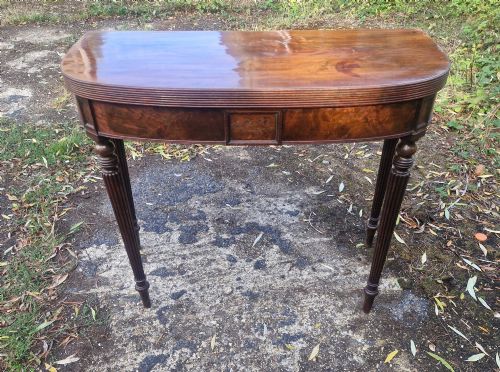


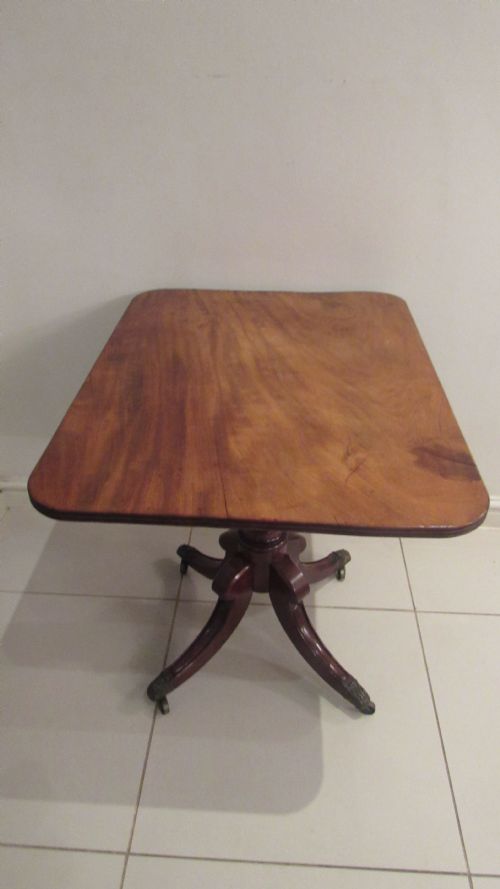
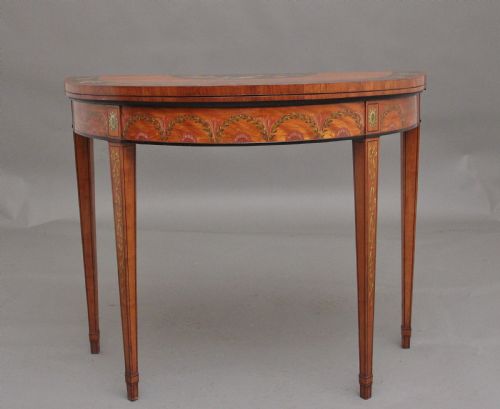


Regency Style Card Table
A regency style card table brings the refined geometry and rich timber of the early nineteenth century straight into a modern drawing room.
Regency Style Card Table
When you search for a regency style card table, you encounter versatile folding tables designed for evening entertainment and interior elegance. The pieces listed span genuine nineteenth-century origins as well as later revivals, reflecting both formal Regency design and subsequent William IV craftsmanship.
You are most likely to meet mahogany examples alongside pieces fashioned from rosewood, satinwood, and goncalo alves. These tables frequently appear in card, tea, and games configurations, often featuring foldover tops that conceal internal surfaces.
The aesthetic embraces the architectural clarity of the period alongside grander interpretations reminiscent of Gillows or George Bullock. Alongside authentic nineteenth-century specimens, you find Sheraton Revival pieces dating from the nineteen-thirties.
Materials and construction
Cabinetmakers utilised dense timbers such as mahogany and figured rosewood, frequently applying flame mahogany veneer to achieve striking surface patterns. Workshops also incorporated exotic woods including goncalo alves and specimen timbers to create decorative contrast.
Metalwork played a key structural and ornamental role, with brass inlay and ormolu mounts integrated into the woodwork. Tables often relied on clever folding mechanisms and pedestal bases supported by distinctive legs in the Gillows style.
Regency Style Card Table Retail Price Guide 2026
Typical asking prices for regency style card table among the pieces listed under this phrase on Sellingantiques today, from the lower quarter to the upper quarter. They describe what is for sale here now, not the wider market.
Listings feature woods spanning mahogany, rosewood, satinwood, and goncalo alves, alongside brass and ormolu metalwork.
Assessing quality and execution
Quality rests upon the selection of timber, where beautifully figured mahogany or rich rosewood veneer distinguishes superior examples from plain construction. The precision of brass inlay and the sharpness of carved or painted details separate ambitious workshop production from standard commercial output.
The integrity of the folding mechanism and the stability of the pedestal base determine the enduring utility of the piece. Finer tables demonstrate seamless joinery and sophisticated timber matching across the foldover top.
George Bullock·Gillows
The Regency Style Card Table Glossary
- Foldover table
- A table featuring a hinged top that opens to double the surface area, traditionally used for card games or tea. This clever mechanism allows the furniture to sit flat against a wall when not in use.
- Goncalo alves
- A dense South American hardwood prized for its striking contrasting grain patterns. Makers utilised this timber to add visual drama to decorative surfaces.
- Ormolu
- Gilded bronze used for decorative mounts and accents on fine furniture. It provides a bright metallic contrast against dark woods like rosewood and mahogany.
- Flame mahogany veneer
- A thinly sliced section of mahogany timber exhibiting a flamed or fire-like grain figure. Cabinetmakers applied this to prominent surfaces to create an opulent visual effect.
- Sheraton Revival
- A late nineteenth and early twentieth-century design movement that reinterpreted the lightness and classical ornamentation of eighteenth-century designer Thomas Sheraton.
Regency Style Card Table: Frequently Asked Questions
What is a regency style card table used for?
These tables served primarily for social pastimes like card games, whilst dual-purpose variants often functioned as tea or side tables. The hinged top opened when guests arrived for evening entertainment.
Today, they adapt readily to domestic interiors as console tables or occasional furniture, offering surface space with a compact footprint when closed.
How do I identify a genuine period piece?
Examine the choice of timber and construction methods beneath the surface, looking for period characteristics such as hand-cut joints and dense native or imported hardwoods. The presence of rosewood, goncalo alves, or finely executed brass inlay often points toward nineteenth-century origins.
Compare the proportions and leg styles against documented workshop traditions. Surviving examples also show natural ageing appropriate to the eighteen-hundreds.
Are all these tables from the nineteenth century?
The selection includes pieces originating directly from the nineteenth century alongside later revivals from the nineteen-thirties. Both eras utilised classic forms and traditional timber construction.
Distinguishing between original Regency pieces and later Sheraton Revival interpretations depends on examining construction details and secondary woods used in the framing.
How do I care for rosewood and mahogany?
Maintain these polished timber surfaces by keeping them away from direct sunlight and rapid temperature fluctuations that can dry out the wood. Regular dusting with a soft, dry cloth preserves the finish.
Avoid placing damp items directly onto the polish, as antique veneers respond poorly to moisture. Occasional application of appropriate wax maintains the natural lustre of the grain.