

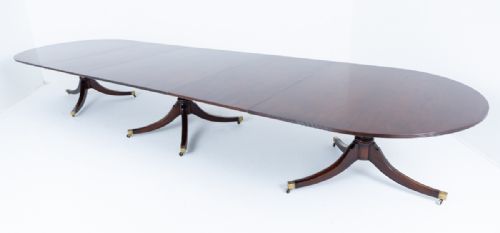
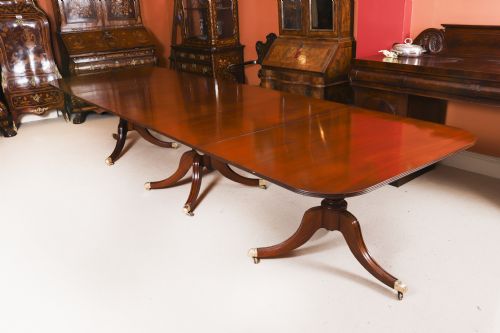

Regency Style Banquet Table
A regency style banquet table offers grand seating capacity in rich mahogany, bringing architectural presence and practical extending mechanisms to large dining spaces.
Regency Style Banquet Table
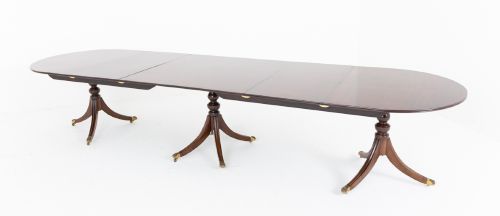
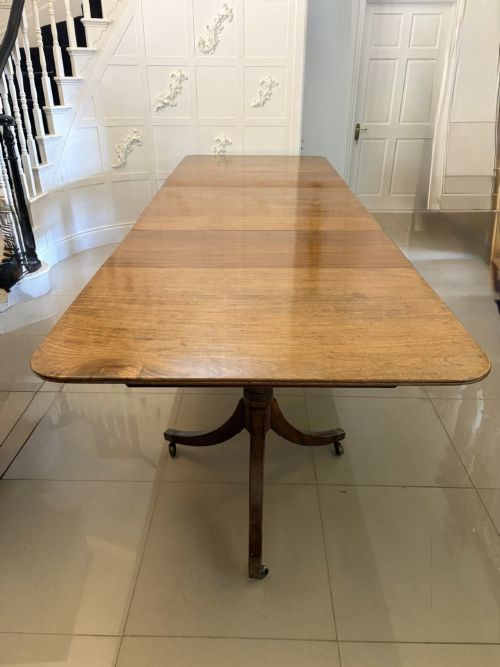
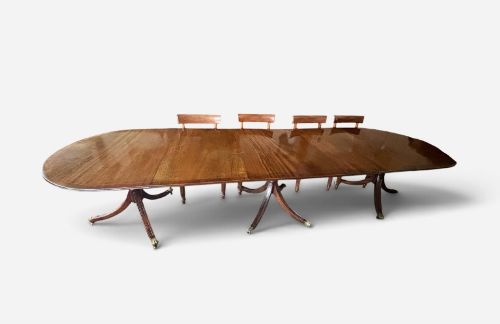
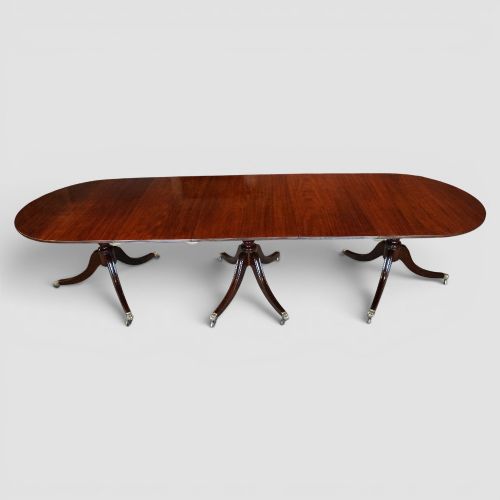
A regency style banquet table provides substantial surface area for large dining gatherings, commonly appearing as multi-pillar extending tables designed to seat twelve to twenty-eight people. These pieces draw from nineteenth-century forms and later revivals spanning the Edwardian era and the nineteen-twenties.
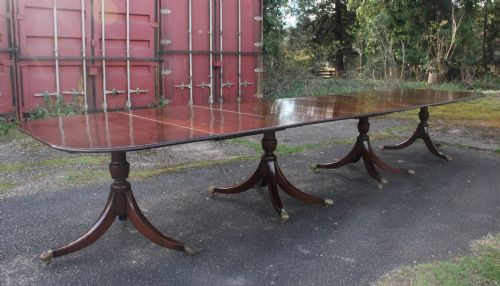
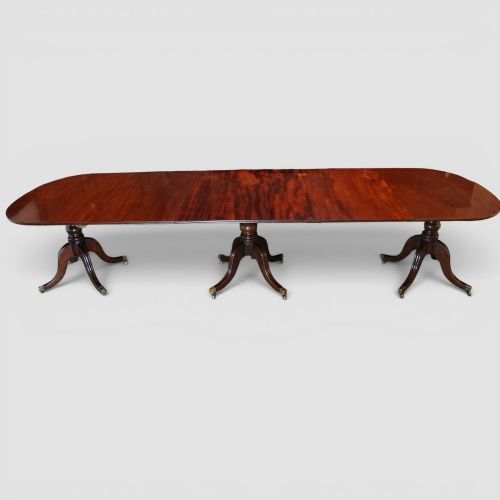
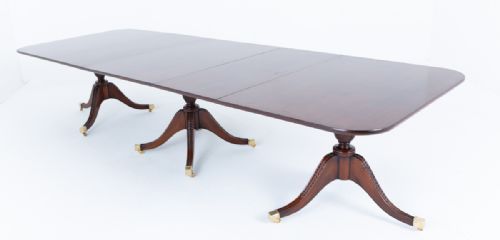
Buyers encounter examples originating from the original Regency and Georgian periods alongside nineteenth-century pieces and twentieth-century revivals. The dominant formats feature three or four pedestals supporting long tops with removable leaves.
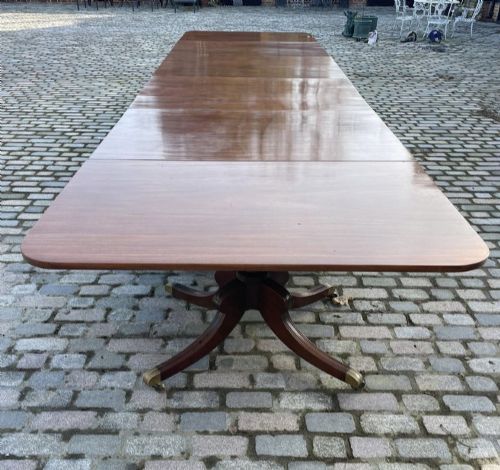
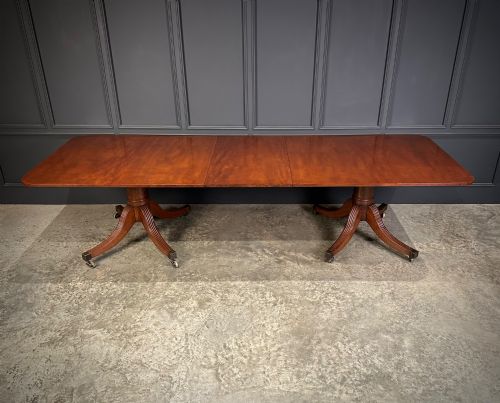
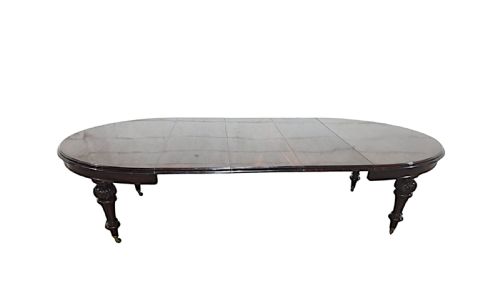
The construction typically incorporates D-end sections or rectangular leaves that expand along brass or wooden mechanisms. This configuration allows hosts to scale the table length down for intimate meals or extend it fully for banquets.
Distinctions in quality and execution
Quality separates through timber selection, such as highly figured mahogany veneers, and the precision of the extending mechanism. Superior tables maintain rigidity across the entire span even when fully loaded with multiple leaves.
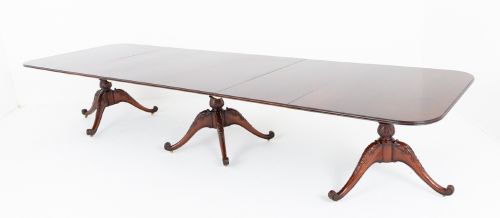
Design detail in the pillar turnings and base carving distinguishes standard production from finer cabinetmaking. Pieces created in the manner of established makers like Gillows demonstrate superior proportion, weight distribution, and joinery.
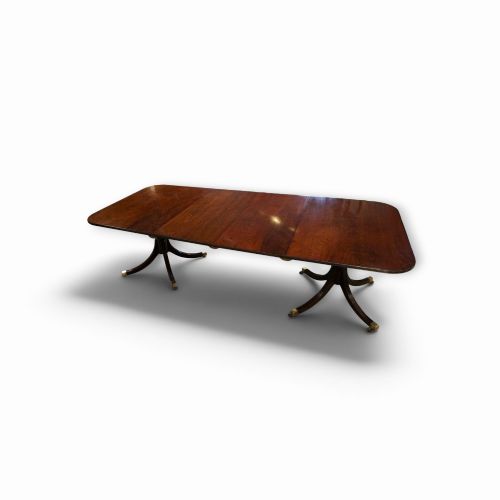
Pillar configurations range from twin pedestals up to large four-pillar structures capable of seating over twenty guests.
Gillows of Lancaster·William and Gibton·Whytock and Reid
The Regency Style Banquet Table Glossary
- Pedestal
- A central timber support column resting on spreading legs that holds up the table top. Multiple pedestals are necessary to support extending banquet tables.
- D-End
- A table end shaped in a semi-circle that resembles the letter D. These sections often detach to serve as side tables or join together when leaves are removed.
- Extending Mechanism
- The internal slides or tracks that allow additional leaves to be inserted into the centre of the table. Brass clips often secure the leaves together.
- Flame Mahogany
- A veneer cut from timber where the grain resembles flickering flames. This decorative cut appears on high-grade table tops.
- Castor
- A small wheel fitted beneath the table feet to ease movement. Brass versions are typical on nineteenth-century extending tables.
Regency Style Banquet Table: Frequently Asked Questions
How do I extend a multi-pillar dining table?
The top pulls apart along internal wooden or brass tracks to create a gap in the centre. Additional loose leaves drop into this space to increase the overall length.
Support legs shift outward as the table expands to maintain structural balance. Once the leaves are aligned, securing clips lock the sections together firmly.
Can I remove leaves for everyday use?
Extra leaves lift out easily when large banquet seating is unnecessary, allowing the table to shrink down to a twin pedestal or D-end format. This adaptability makes large tables suitable for daily dining as well as hosting.
Stored leaves require careful climate control to prevent warping. Keeping them in a stable room ensures they fit back into the table mechanism seamlessly.
How do I care for a polished mahogany surface?
Regular dusting with a soft, dry cloth preserves the polished finish of mahogany and rosewood surfaces. Avoid chemical sprays that can degrade historic polishes over time.
Using felt pads under hot dishes and placemats protects the timber from moisture and heat damage. Wax application periodically feeds the grain and maintains the deep lustre.
How do I tell an original period table from a revival?
Construction marks, timber ageing, and secondary woods inside the frame reveal the period of manufacture. Original Georgian and Regency pieces show hand-cut joinery and period-appropriate wear patterns.
Revival pieces from the early twentieth century often utilise standardised machine-cut elements and modern screws while replicating nineteenth-century proportions and styling.