
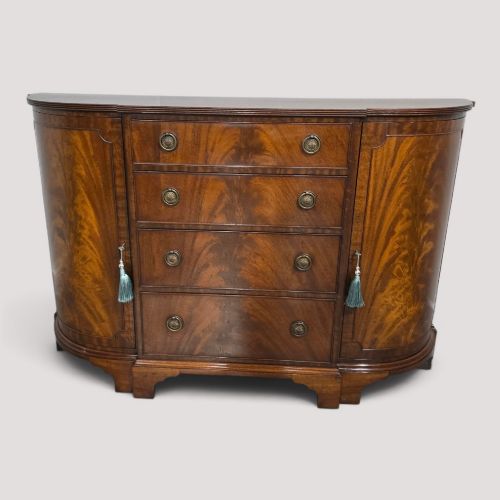
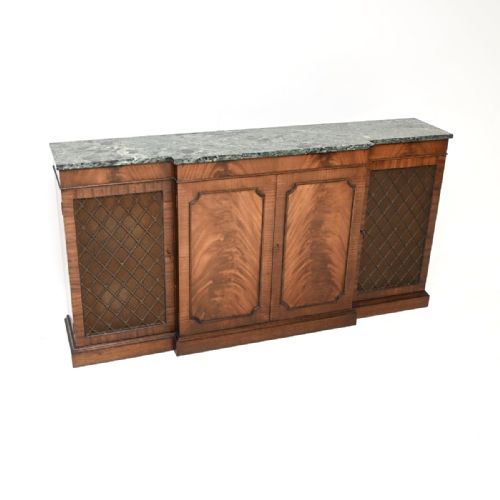
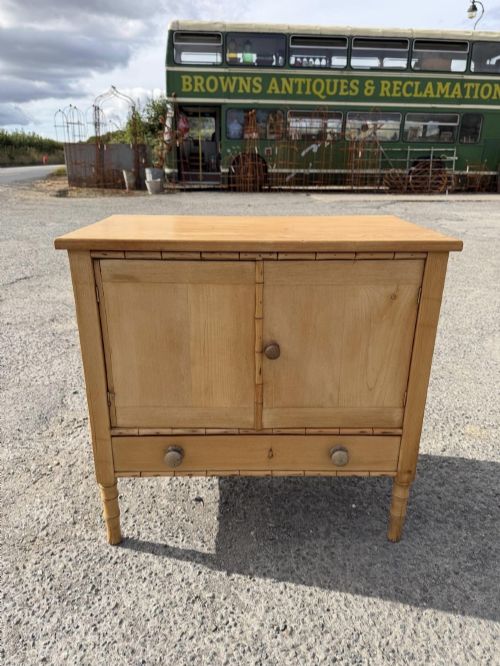
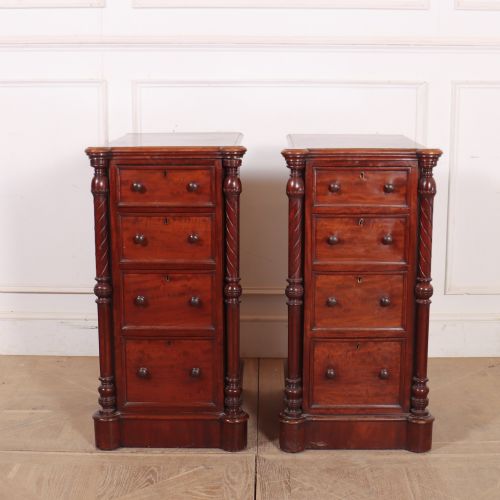
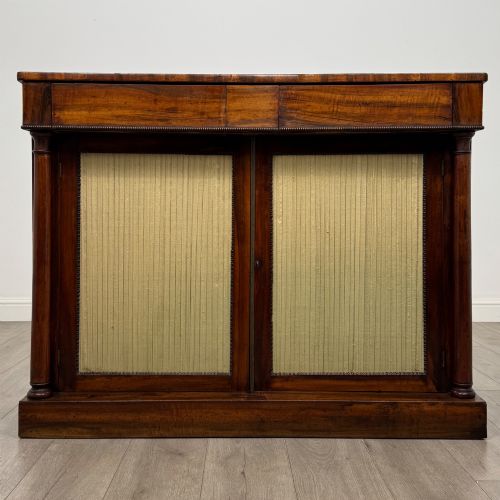
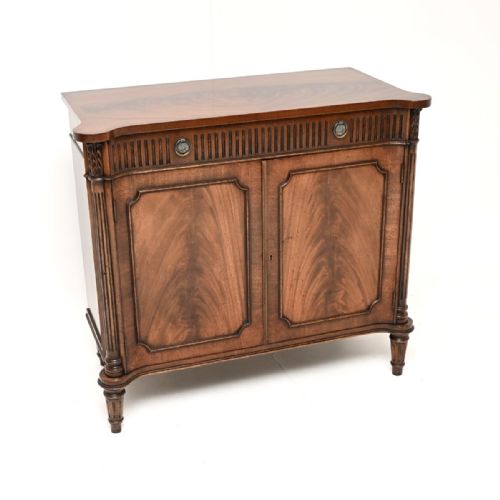
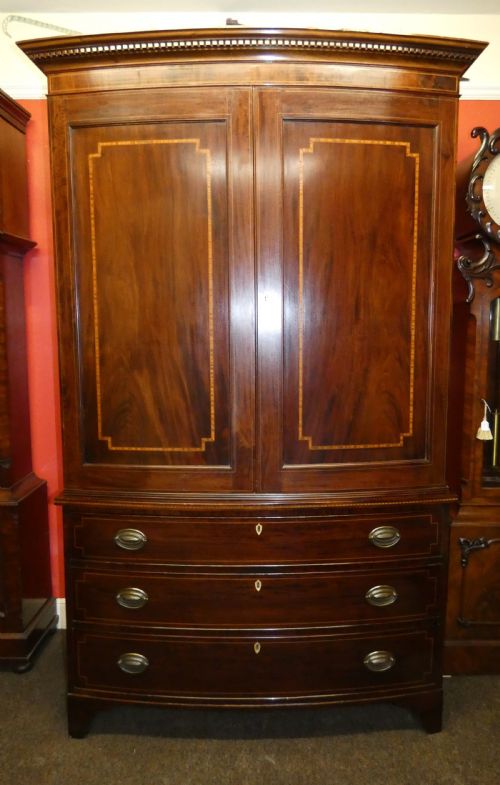
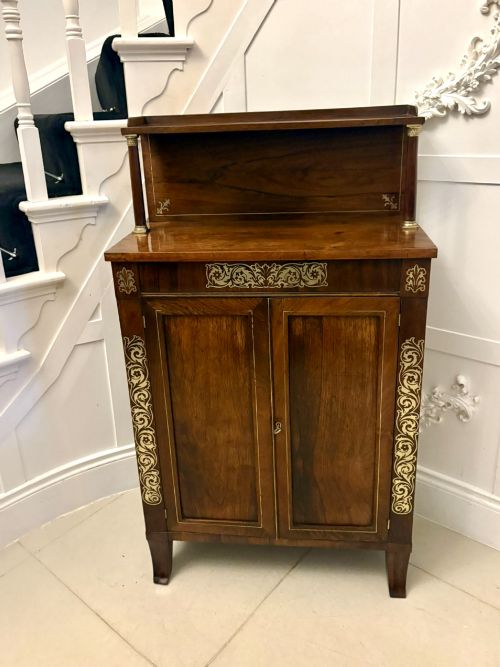
Regency Storage Cabinet
A regency storage cabinet brings functional elegance to any room, offering disciplined timber work and refined brass details.
Regency Storage Cabinet
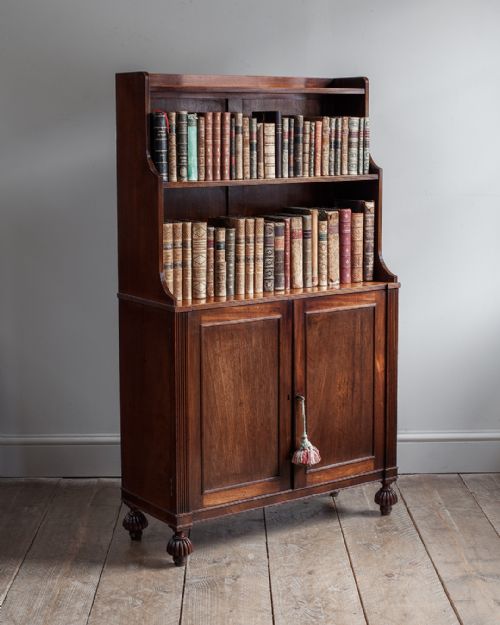
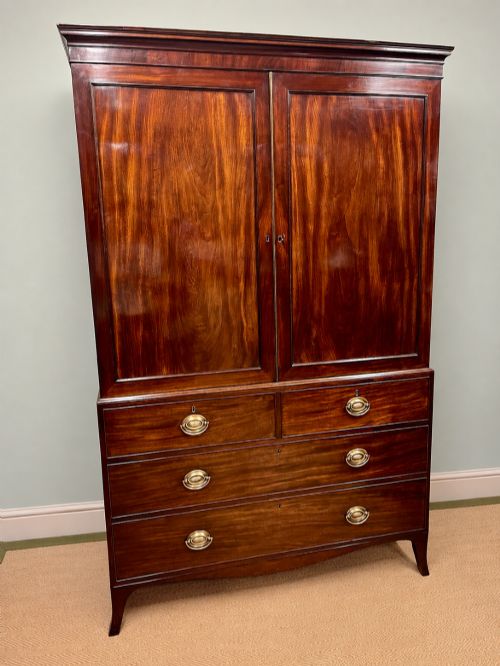
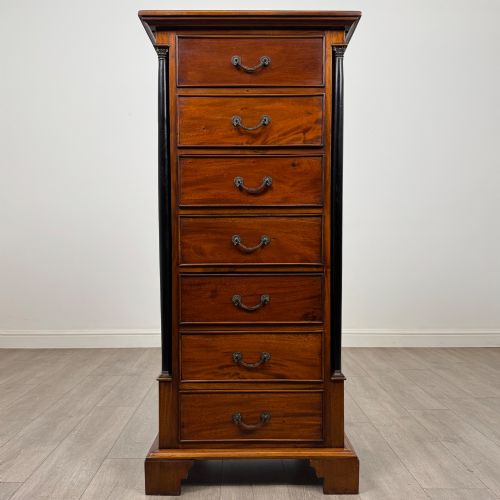
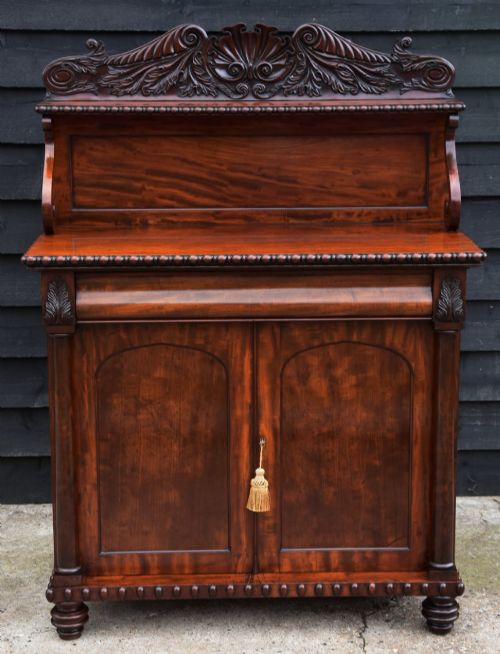
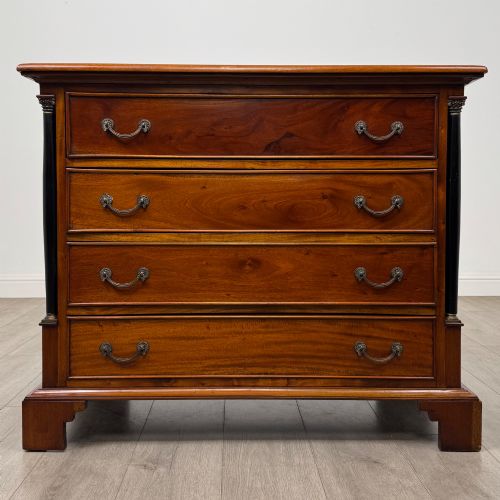
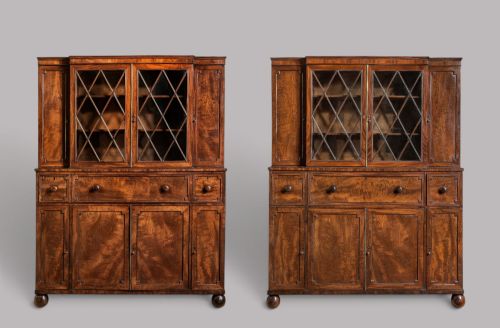
The material selection leans heavily towards figured timbers such as mahogany and rosewood, alongside painted pine and yew wood. Pieces range from modest bedside chests and low cupboards to monumental breakfront glazed bookcases and tall wardrobes.
While authentic Regency pieces dominate the aesthetic, revival items from the Edwardian period and the early twentieth century also appear. These domestic containers reflect both formal entertaining spaces and practical country house utility.
Quality and Distinction
The distinction between tiers of craftsmanship lies in the selection of timber veneers and the precision of decorative flourishes like blind fretwork cornices. Superior examples display thoughtful grain matching and integrated brass work that harmonises with the primary wood.
Proportion and structural balance separate standard utility items from pieces attributed to premier workshops. Refined turning on legs, precise joinery in drawer construction, and original hardware elevate the standing of a cabinet.
Periods represented span from George III and Regency eras through Victorian, Edwardian, and early twentieth-century revivals.
Gillows
The Regency Storage Cabinet Glossary
- Chiffonier
- A compact sideboard or low cabinet featuring shelves or enclosed storage behind doors, often surmounted by a shallow gallery. This form became popular during the Regency period for holding dining silver or books.
- Linen Press
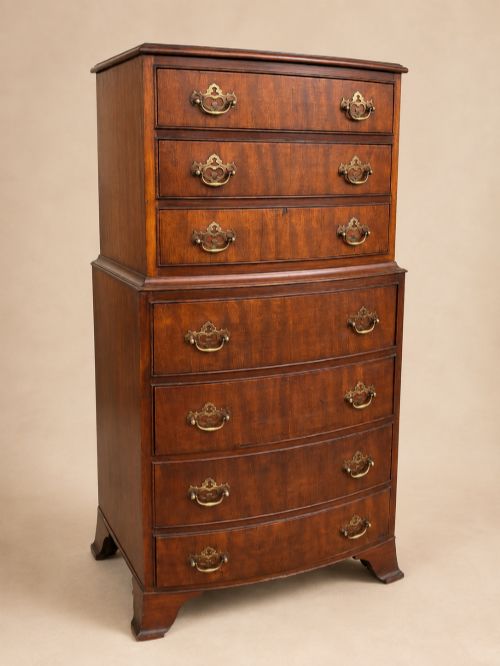
- A tall piece of furniture featuring upper sliding trays or shelves enclosed by doors, positioned above a chest of base drawers. These items were essential for storing folded household textiles.
- Bowfront
- A convex curved cabinet front that projects outward in a smooth arc. This curved profile softens the linear geometry of a room.
- Goncalo Alves
- A dense exotic hardwood sometimes utilised for cabinet making, valued for its striking striped grain pattern. It provides a distinctive alternative to standard mahogany.
- Grille
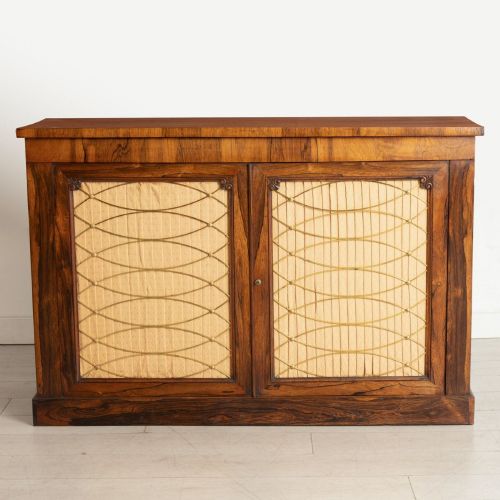
- A decorative wire mesh fitted into cabinet doors in place of glass, allowing ventilation while concealing contents. These brass or metal screens add textural contrast to timber surfaces.
Regency Storage Cabinet: Frequently Asked Questions
What is a regency storage cabinet used for?
These pieces provide concealed storage for books, linen, and household items while serving as a decorative surface for lamps and ornaments. Their enclosed cupboards and drawers help maintain tidy living spaces.
Historically, specific forms served designated functions, such as linen presses for textiles and chiffoniers for dining accessories. Today, they adapt easily to modern living rooms and hallways as statement storage.
How do I identify a genuine period piece?
Examine the secondary timbers inside drawers and at the back of the cabinet, as period makers typically used native pine or oak alongside primary mahogany. Construction methods such as hand-cut dovetails indicate earlier manufacturing dates.
Stylistic markers like brass grille work, flame mahogany veneers, and specific proportions help distinguish authentic Regency items from later Georgian style revivals.
Where should I place a chiffonier?
A chiffonier fits naturally against a dining room or drawing room wall, echoing the placement of larger sideboards. Its compact footprint also suits narrow hallways and landings.
The low profile of these cabinets allows art or mirrors to be hung comfortably above them without overcrowding the wall space.
How do I care for rosewood furniture?
Keep rosewood cabinets away from direct sunlight and heat sources to prevent timber shrinkage and veneer lifting. Regular dusting with a soft, dry cloth preserves the natural lustre of the polished surface.
Occasional application of appropriate wax feeds the dense wood and maintains its deep colour without building up heavy residues.