




Regency Standing Glass
Regency standing glass describes large floor-standing mirrors and display pieces designed to reflect light and anchor a room.
Regency Standing Glass
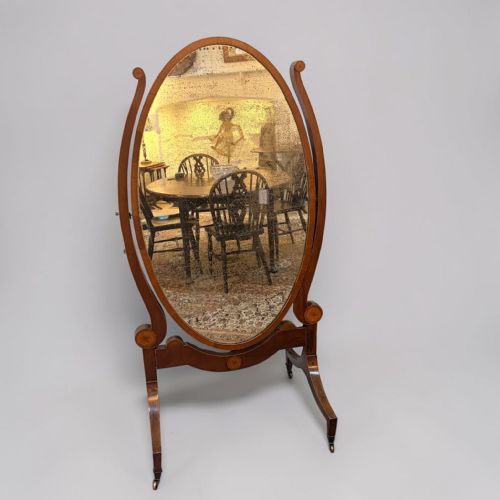
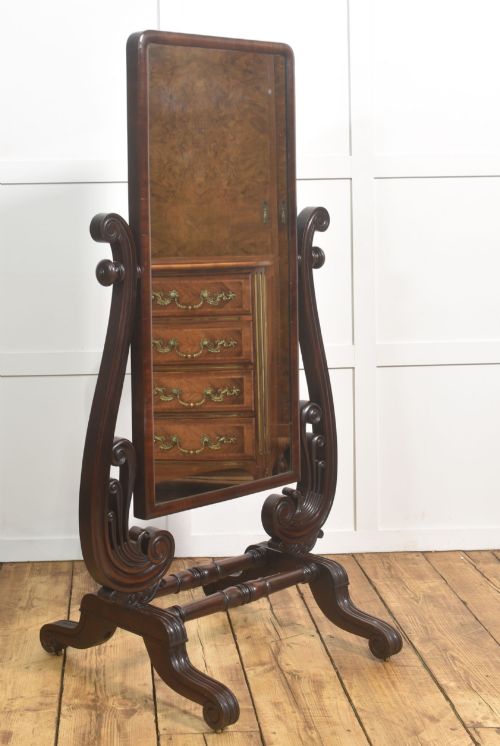
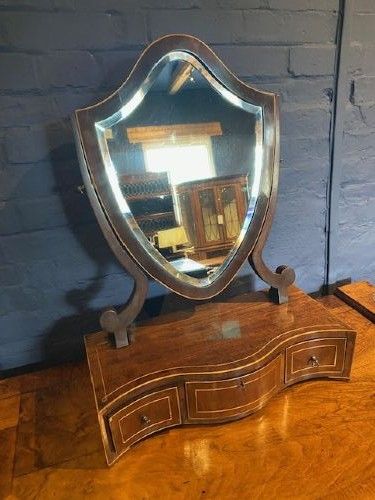
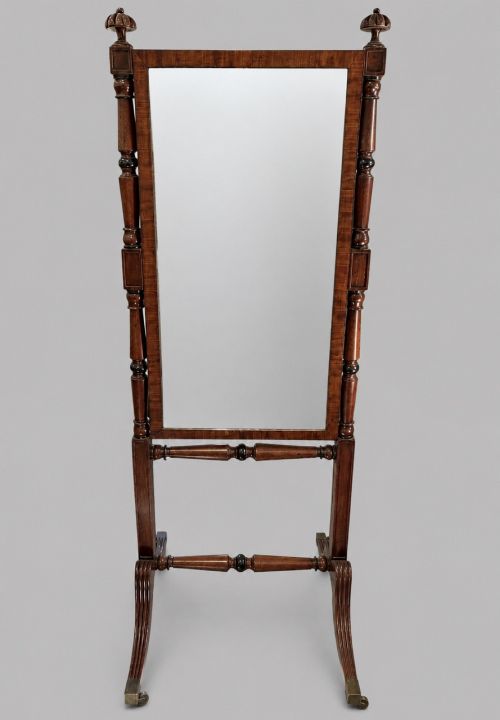
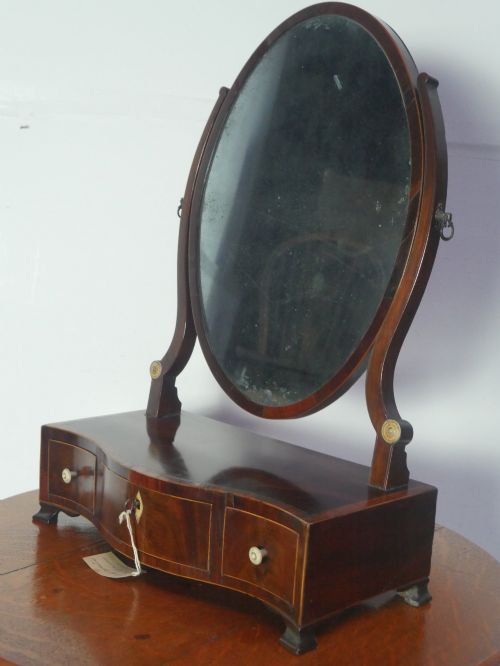
When you search for regency standing glass, you encounter substantial cheval mirrors and tall dressing glasses alongside specialised stands for glass and silver. The pieces date primarily from the Regency, Georgian and Victorian eras, reflecting the high domestic standards of those periods.
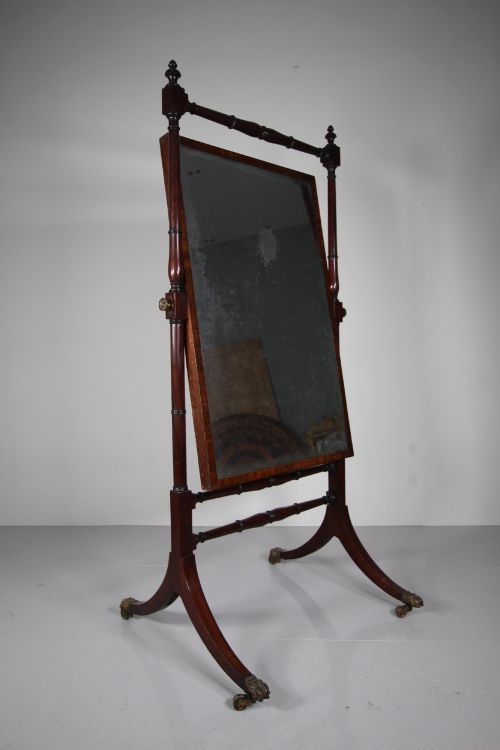
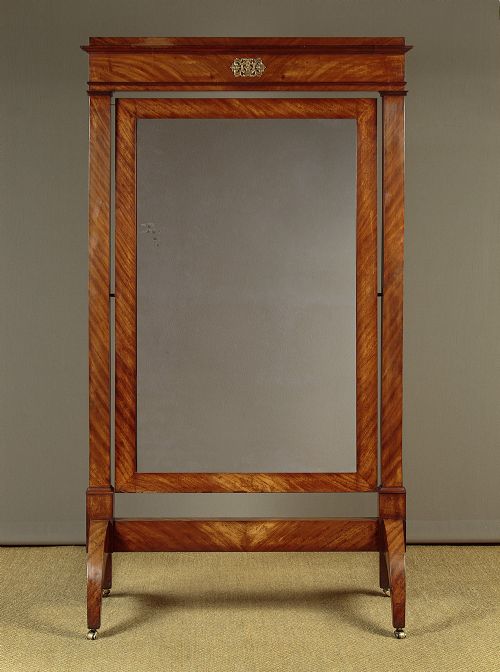
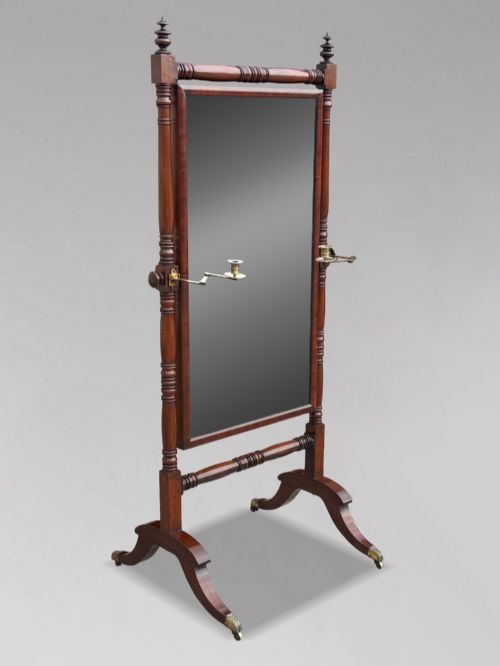
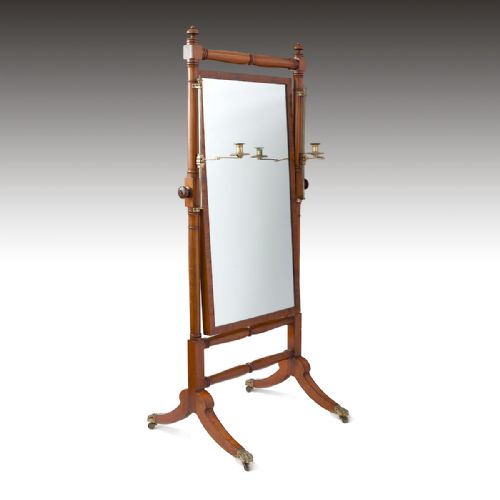
Mahogany cheval mirrors dominate the selection, often featuring swing frames mounted on sturdy upright supports. You also find rosewood and satinwood writing desk sets, cut glass centrepiece bowls, and silver cruet sets resting on dedicated stands.
Country house proportions appear frequently among the larger cheval mirrors, sometimes associated with makers such as Gillow. Smaller table-standing glass items, including epergnes and tazzas, provide alternative expressions of the form.
How they were made
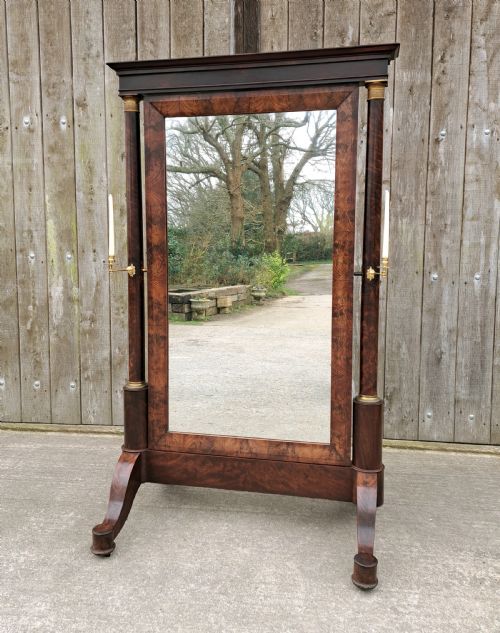
Cabinet makers utilised dense timbers such as mahogany, rosewood and burr maple to build the substantial frames required to support heavy mirror glass. Brass fittings, including articulated candle holders and castors, added both functional mobility and decorative contrast to the timber structures.
Glass production relied on heavy cutting techniques to create deep facets on bowls, decanters and tazzas, while silversmiths shaped sterling silver and Old Sheffield plate for inkstands and cruet frames.
Several mirrors arrive equipped with brass articulated candle holders, ensuring one could check an outfit while menaced by flickering tallow.
What varies in quality
The weight and clarity of the mirror glass or cut glass dictate the baseline standard of a piece, alongside the crispness of any brass mountings. Timber selection matters profoundly, with figured mahogany and finely grained rosewood elevating the visual presence of a standing glass.
Proportion and structural joinery distinguish workshop standards, particularly in how smoothly a cheval mirror tilts on its pivots or how securely a stand holds its glass vessels.
Gillows·Charles Thomas Fox
The Regency Standing Glass Glossary
- Cheval mirror
- A large standing mirror mounted in a frame that allows it to swing or tilt. These freestanding glasses appeared frequently in nineteenth-century dressing rooms.
- Cruet set
- A matched group of glass bottles or cruets held in a metal stand for condiments. They frequently incorporate silver or Old Sheffield plate frames.
- Tazza
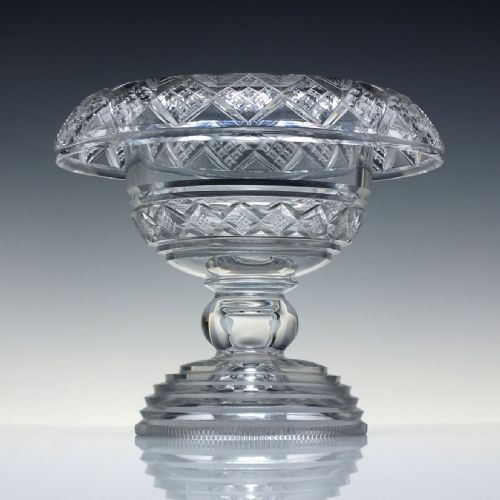
- An ornamental shallow bowl or cup mounted on a pedestal foot. Large glass examples served as centrepieces on formal dining tables.
- Teapoy
- A small stand or chest for holding tea varieties, sometimes accompanied by internal glass mixing bowls. They date predominantly from the Georgian and William IV periods.
- Old Sheffield plate
- A composite material formed by fusing a thin sheet of silver to a thicker copper base. It provides the durability of copper with the appearance of solid silver.
Regency Standing Glass: Frequently Asked Questions
Where were cheval mirrors placed?
Cheval mirrors stood in bedrooms and dressing rooms to provide a full-length reflection for checking attire. Their mobility allowed users to position them near windows for optimal natural light.
In larger country houses, they also anchored empty corners of dressing chambers and boudoirs as substantial decorative furnishings.
How do I date a mahogany mirror?
Dating relies on timber choice, construction joints and the composition of the mirror plate itself. Earlier pieces from the Georgian and Regency periods utilise dense, well-figured mahogany and subtle brass hardware.
Later Victorian interpretations often display heavier proportions and machine-assisted turning on the upright supports.
What is an epergne used for?
An epergne functions as a large decorative centrepiece for a dining table, featuring a central bowl with branching arms for smaller baskets or glass dishes. Hosts used them to display fruit, sweetmeats or flowers during formal meals.
Cut glass and silver examples from the early nineteenth century caught the candlelight during evening dining.
Can I adjust a tilting mirror?
Most cheval mirrors use brass thumbscrews or pivot pins set into the upright supports to control the tension of the swinging glass frame. Tightening these fittings holds the mirror plate at the desired angle.
Original hardware should move smoothly without excessive play in the frame.