

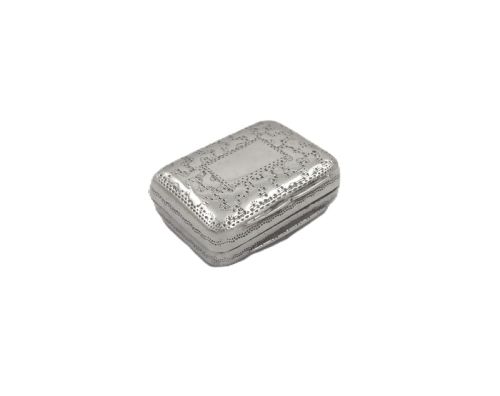


Regency Silver Salts
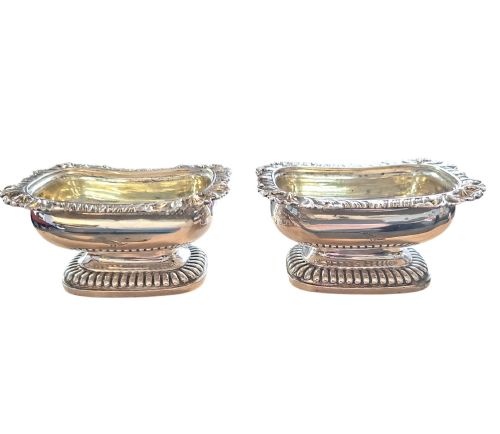
Regency silver salts are essential Georgian dining accessories, combining bright sterling metal with rich silver-gilt interiors to hold individual portions of salt at the table.
Regency Silver Salts
Regency silver salts encompass individual table salts and salt cellars made during the Georgian era, often appearing as pairs or matched sets from the early nineteenth century. These small tableware vessels sat upon dining tables to hold seasoning before the widespread adoption of domestic salt shakers. The examples seen on this page span the Neoclassical taste of the Regency period through to William IV.
How they were made
Silversmiths formed these vessels using sterling silver, hammering, casting, and soldering the metal into robust shapes suitable for daily dining use. Many interiors receive a layer of gold plate or silver-gilt, which prevents the salt from tarnishing and pitting the underlying silver.
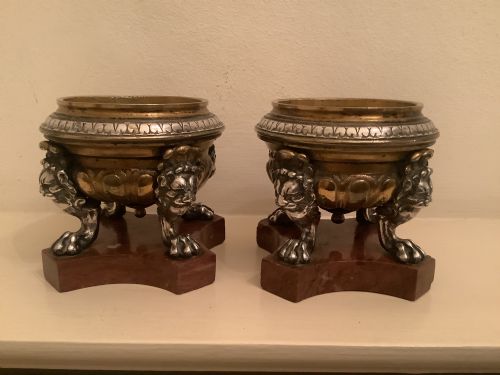
Makers integrated decorative elements reflecting the Neoclassical taste of the period, sometimes combining the silver with materials like cut glass, bronze, marble, and agate as seen in related boxes and tazzas.
Regency Silver Salts Retail Price Guide 2026
Typical asking prices for regency silver salts among the pieces listed under this phrase on Sellingantiques today, from the lower quarter to the upper quarter. They describe what is for sale here now, not the wider market.
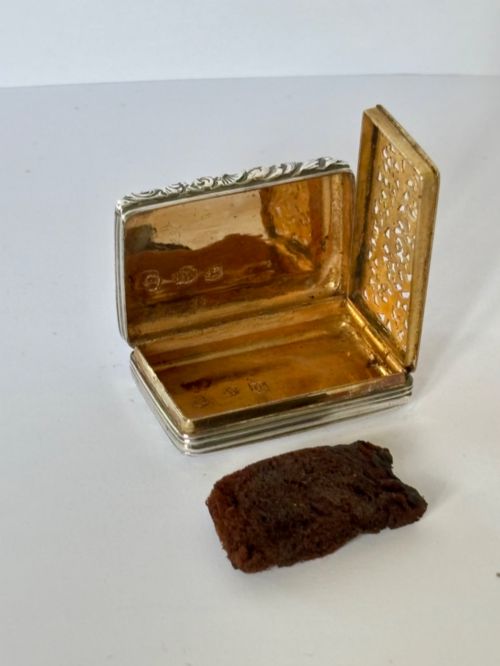
Some nineteenth-century boxes include tiny internal sponges that once held aromatic vinegar for pocket refreshment.
What varies in quality
Quality in these pieces rests upon the crispness of the silversmith's work, the weight of the sterling metal, and the preservation of the original silver-gilt interior. Maker marks stamped into the silver distinguish standard production from the exceptional output of prominent workshops.
The sophistication of the design dictates distinction, moving from plain functional vessels to elaborate matched sets accompanied by specialist makers or integrated decorative stones.
Rebecca Emes & Edward Barnard I·Joseph Willmore·John Bettridge·Paul Storr
The Regency Silver Salts Glossary
- Silver-gilt
- Sterling silver that has been coated with a thin layer of gold on the surface. This technique was routinely applied to the interiors of salt cellars to prevent corrosion.
- Vinaigrette
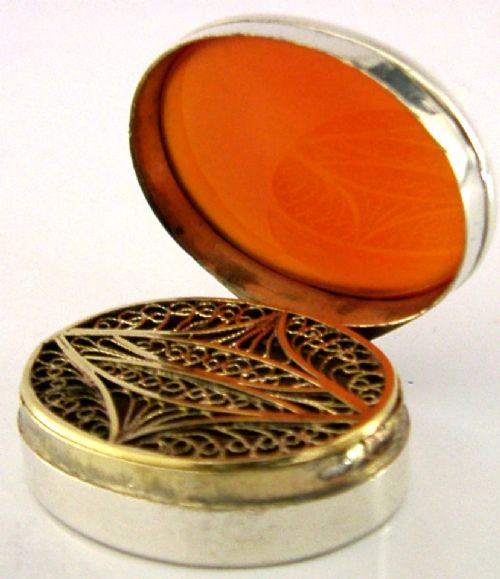
- A small pocket box fitted with a pierced internal grille, designed to hold a sponge soaked in aromatic vinegar. These portable containers date from the Georgian period.
- Cruet set
- A matched assembly of glass bottles or silver containers housed in a frame for holding condiments at the table. These sets often incorporate mustard pots and salt bottles.
- Tazza
- A small ornamental cup or plate raised on a stem and foot, used for display or serving. Examples appear in bronze and silvered metal during the nineteenth century.
Regency Silver Salts: Frequently Asked Questions
What is a regency silver salt used for?
These small open vessels held ground salt at the formal dining table before shaker bottles became common.
Dinners used small spoons or fingers to take a pinch of salt from the open cellar to the side of the plate.
Why do silver salts have gold inside?
Silversmiths applied a gold wash, known as silver-gilt, to the interior bowls of salt cellars to protect the sterling silver.
Table salt is corrosive and will rapidly pit and discolour untreated silver if left in direct contact.
How do I identify a Georgian silver salt?
Identification relies upon reading the hallmarks stamped into the metal, which record the assay office, date letter, and maker's mark.
Stylistic cues such as Neoclassical motifs and heavy sterling construction also point to the early nineteenth-century period.
What is the difference between a salt and a cruet set?
An individual salt is a single vessel meant to hold a portion of seasoning at a diner's place.
A cruet set brings together multiple bottles and containers within a single frame to serve various condiments together.