



Regency Silhouette Shadow Picture
A regency silhouette shadow picture captures profile likenesses in ink or cut paper, offering an intimate glimpse into nineteenth-century life.
Regency Silhouette Shadow Picture
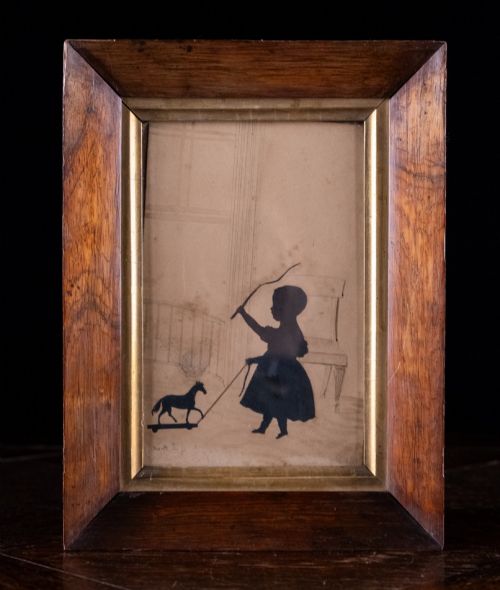
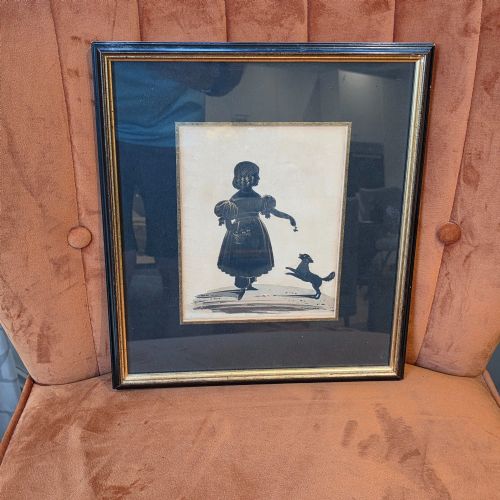
When you search for a regency silhouette shadow picture, you encounter profile portraits from the nineteenth century depicting individuals and children with their animals. These works capture likenesses through cut paper, ink, and painted details on glass, originating primarily from the Georgian, Regency, and Victorian periods.
The most common examples on this page are framed artworks and wall art featuring standing gentlemen, ladies, and children accompanied by dogs or horses. Many are housed in rosewood or maple frames, sometimes accented with gold leaf or brass fittings.
Makers recorded in these works include notable profile artists such as William James Hubard, Augustin Edouart, and J. Deacon. Their pieces range from delicate cut paper and watercolour compositions to gilded portraits dated from around eighteen hundred through the eighteen thirties.
How they were made
Mounting typically involved timber frames fashioned from rosewood or maple, often enclosing glass to protect the delicate paper or painted surface within. Brass hangers and gold leaf accents completed the presentation of these wall-hung portraits.
Regency Silhouette Shadow Picture Retail Price Guide 2026
Typical asking prices for regency silhouette shadow picture among the pieces listed under this phrase on Sellingantiques today, from the lower quarter to the upper quarter. They describe what is for sale here now, not the wider market.
Listings feature paper, glass, ink, brass, wood, gold leaf, papier-mache, and rosewood across the nineteenth century.
What varies in quality
Differentiation in these pieces rests upon the precision of the cutting or brushwork, alongside the presence of known maker signatures or attributions. Finer examples display intricate detail in costume and posture, elevating simple profiles into characterful studies.
The choice of framing material and original mounting contributes significantly to the character of the work. Rosewood surrounds and period glass preserve the integrity of the paper and painted surfaces much better than later replacements.
William James Hubard·Augustin Edouart·J. Deacon
The Regency Silhouette Shadow Picture Glossary
- Silhouette
- A portrait profile filled in with a solid dark colour, typically black, against a lighter background. This form relies entirely on outline and contour to capture a likeness.
- Cut Paper
- A technique where the artist uses scissors or a knife to snip the silhouette directly from paper. This method requires steady hands and immense precision to achieve fine details in hair and clothing.
- Gilded
- Embellished with gold leaf or gold paint applied to the surface. In these portraits, gilding often highlights buttons, jewellery, or the border of the picture.
- Portrait Miniature
- A small-scale painting or silhouette designed for intimate viewing. These works were frequently framed for hanging on domestic walls or keeping on a desk.
- Regency
- A period in British history spanning the early nineteenth century defined by distinct architectural and artistic styles. Pieces from this era often feature classical restraint combined with elegant decorative touches.
Regency Silhouette Shadow Picture: Frequently Asked Questions
What is a regency silhouette shadow picture?
A regency silhouette shadow picture is a nineteenth-century profile portrait made from cut paper, ink, or painted glass. These works capture the likenesses of individuals, children, and pets.
Artists mounted these profiles in timber frames made from rosewood or maple, often finishing them with brass and gold leaf details.
Who made these silhouette portraits?
Professional profile artists and miniaturists created these works during the Georgian, Regency, and Victorian eras. Notable practitioners include Augustin Edouart and William James Hubard.
Many pieces also bear the signatures or attributions of lesser-known artists working in studios and galleries across Britain.
How were these pictures displayed?
These portraits were designed to hang on domestic walls as framed artwork. Their modest size made them suitable for grouping together in private parlours.
Original frames often incorporated rosewood or maple surrounds with glass to protect the delicate paper and painted surfaces.
How do I identify the period?
Dating relies on the costume of the sitter, the style of the frame, and any recorded dates or signatures on the work. Regency pieces often feature distinct period attire from the early nineteenth century.
Materials like rosewood frames and early glass help confirm the nineteenth-century origins of the piece.