


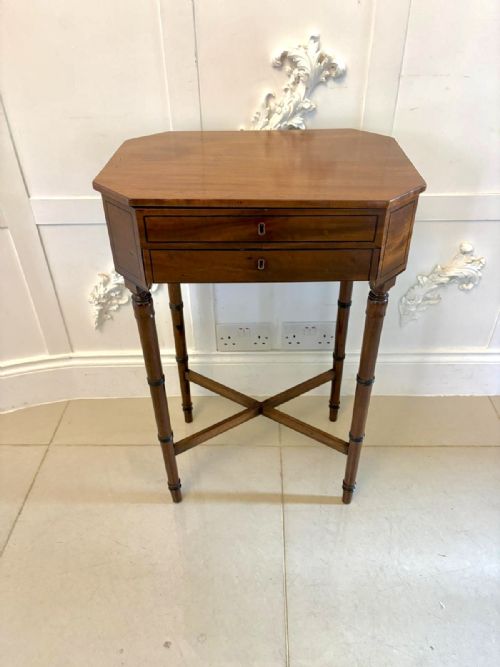
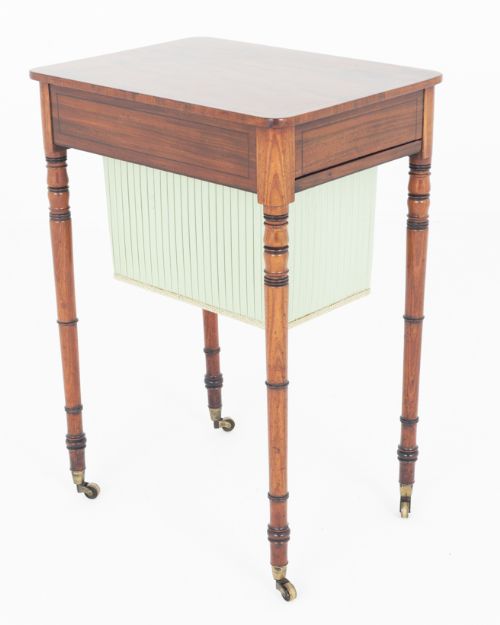


Regency Sewing Basket
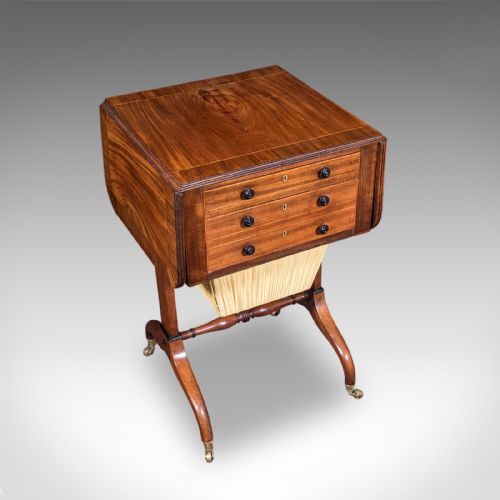
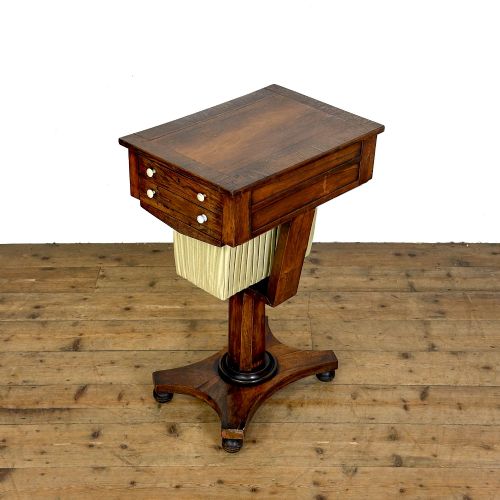
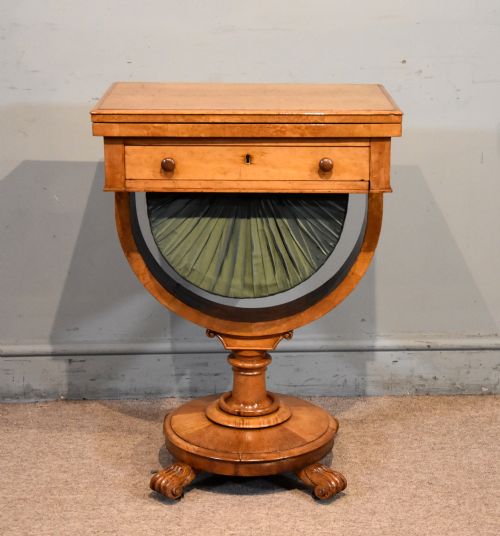
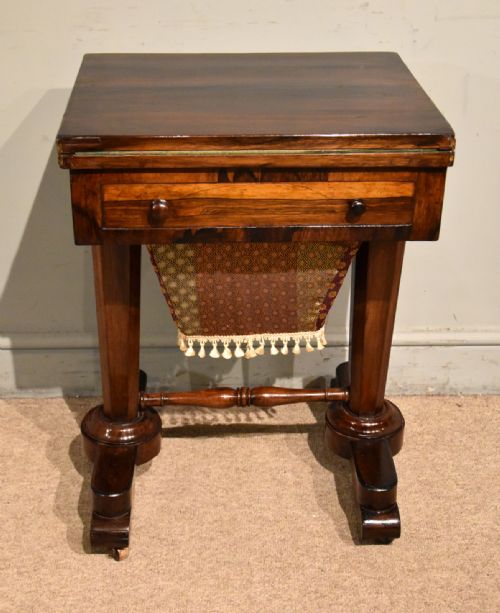
A regency sewing basket brings together fine cabinet-making and functional needlework storage from the early nineteenth century.
Regency Sewing Basket
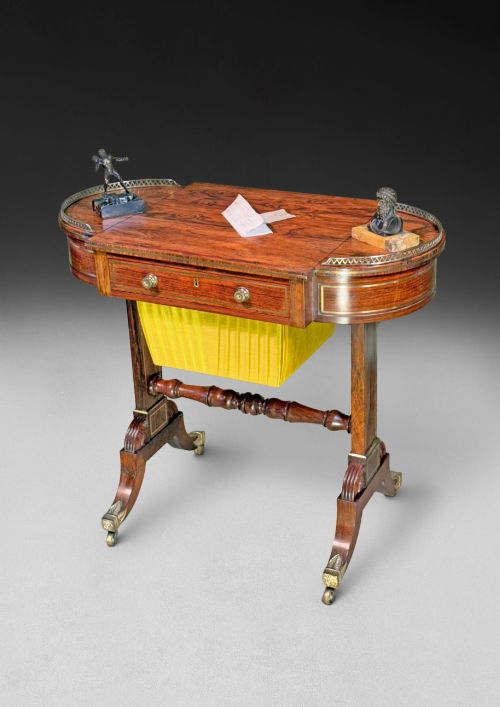
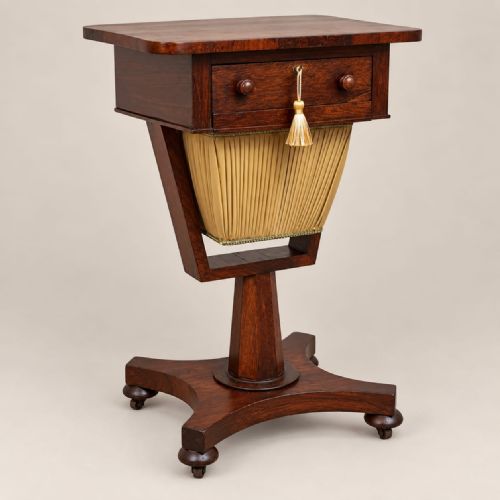
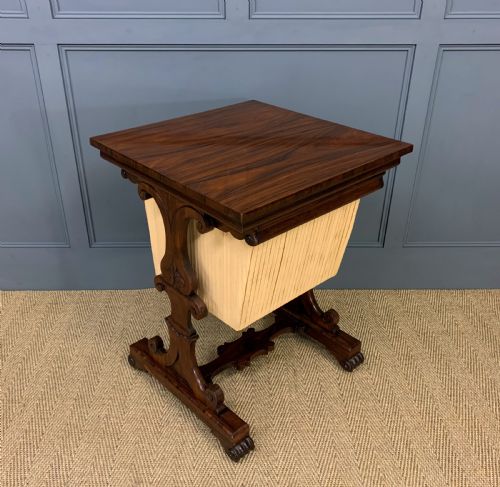
A regency sewing basket encompasses specialised work tables, drop-leaf stands, and fitted boxes designed for domestic needlework during the Georgian and Regency periods. These pieces frequently double as games or writing tables, combining compartments and fabric bags beneath the surface to hold threads, lace, and implements.
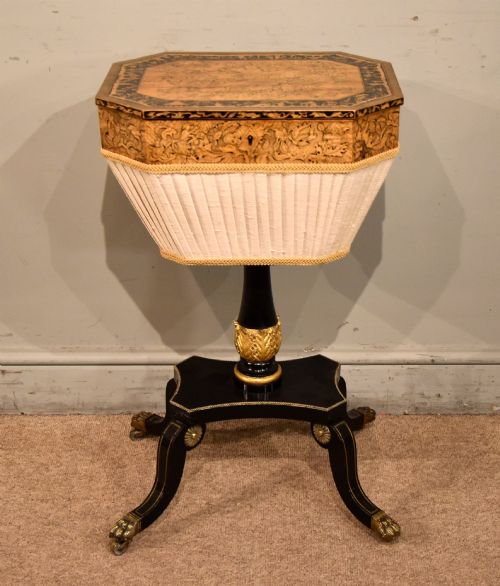
The versions most commonly met on this page are rosewood and mahogany work tables originating from the nineteenth century, often featuring drop leaves and pedestal bases. Pieces range from modest mahogany stands to elaborate rosewood tables inlaid with brass or finished with penwork decoration.
Examples from this era reflect the refined tastes of English country houses, where ladies required portable or static furniture tailored to pursuits like embroidery and sewing. Surviving items demonstrate how craftsmanship served both social display and practical utility in the drawing room.
Materials and construction methods
Makers utilised dense timbers such as mahogany and rosewood, alongside decorative accents in boxwood, brass, and ebonised wood. Surfaces often display finely figured grain, sometimes enhanced by contrasting stringing, marquetry, or intricate penwork designs.
Structural finesse appears in lyre ends, pedestal pillars, and drop-leaf mechanisms that allowed tables to adapt to smaller spaces. Interior compartments and suspended silk or fabric bags required careful joinery to house delicate sewing tools safely.
Specialised techniques such as Tunbridge Ware micro-mosaic work and brass inlay mark out the more ambitious pieces. These methods required patient hand-fitting of tiny wood blocks or metal strips into the primary timber ground.
Regency Sewing Basket Retail Price Guide 2026
Typical asking prices for regency sewing basket among the pieces listed under this phrase on Sellingantiques today, from the lower quarter to the upper quarter. They describe what is for sale here now, not the wider market.
Listings feature woods including mahogany, rosewood, maple, boxwood, and pollard oak, alongside decorative brass inlay and silk elements.
Distinctions in craftsmanship and design
Quality separates simple utilitarian furniture from pieces designed by prominent workshops through the crispness of the carving, the selection of figured veneer, and the integration of secondary functions like folding games boards. The harmony of proportions between the upper cabinet and the supporting pedestal or legs dictates visual success.
The execution of decorative elements, from brass stringing to penwork illustrations, defines the grade of a piece. Finer examples retain original silk bags, interior fittings, and working locks with matching keys, whereas lesser items often show later replacements or simplified internal layouts.
Gillows of Lancaster
The Regency Sewing Basket Glossary
- Work table
- A small domestic table fitted with drawers and a fabric bag for holding needlework supplies. It served as a functional piece for ladies in the drawing room.
- Penwork
- A decorative technique using Indian ink on wood to create intricate monochrome designs resembling engravings. It frequently appears on boxes and small tables from the Regency era.
- Tunbridge Ware
- Woodworking characterised by mosaic patterns made from many tiny pieces of naturally coloured timbers. It takes its name from the Kent town where craftsmen specialised in the craft.
- Drop leaf
- A hinged flap on a table that can be raised to extend the surface or dropped when space is required. These flaps are typical of compact nineteenth-century design.
- Pollard oak
- Timber taken from trees that have been pollarded, producing wood with a dense, mottled grain pattern. Cabinet-makers valued it for its rich decorative appearance.
Regency Sewing Basket: Frequently Asked Questions
What is a regency sewing basket?
A regency sewing basket refers to specialised work tables, boxes, and stands created during the early nineteenth century to hold needlework equipment. These items combined practical storage with elegant furniture design for the home.
They often include fitted interiors for spools and pins, alongside suspended fabric bags to collect scraps of silk and wool while ladies worked.
How were these tables used originally?
Gentlewomen used these tables in the drawing room for embroidery, lacemaking, and mending. Many pieces doubled as writing desks or games tables for cards and chess.
Their movable leaves and compact footprints allowed them to be placed beside chairs or windows where natural light was best for detailed handwork.
How do I care for a rosewood work table?
Keep nineteenth-century rosewood and mahogany furniture away from direct sunlight and heat sources to prevent the wood and veneers from drying out. Regular dusting with a dry, soft cloth preserves the polished surface.
Avoid using modern liquid polishes or silicone sprays, which can build up and dull the natural patina over time.
How can I tell a Regency piece from a Victorian one?
Regency pieces, dating roughly from the early decades of the nineteenth century, tend to feature classical restraint, architectural lines, and delicate brass or penwork details. Victorian examples from later in the century often display heavier proportions and more exuberant carving.
Examining the secondary woods inside drawers and the style of the turning helps clarify the period of manufacture.