

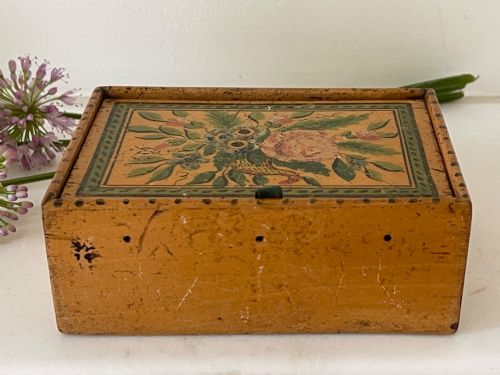


Tunbridge Ware Sewing Box
A tunbridge ware sewing box brings together precise wood mosaic and nineteenth-century needlework in a single compact receptacle.
Tunbridge Ware Sewing Box
A tunbridge ware sewing box is typically encountered as a Victorian or Georgian desk accessory, often formed as a work box, ladies box, or sewing basket.
The pieces on this page span the nineteenth century, including Regency examples and items dated from the 1840s to 1880, alongside earlier painted circular sewing pannier boxes.
Most items combine timber construction with intricate mosaic or marquetry panels depicting geometric patterns or floral motifs, housing fitted compartments for threads and pins.
Materials and Construction
Craftsmen built the carcases using woods such as walnut, rosewood, and mixed hardwoods, occasionally applying paint or varnish to early circular forms.
The distinctive surface decoration relies on thousands of tiny wood blocks glued together in bundles and sliced across the grain to create mosaic tile pictures.
Internal fittings incorporate silk linings and brass hardware, while some later examples house mechanical sewing machines or pin cushions.
Tunbridge Ware Sewing Box Retail Price Guide 2026
Typical asking prices for tunbridge ware sewing box among the pieces listed under this phrase on Sellingantiques today, from the lower quarter to the upper quarter. They describe what is for sale here now, not the wider market.
Listings feature walnut, rosewood, and mixed hardwoods combined with silk linings and brass elements across nineteenth-century periods.
Assessing Quality
Quality rests upon the complexity and fineness of the mosaic tesserae, where smaller individual wood elements demand greater skill from the maker.
The survival of internal fittings, silk components, and original varnish influences the integrity of each box.
Proportion and timber selection, particularly figured walnut or rosewood carcases, separate standard utility pieces from more ambitious caskets.
Edmund Nye·Faudels of London
The Tunbridge Ware Sewing Box Glossary
- Tunbridge Ware
- Woodworking characterised by mosaic surface decoration made from many small blocks of naturally coloured timbers. It originated in Kent during the eighteenth century.
- Marquetry
- The art of applying pieces of veneer to a structure to form decorative patterns and pictures. It differs from mosaic by using thin sheets rather than bundled rods.
- Work Box
- A nineteenth-century container designed to hold sewing implements, threads, and needlework tools. These boxes frequently feature lift-out trays and fitted compartments.
- Pannier Box
- A lidded sewing or basket container, often circular or oval in shape, used for carrying lighter needlework items. Early versions employ painted decoration before mosaic techniques dominated.
Tunbridge Ware Sewing Box: Frequently Asked Questions
What is inside a tunbridge ware sewing box?
These boxes typically contain lift-out wooden trays divided into small compartments for storing spools, needles, and bodkins. Many retain original silk linings and fitted pin cushions.
Some examples include specialised spaces for writing implements or integrated sewing machines from later Victorian periods.
How do I date a tunbridge ware box?
Dating relies on timber choices, box forms, and the style of the mosaic work. Georgian and Regency pieces often feature painted decoration or simpler geometric banding.
Victorian examples tend to utilise burr walnut or rosewood carcases with highly detailed floral or architectural mosaic panels.
Are all tunbridge boxes made in Kent?
While the technique originated in and around Tunbridge Wells, related decorative woodware was produced by various makers across England during the nineteenth century. Retailers such as Faudels also distributed fitted boxes.
Attribution generally depends on construction methods and the specific patterns used in the wood mosaic panels.
How should I care for a wooden sewing box?
Keep the box away from direct sunlight and steady heat sources to protect the delicate wood mosaic and nineteenth-century varnish. Maintaining stable room humidity prevents the timber carcase and tiny tesserae from shrinking.
Clean surfaces gently with a dry, soft cloth without applying modern liquid polishes or oils.