


Regency Scroll Chairs
Regency scroll chairs combine sweeping timber arms with disciplined proportion, offering both formal elegance and surprisingly generous support.
Regency Scroll Chairs
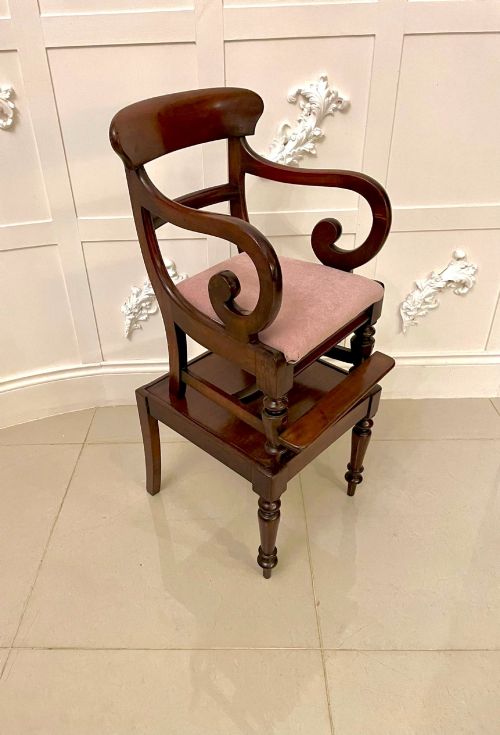
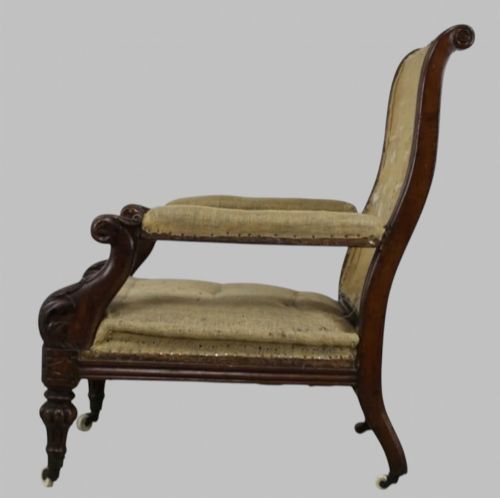
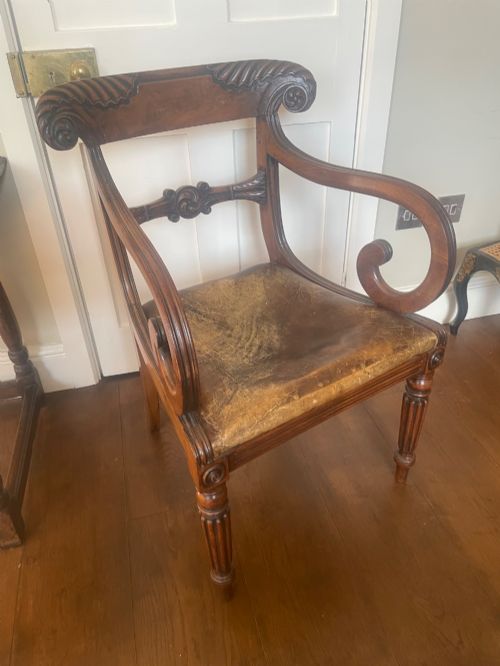
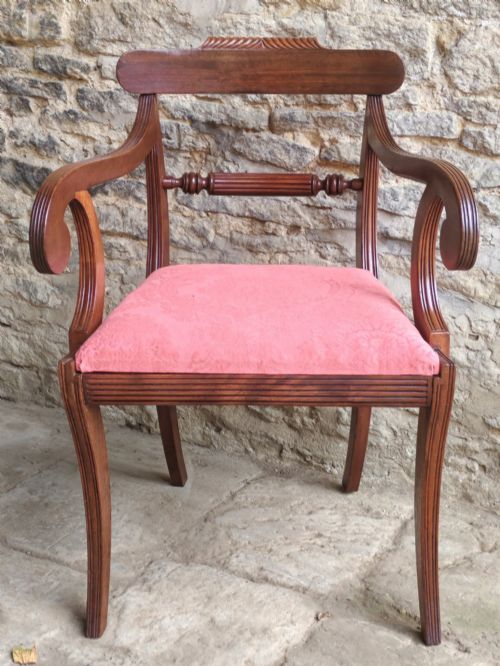
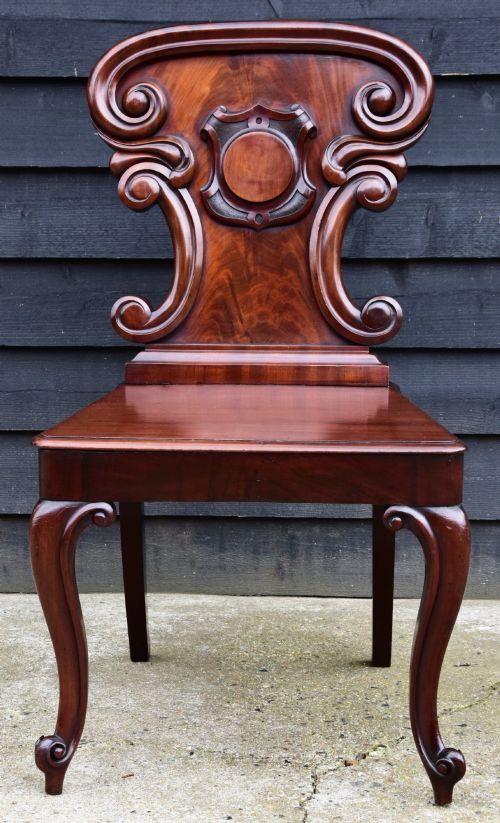
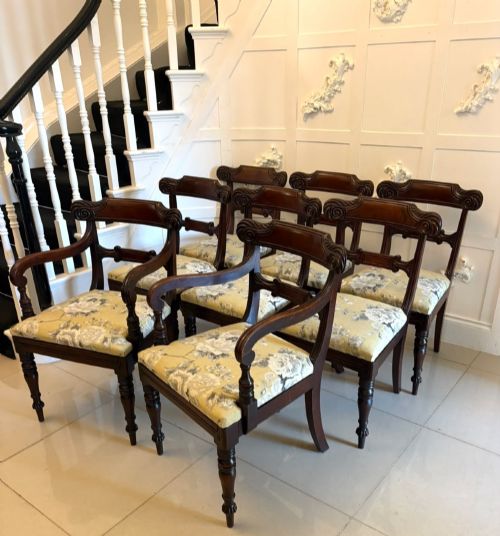
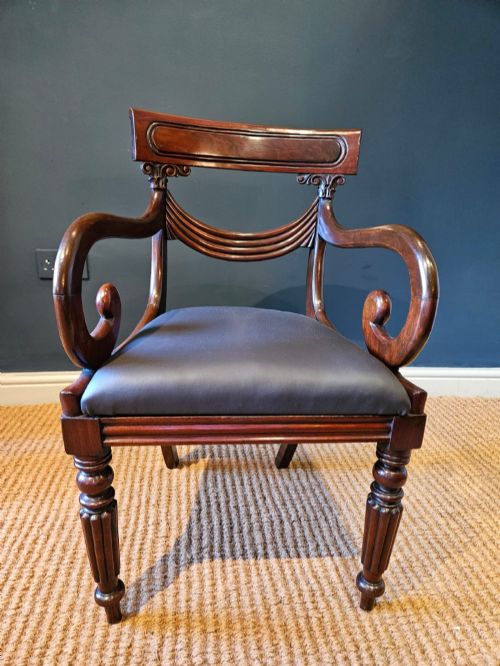
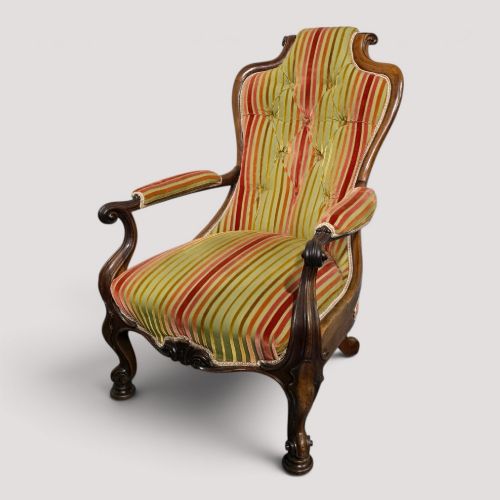
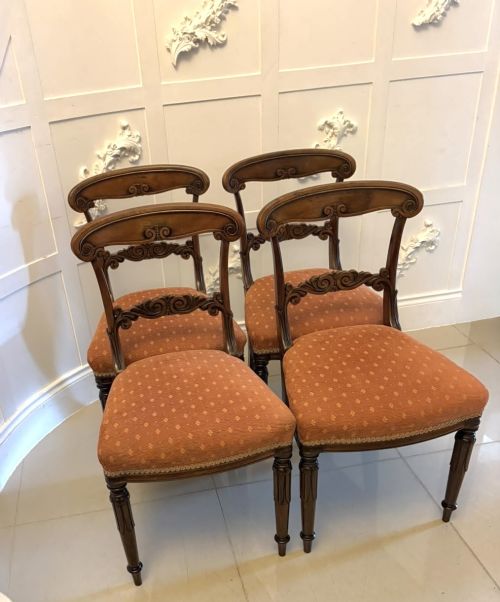
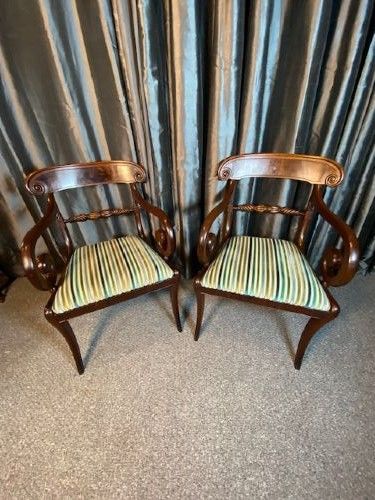
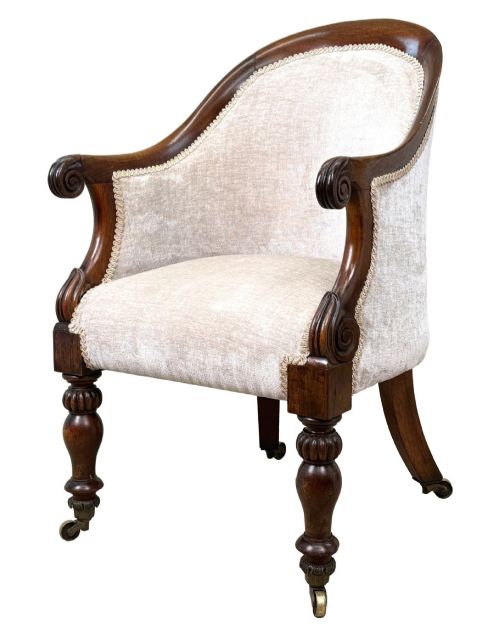
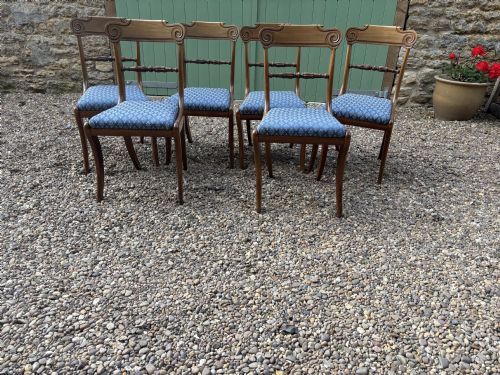
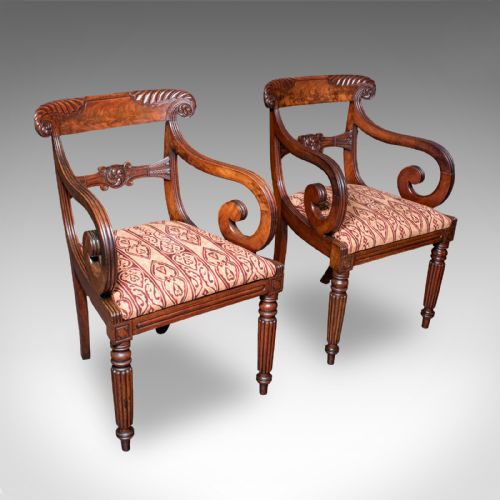
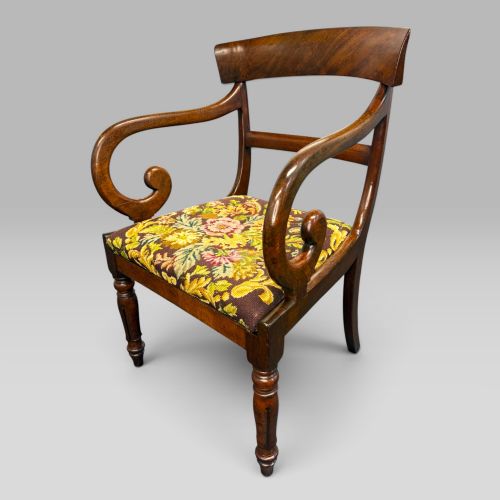
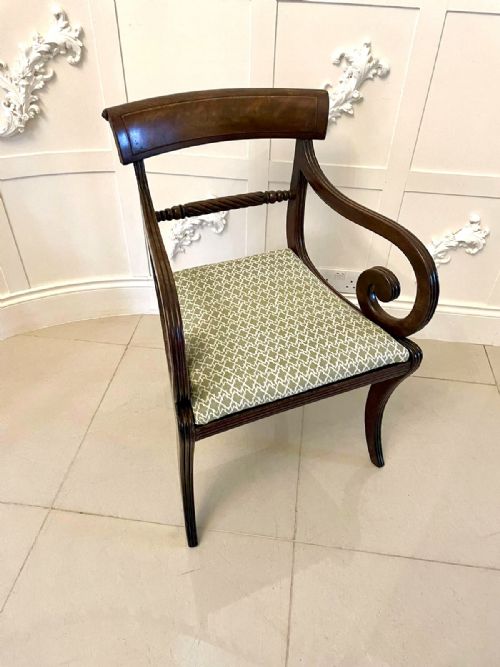
Regency scroll chairs encompass dining chairs, library armchairs, and hall seats originating primarily from the Regency and William IV periods. These pieces are characterised by their distinctive flowing arm terminals and robust timber frames designed for nineteenth-century reception rooms and dining spaces.
Dining sets and pairs of carvers appear frequently across these listings, alongside individual library armchairs and desk chairs. Mahogany and rosewood form the vast majority of these seating options, often shaped into sets or single statement pieces.
Materials and construction methods
Cabinetmakers utilised dense tropical hardwoods, predominantly solid mahogany and rosewood, chosen for their strength in supporting intricate curved scroll arms and sabre legs. Selected pieces incorporate brass inlay or brass mounts to accentuate the timber grain and linear design.
Upholstery fabrics, velvet, and leather complete the seating surfaces, secured over traditional webbing and stuffing within the frame. Joinery relies on precise tenon and mortise construction to maintain stability through centuries of daily use.
Regency Scroll Chairs Retail Price Guide 2026
Typical asking prices for regency scroll chairs among the pieces listed under this phrase on Sellingantiques today, from the lower quarter to the upper quarter. They describe what is for sale here now, not the wider market.
Listings feature mahogany and rosewood woods predominantly, spanning the Regency, William IV, and Victorian periods.
Distinctions in craftsmanship
Superior examples reveal themselves through the crispness of carved scrollwork on the arms and the selection of figured timber veneers. The fluidity of the line in a sabre leg or the precision of brass inlay separates standard production from exceptional workshop output.
Structural integrity of the timber frame and the retention of original upholstery foundations distinguish master-carved carvers and library chairs from later nineteenth-century adaptations or twentieth-century revival pieces.
Gillows
The Regency Scroll Chairs Glossary
- Carver
- An armchair, usually designed to sit at the head of a dining table, featuring supportive side arms. These items match the simpler side chairs in a dining set.
- Sabre leg
- A curved chair leg that tapers toward the foot, mimicking the shape of a cavalry sword. This form provides outward stability without heavy stretchers.
- Bergere
- An enclosed upholstered armchair with exposed wooden framing and cane or upholstered sides. It offers deep comfort for library and drawing-room use.
- Metamorphic
- Furniture designed to transform into another object, such as a library armchair converting into a set of steps. These pieces demonstrate clever nineteenth-century mechanical ingenuity.
Regency Scroll Chairs: Frequently Asked Questions
What defines a scroll arm?
A scroll arm curves outward and downward in a tight or sweeping spiral, providing a distinctive terminal point to the chair's support.
This architectural detail derives from classical antiquity and defines the silhouette of seating from the early nineteenth century.
How do I spot a genuine period piece?
Examine the timber patination, joint construction, and hand-carved details to determine age and authenticity.
Period chairs display traditional joinery methods and dense mahogany or rosewood timbers characteristic of nineteenth-century workshops.
Were these used at dining tables?
Many examples form part of larger dining sets, combining armchairs with side chairs for the head and sides of the table.
Single carvers also functioned as desk or reception chairs in grand libraries and morning rooms.
Can I use these chairs daily?
Solid hardwood construction and robust joinery allow these seats to handle regular daily use in contemporary homes.
Modern buyers often pair sturdy nineteenth-century frames with fresh upholstery fabrics suited to their interior scheme.