




Regency Scottish Mahogany Chest
These pieces of regency scottish mahogany chest bring together rich timbers and precise regional proportions for any room.
Regency Scottish Mahogany Chest
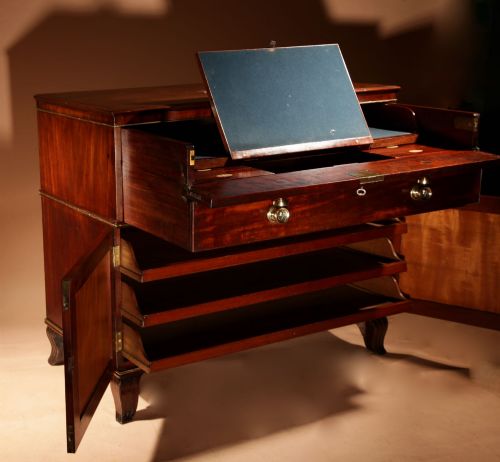
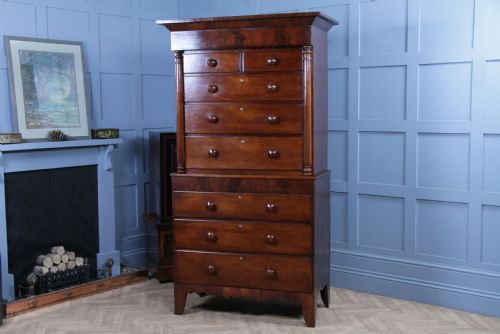
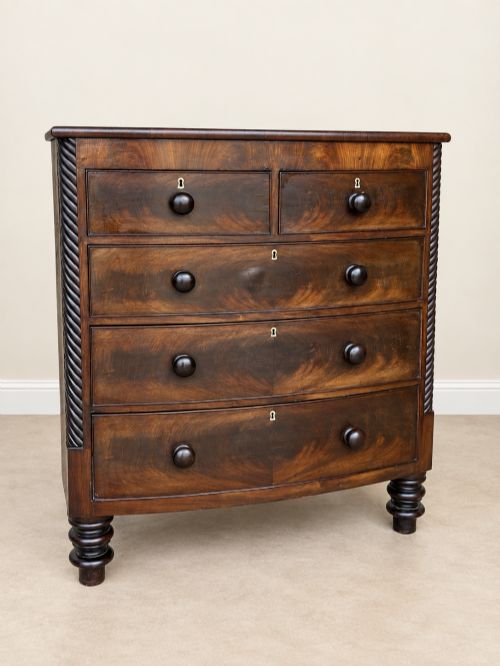
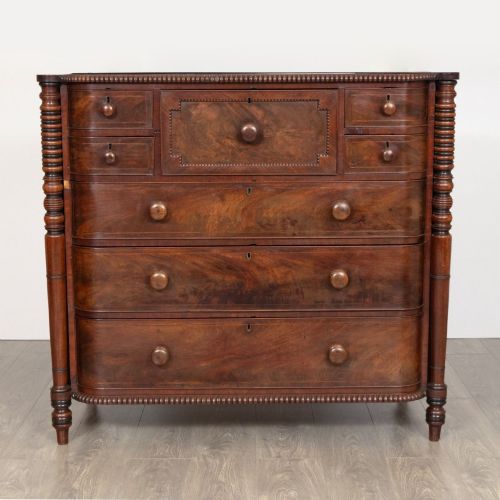
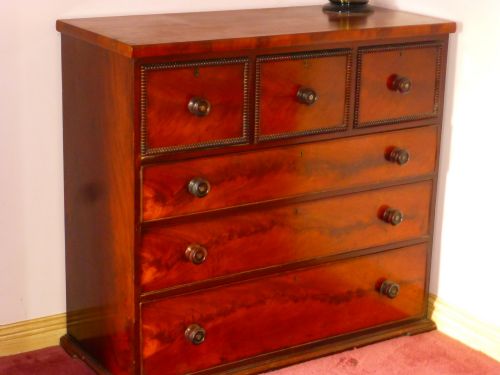
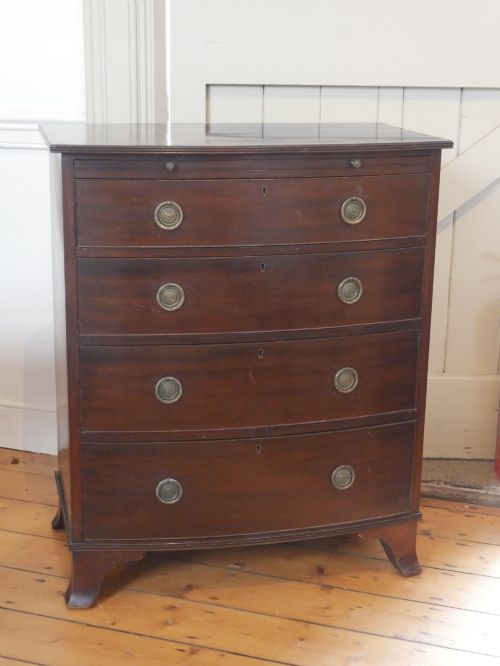
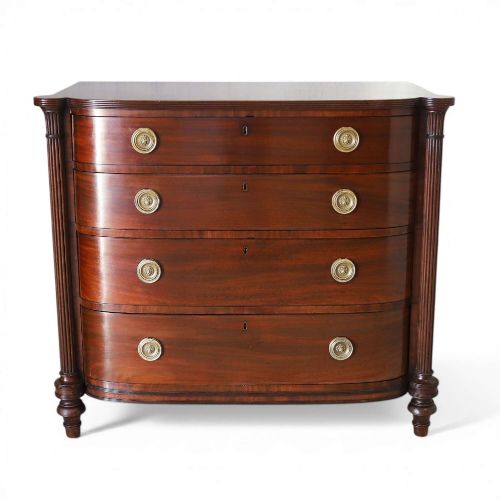
A regency scottish mahogany chest represents a distinct regional take on the classic drawer form, often appearing with bowed fronts and deep proportions. You will frequently encounter forms such as standard chests of drawers, linen presses, and secretaire desks originating from the nineteenth century.
The materials recorded in these pieces rely heavily on solid mahogany and flame mahogany veneers over secondary timbers like oak. Makers combined these timbers to create striking grain patterns across the drawer fronts.
How they were made
Cabinet makers utilised solid mahogany and figured flame mahogany veneers applied to sturdy internal structures built from woods like oak. Drawers frequently feature secondary linings of oak, showing the structural approach typical of Scottish workshops.
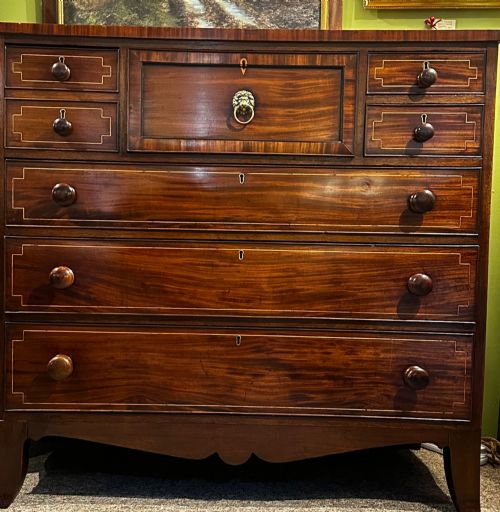
Detailing often included fine boxwood stringing and brass fittings such as drop handles or escutcheons. Construction methods prioritised durability alongside the decorative impact of highly figured timber.
Regency Scottish Mahogany Chest Retail Price Guide 2026
Typical asking prices for regency scottish mahogany chest among the pieces listed under this phrase on Sellingantiques today, from the lower quarter to the upper quarter. They describe what is for sale here now, not the wider market.
Some chests hide clever writing desks inside, proving that past owners also needed a quiet place to hide their bills.
What varies in quality
The grade of timber selected for the drawer fronts dictates much of the visual hierarchy, with well-figured flame mahogany commanding attention over plain grain. The choice of secondary woods such as oak for internal linings also marks out better examples.
Proportion and execution of regional details, from bow fronts to secretaire fittings, separate standard workshop output from more ambitious pieces. The integration of brass hardware and subtle boxwood stringing reveals the level of care taken during construction.
WILLIAM TROTTER Edinburgh
The Regency Scottish Mahogany Chest Glossary
- Flame mahogany
- A veneer cut from timber where the grain creates a distinctive flame-like pattern. This figure was prized for principal display surfaces.
- Bow front
- A convex curved front to a piece of furniture. This shape softens the profile of a chest.
- Linen press
- A tall cupboard featuring upper doors enclosing sliding trays and lower drawers. These items were designed to store textiles.
- Secretaire desk
- A chest of drawers incorporating a fitted writing drawer with a drop-down front. This dual-purpose form saved space in period interiors.
Regency Scottish Mahogany Chest: Frequently Asked Questions
What is a scotch chest?
A scotch chest is a regional term often applied to larger chests of drawers originating from Scotland. These pieces frequently display distinctive proportions and arrangement of top drawers.
They serve as practical storage items while offering a strong visual presence through figured wood veneers.
How do I spot flame mahogany?
Flame mahogany shows a swirling, fiery grain pattern caused by cutting across specific sections of the tree log. It appears predominantly on the main drawer fronts of better pieces.
Cabinet makers arranged these veneers symmetrically to enhance the decorative appeal of the furniture.
What is a linen press used for?
A linen press stores folded garments and household textiles within internal sliding trays behind upper doors. The lower drawers provide additional space for bulkier items.
These taller pieces combine wardrobe and chest functions into a single unified cabinet.
Are all these chests from the Regency period?
While many examples date from the Regency era and the wider nineteenth century, the listings also include Georgian pieces and later interpretations. Different makers continued traditional Scottish forms across multiple decades.
Checking the specific construction details helps determine the likely period of manufacture.