
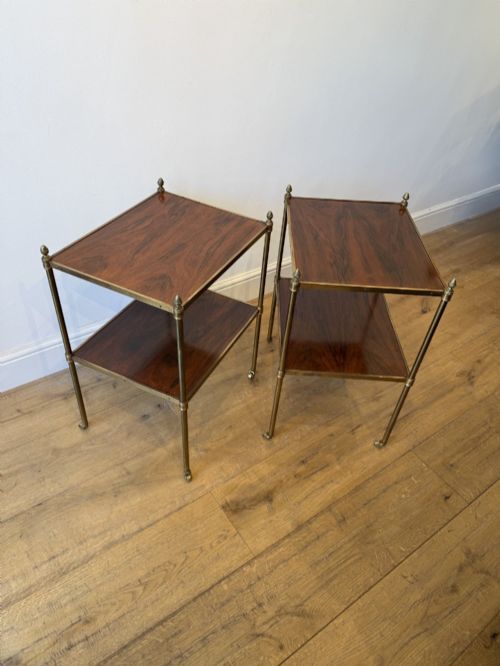
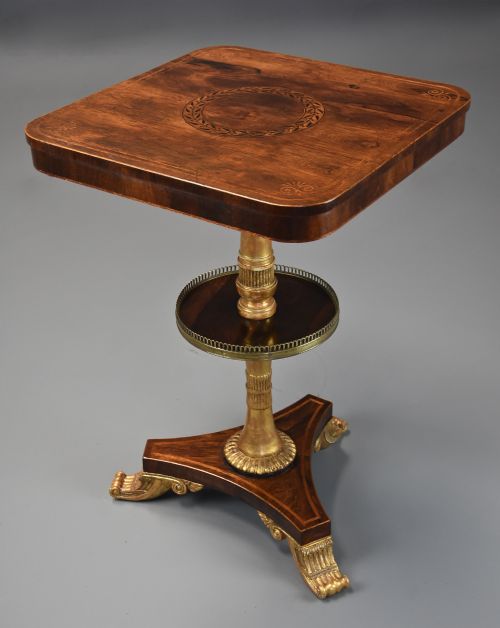


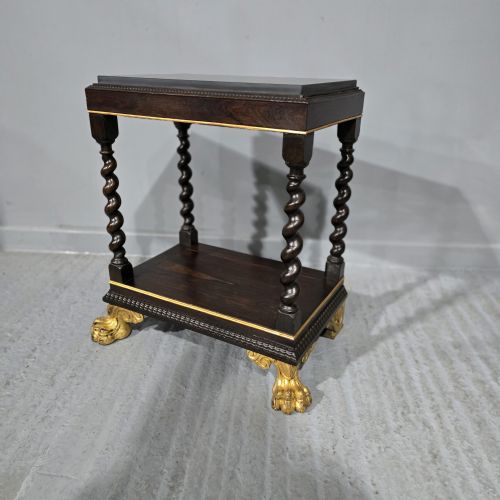


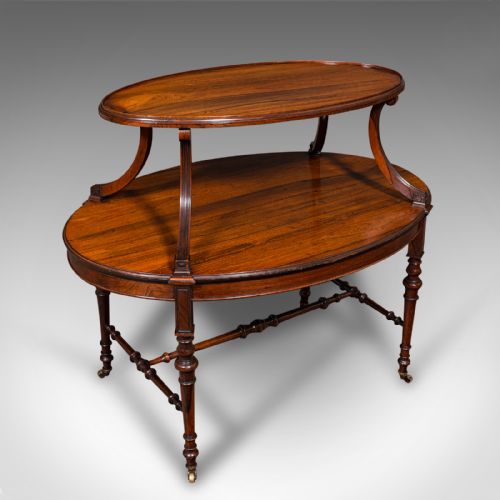

Regency Rosewood Tier Table
A regency rosewood tier table offers stacked display surfaces in rich timber, bringing tiered utility and architectural elegance to a period interior.
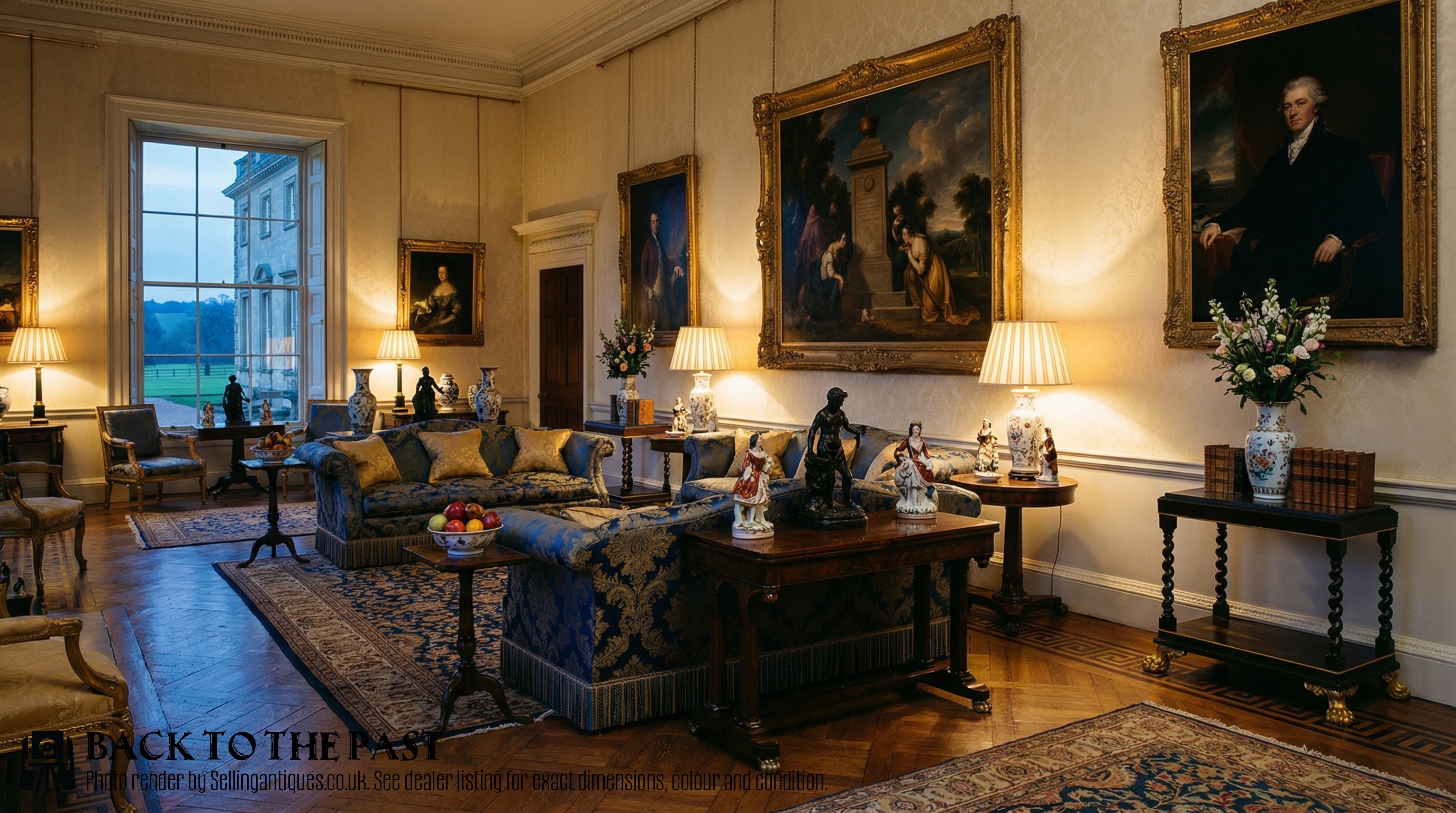
Regency Rosewood Tier Table
A regency rosewood tier table is a multi-level piece of furniture designed for display and utility, frequently taking the form of a two or three tier etagere or whatnot. These tables combine the rich, dark grain of rosewood with tiered platforms supported by slender uprights.
The versions most commonly met on this page date from the Regency and nineteenth-century periods, spanning occasional tables, side tables, and plant stands. Makers often incorporated brass details, gilt elements, or marble tops to elevate the status of the furniture.
Forms range from compact lamp tables to larger display serving tables and metamorphic pieces. Buyers select these tables to introduce vertical interest and historical character into reception rooms without taking up excessive floor space.
How they were made
Cabinetmakers utilised dense rosewood timber for its deep colour and pronounced grain pattern, often contrasting it with mahogany or giltwood elements. Surfaces were polished to a high sheen to highlight the natural figuring of the wood.
Construction methods relied on sturdy upright supports to bear the weight of multiple shelves, frequently reinforced with brass castors, rods, or gallery rails. Finer examples integrated marble inserts or glass panels into the upper tiers for durability and varied texture.
Form variations include lamp tables, chiffoniers with marble tops, and botanical plant stands alongside traditional two and three tier etageres.
What varies in quality
The distinction between standard examples and the finest pieces lies in the selection of the rosewood veneer and the crispness of the turning on the upright supports. Superior tables display continuous grain matching across the tiers and refined brass mounts rather than crude cast replacements.
Proportion and structural balance dictate the upper tier of the market, where smaller, highly functional configurations show greater restraint and architectural harmony. Attribution to notable workshops or makers through documented stylistic traits also elevates a piece above standard workshop production.
Mallett·George Bullock·John MaClean
The Regency Rosewood Tier Table Glossary
- Etagere
- A set of open shelves or tiers designed for displaying small objects, ornaments, or books. This form became particularly popular during the Regency period.
- Whatnot
- A piece of furniture with multiple shelves standing one above another, used for general storage and display in principal rooms. Nineteenth-century examples often feature three or more tiers.
- Rosewood
- A heavy, durable timber prized for its dark purple-brown colour and distinctive black grain markings. It served as the primary decorative veneer for high-status furniture of the Regency era.
- Giltwood
- Wood that has been coated with gold leaf or gold paint to simulate solid gold enrichment. This technique highlights carved mouldings and decorative mounts on formal tables.
- Metamorphic
- Furniture designed to transform into another object or configuration through folding, sliding, or rising mechanisms. Such tables offered versatile utility in nineteenth-century interiors.
Regency Rosewood Tier Table: Frequently Asked Questions
What is a tier table used for?
A tier table provides multiple levels of surface area for displaying lamps, decorative objects, and small items in a sitting room.
The stacked design allows for vertical storage and display while maintaining a compact footprint on the floor.
How do I identify a Regency table?
Regency tables typically exhibit classical proportions, dark rosewood veneers, and refined elements such as brass inlay, gilt highlights, or turned uprights.
Construction details and timber selection align with the architectural tastes prevalent during the early nineteenth century.
Where should I place an etagere?
An etagere suits corners, spaces beside seating, or blank wall sections where vertical display adds interest to the room.
Because the shelves are open on all sides, these pieces work well when positioned to catch ambient light.
How do I care for rosewood furniture?
Rosewood surfaces require dusting with a soft, dry cloth and protection from direct sunlight and excessive heat fluctuations to prevent timber splitting.
Applying appropriate specialist wax sparingly helps maintain the natural lustre of the polished wood over time.