
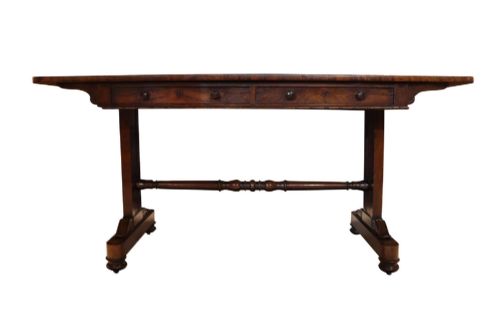
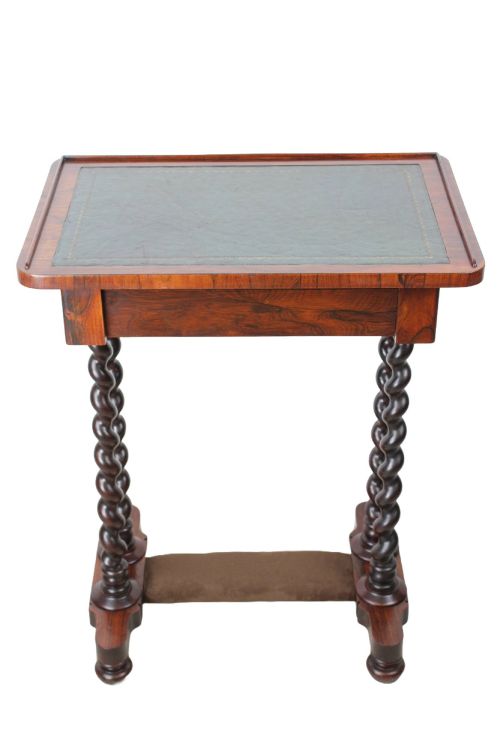
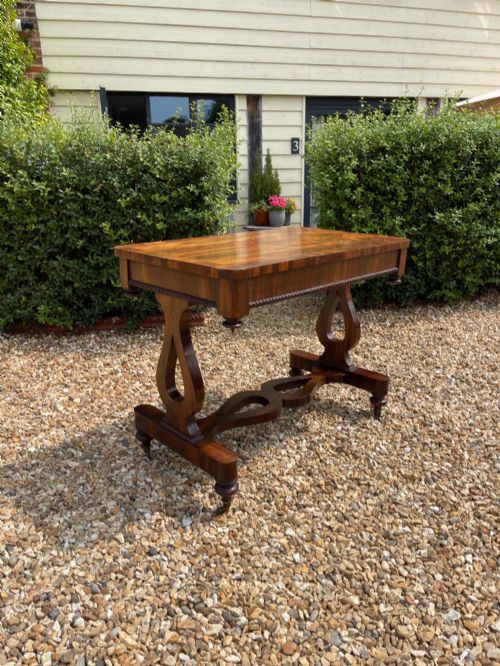
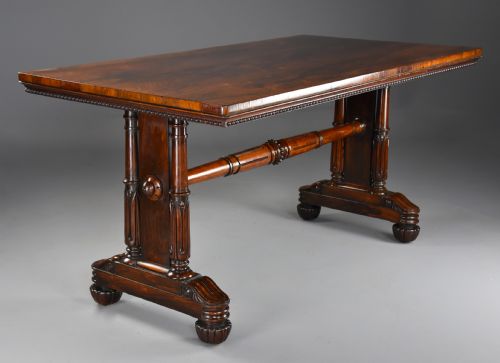



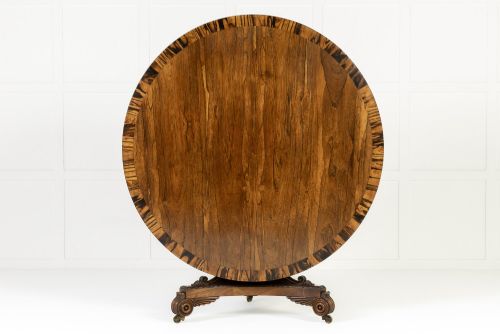


Regency Rosewood Hall Table
A regency rosewood hall table brings rich, dark timber and precise brass inlay into an entranceway, offering both a surface for letters and a statement of early nineteenth-century elegance.
Regency Rosewood Hall Table
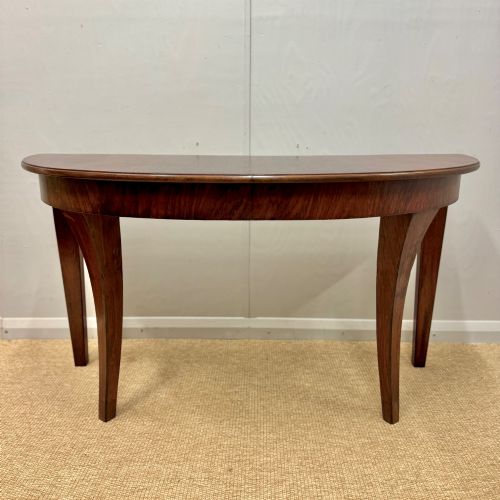
A regency rosewood hall table encompasses a variety of formats designed for the entrance and reception rooms of the period, including side tables, console tables, and occasional pieces. Many examples span the broader Regency, William IV, and George IV eras, extending into the wider nineteenth century.
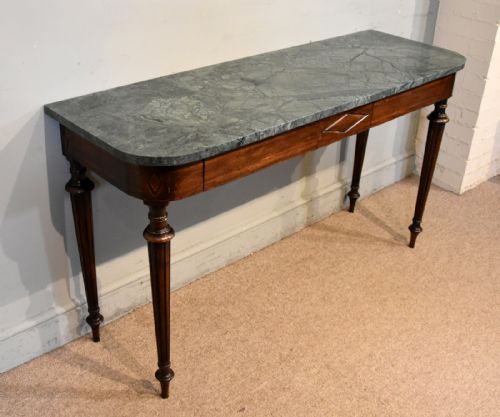
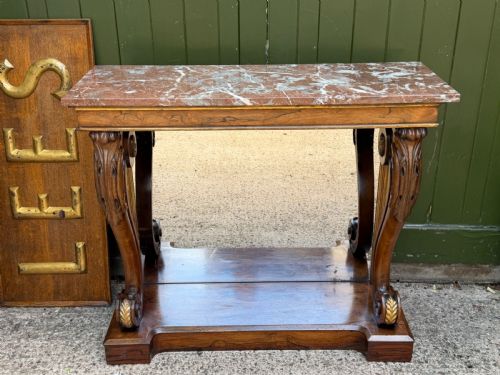
Origins stretch across English workshops as well as Scottish and Irish regional centres, demonstrating a shared vocabulary of proportion and timber selection. Pieces range from straightforward side tables to elaborate console tables set with figured marble tops.
How they were made
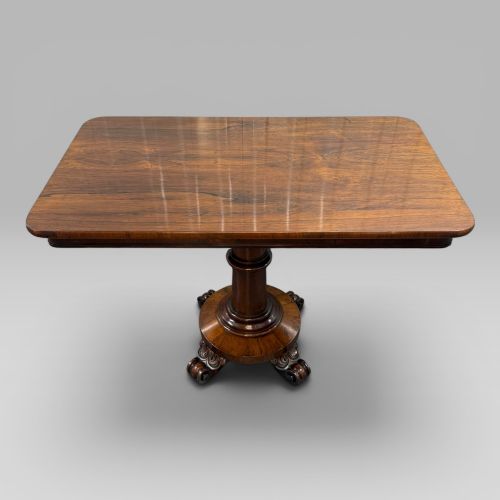
Cabinet makers utilised dense, highly figured rosewood veneers laid over secondary timbers, often accentuating the grain with crossbanding and brass stringing. Parcel-gilt highlights and brass mounts provided contrast against the dark polish of the wood.
Structural elements frequently incorporated carved pedestals, concave legs, or stretcher bases to support heavy marble or timber tops. Joinery relied on traditional techniques suited to heavy hardwoods, ensuring stability across extending sofa tables and solid console frames.
Listings feature rosewood paired with brass, marble, and giltwood across Regency, William IV, and Victorian periods.
What varies in quality
The distinction between standard production and top-tier workshop output lies in the selection of the rosewood veneer and the precision of the brass inlay. Superior examples display continuous, richly figured grain patterns and finely chased brass work rather than simple stamped lines.
Structural integrity and secondary timber choices also dictate value, with better pieces maintaining tight joints, original mirror plates, and uncompromised carved elements. Attribution to known makers adds a layer of distinction, distinguishing standard commercial furniture from bespoke commissions.
Gillows·James Mein·William Trotter·Walker and Hall
The Regency Rosewood Hall Table Glossary
- Crossbanding
- A strip of veneer run perpendicular to the main grain along the edge of a table top, framing the primary timber. This technique protects end grain and creates a neat border.
- Console table
- A table designed to stand against a wall, frequently supported by brackets or front legs rather than four freestanding supports. In Regency halls, these often featured mirror backs to reflect light.
- Parcel-gilt
- Woodwork partially decorated with gold leaf applied to carved details or mouldings. It highlights specific architectural motifs against dark rosewood.
- Sofa table
- A rectangular table traditionally placed in front of a sofa, featuring drop leaves on either side. They often include dual pedestals joined by a stretcher.
- Goncalo Alves
- An exotic dense timber resembling rosewood, occasionally utilised during the Regency and William IV periods. Its striking contrasting grain made it popular for high-status cabinet work.
Regency Rosewood Hall Table: Frequently Asked Questions
What distinguishes a hall table from a centre table?
Hall tables are built with a shallow depth so they sit flat against a wall without blocking passageways. They frequently feature finished backs or mirror panels designed for specific wall placements.
Centre tables, by contrast, are finished on all four sides to stand free in the middle of a room. While both utilise rosewood and similar Regency styling, their intended room placement dictates their proportions.
How do I care for antique rosewood surfaces?
Rosewood requires stable humidity levels to prevent timber shrinkage and veneer lifting. Keeping tables away from direct sunlight and heat sources protects the original polish from fading or crazing.
Regular dusting with a dry, soft cloth is sufficient for daily maintenance. Wax polishes should be used sparingly and only when the timber appears dry, avoiding modern silicone sprays entirely.
How can I tell a Regency piece from a later copy?
Examine the construction methods and secondary timbers used beneath the rosewood veneer, such as pine or mahogany backing boards. Regency cabinet work typically employs hand-cut dovetails and older fastening methods.
Look closely at the brass inlay and carving details for signs of hand tools rather than modern machine routing. Wear patterns on the feet and undersides should align with centuries of gentle use.
Can these tables be used for daily dining or work?
Writing tables and certain sofa tables were originally built for functional use, making them sturdy enough for occasional writing or laptop work today. Using coasters and blotters protects the antique polish from moisture and ink.
Delicate console tables with marble tops or mirror backs are better suited for display and holding small decorative objects. Heavier library or centre tables accommodate more substantial daily use.