

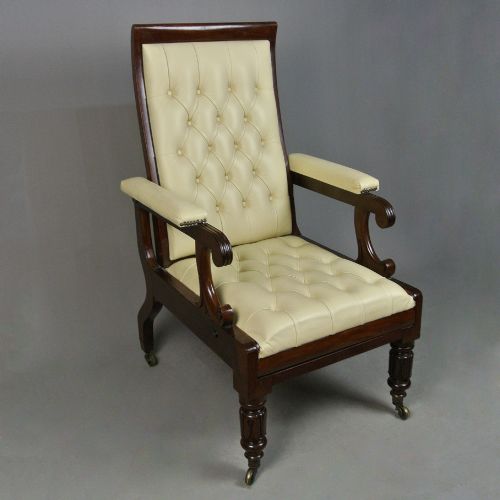


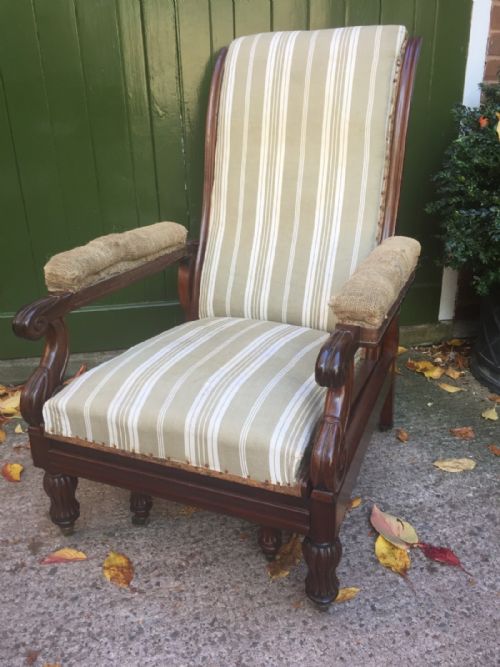

Regency Reclining Chair
A regency reclining chair offers ingenious nineteenth-century comfort through mechanical innovation disguised as stately library seating.
Regency Reclining Chair
A regency reclining chair combines the formal presence of a library armchair with adjustable mechanical frames designed for prolonged reading or resting. The pieces found here span the Regency, George IV, and William IV periods, alongside nineteenth-century interpretations of these foundational forms.
Most examples take the form of sturdy armchairs or library chairs, while occasional day beds and chaise longue variations appear within the selection. The construction follows the heavy, architectural proportions typical of English seating from the early decades of the eighteen-hundreds.
Makers of the era utilised patented mechanisms to allow the backrest and sometimes the seat to shift angles smoothly. These seating forms served as functional furniture for gentlemen's libraries and private studies, prioritising physical ease without abandoning formal decorative standards.
Distinctions in quality
The sophistication of the mechanical patent marks the clearest separation between standard library seating and exceptional examples. Original mechanisms by known inventors hold greater weight among collectors than simpler or later adaptations.
The choice of dense cabinet timbers and the integrity of the original show wood dictate the durability and visual depth of the frame. Subtle differences in the carving of the arm supports and the proportion of the X-frame base reveal the skill of the original workshop.
Regency Reclining Chair Retail Price Guide 2026
Typical asking prices for regency reclining chair among the pieces listed under this phrase on Sellingantiques today, from the lower quarter to the upper quarter. They describe what is for sale here now, not the wider market.
Mahogany and rosewood dominate the structural framing across this selection of nineteenth-century seating.
Robert Daws·Minter·Gillows
The Regency Reclining Chair Glossary
- X-frame
- A structural base formed of intersecting diagonal timbers that provides stability for heavy library seating. This configuration appears frequently on late Regency reading chairs.
- Patent mechanism
- A legally protected mechanical design allowing a chair to alter its angles via levers, ratchets, or screws. These devices represent the peak of nineteenth-century seating ingenuity.
- Horsehair
- A traditional upholstery stuffing material woven from animal hair to provide resilient, springy support beneath leather or fabric covers. It maintains its shape over decades of heavy use.
- Chaise longue
- An upholstered seating form designed for reclining, combining a chair with an extended footrest. Certain examples share the adjustable mechanical backrests found on library armchairs.
Regency Reclining Chair: Frequently Asked Questions
How do these reclining mechanisms work?
The mechanical systems rely on internal ratchets, hinges, or screw adjustments operated by shifting the body weight or turning hidden levers. These allow the backrest to lock securely at various angles.
Patented designs by makers like Robert Daws utilised clever pivoting linkages concealed within the wooden arms and seat rails. This kept the exterior appearance formal while offering modern levels of adjustable comfort.
Are these chairs comfortable for daily use?
The dense horsehair stuffing and deep proportions make them exceptionally supportive for reading or resting over long periods. The adjustable backrest allows the user to find a comfortable posture tailored to the task.
Because the timber frames are heavy and built to nineteenth-century specifications, they do not slouch or sag like modern lounge furniture. Proper care of the leather and internal mechanisms ensures they remain functional seating.
How can I tell a genuine period piece apart?
Examination of the timber patination, hand-cut joints, and the construction of the hidden iron or brass mechanism reveals the age of the piece. Period examples display the tool marks and material density consistent with nineteenth-century cabinet making.
Makers' stamps or patent plaques on the brass fittings often provide definitive evidence of origin. Comparing the proportion of the mahogany or rosewood frame against known period styles confirms authenticity.
Where were these chairs used originally?
These seating forms belonged primarily in gentlemen's libraries, private studies, and grand drawing rooms of large country houses. They provided a place of quiet retreat for reading heavy volumes or resting.
The inclusion of reading attachments or book rests on certain models shows they were engineered specifically for scholarly or leisurely study. Their solid timber construction allowed them to withstand decades of daily use in domestic interiors.