


Regency Quadruped Table
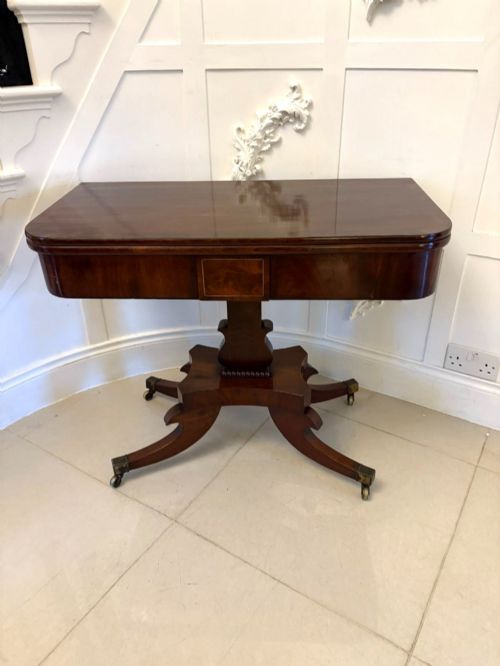
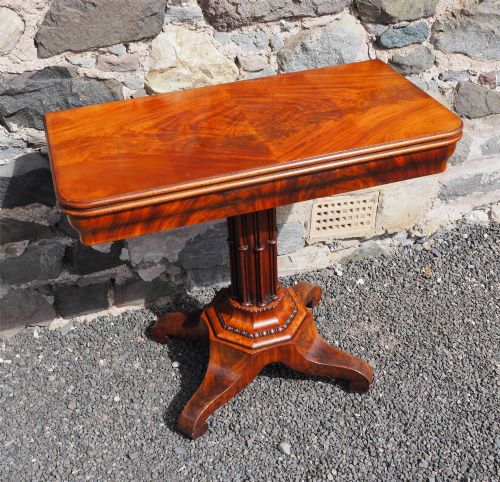
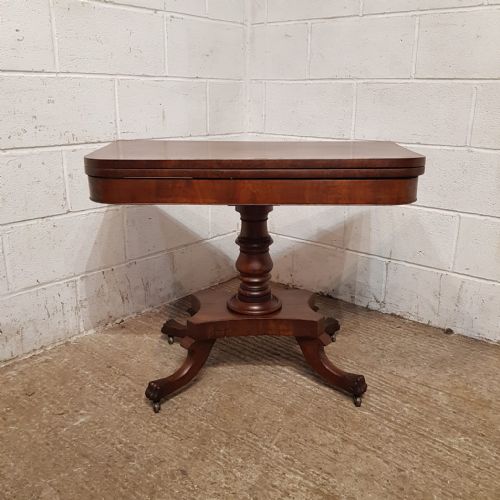
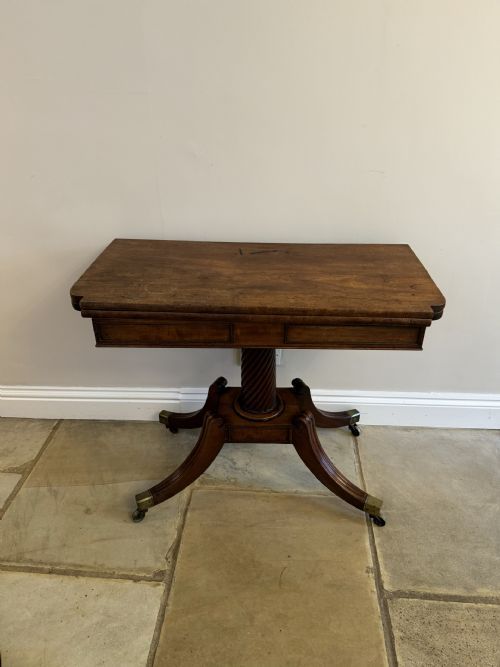
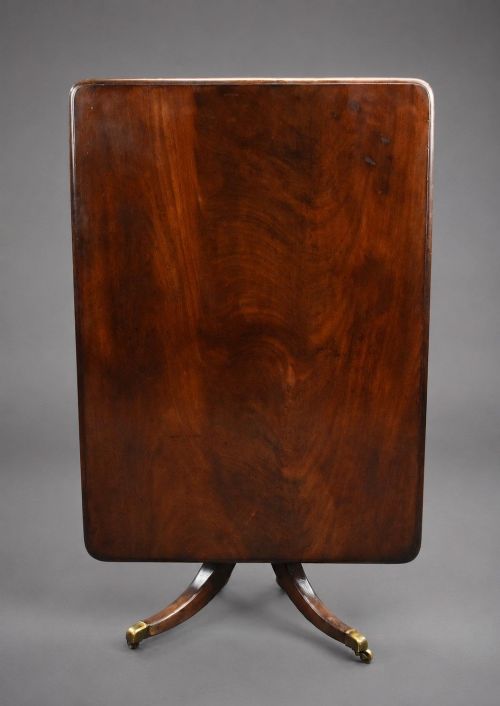
A regency quadruped table stands on a four-legged pillar base, offering steady proportion and formal dining or card-playing utility.
How They Were Made
Cabinetmakers constructed these tables using solid timber frames combined with flame mahogany veneer, rosewood, and satinwood surfaces. Timber selection focused on rich grain figures, particularly for table tops that folded over or tilted on their pedestals. Craftsmen frequently incorporated brass inlay, gilt metal mounts, and delicate stringing to accent the polished wood.
The structural integrity of a quadruped base depends on the solid junction between the central pillar and the four radiating legs. Makers often added brass paw castors beneath the feet to allow smooth movement across carpets and flooring. Joinery relied on traditional techniques to support heavy tilt tops and folding leaves without destabilising the pedestal.
What Varies in Quality
Timber selection and grain matching separate standard tables from exceptional ones, particularly where flame mahogany veneer or rosewood is employed. The crispness of carved details on the central pedestal and pillar base indicates the maker's skill. Secondary woods and internal framing show the level of care invested in parts less visible to the room.
Hardware integration also defines the upper tier of pieces, seen in original brass mounts, inlaid stringing, and functional castor fixings. Tables that retain their original polished finish without excessive restoration hold greater visual harmony. The stability of the four-legged base under weight reflects precise initial engineering.
Several tables retain their original baize linings, whispering of high-stakes whist played by candlelight centuries ago.
James Mein
The Regency Quadruped Table Glossary
- Quadruped table
- A table supported by a central pillar that divides into four distinct feet. This configuration provides wide-stance stability for heavy dining and breakfast tops.
- Tilt-top table
- A table featuring a mechanism that allows the top to hinge vertically for storage against a wall. This design saved space in period drawing rooms.
- Fold-over table
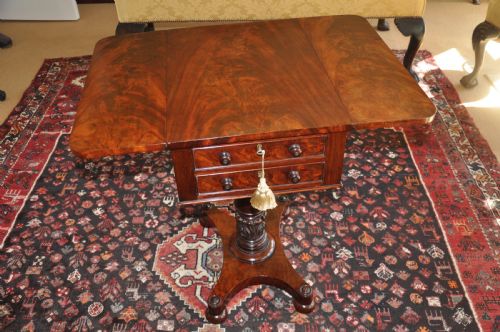
- A dual-surface table with a hinged top that opens out to double its surface area. It served primarily for card games and domestic entertaining.
- Flame mahogany veneer
- A thinly sliced wood layer displaying a distinct flickering flame pattern derived from specific branch cuts. Cabinetmakers applied this to prominent surfaces for visual depth.
Regency Quadruped Table: Frequently Asked Questions
What is a quadruped table?
A quadruped table rests upon a central column that descends into four distinct legs, typically terminating in brass castors. This structural arrangement provides a wide base for large breakfast or dining surfaces.
Such designs emerged strongly during the early nineteenth century to accommodate heavier timber tops while maintaining floor clearance around the pillar.
How were card tables used?
Card tables functioned as side furniture during the day, positioned against walls with their leaves folded shut. When evening arrived, they opened out to create a baize-lined surface for social gaming.
Their dual-purpose nature made them essential fixtures in Regency drawing rooms where space served multiple domestic requirements.
How do I distinguish Regency from William IV?
Regency pieces generally display lighter proportions, refined brass inlay, and restrained classical ornament. Timbers like satinwood and figured mahogany dominate these earlier constructions.
William IV furniture tends toward heavier, stockier forms with bolder carving and darker rosewood or feathered mahogany veneers. The pillar bases on later tables often appear more massive.
How do I care for rosewood surfaces?
Rosewood requires stable indoor humidity and protection from direct sunlight to prevent fading and splitting. Regular dusting with a soft, dry cloth preserves the polished finish.
Avoid silicone-based polishes, opting instead for traditional beeswax applications sparingly applied by hand to nourish the timber.