

Regency Pillar Dining Table
A regency pillar dining table brings adaptable scale and proportion to large rooms through modular pedestals.
Regency Pillar Dining Table
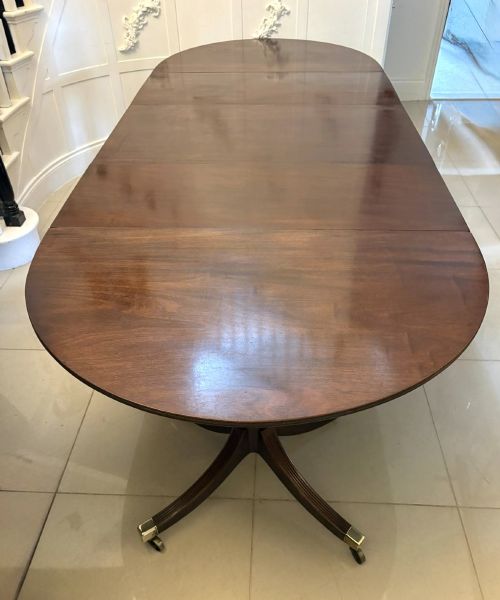
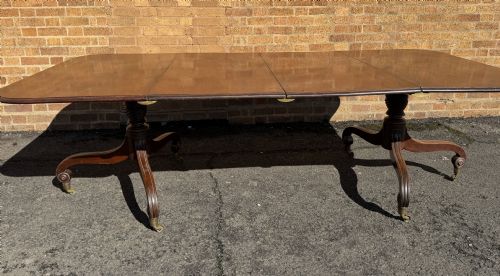
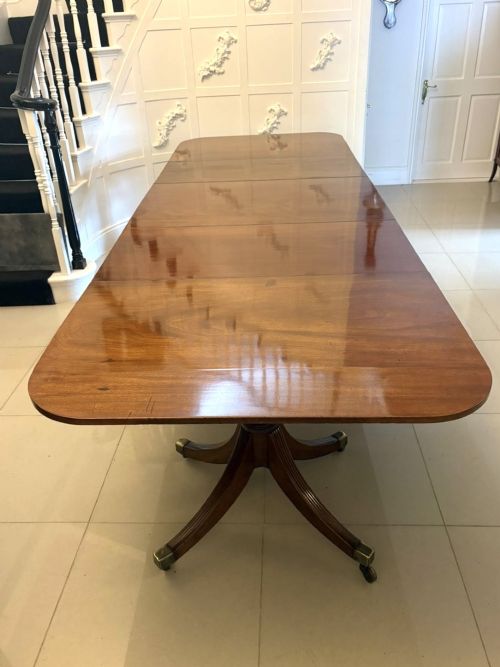
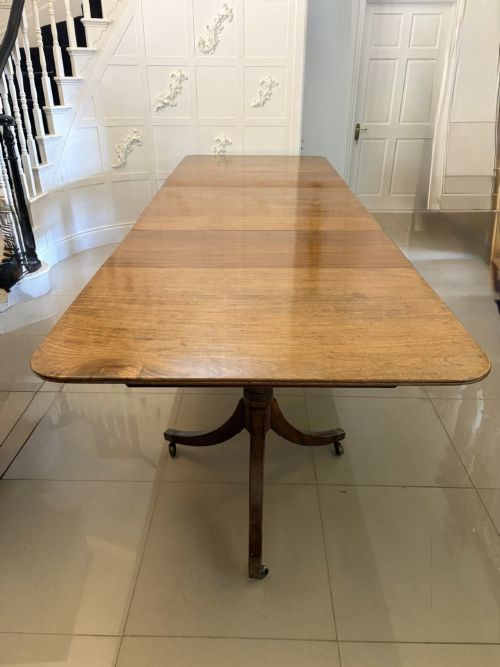
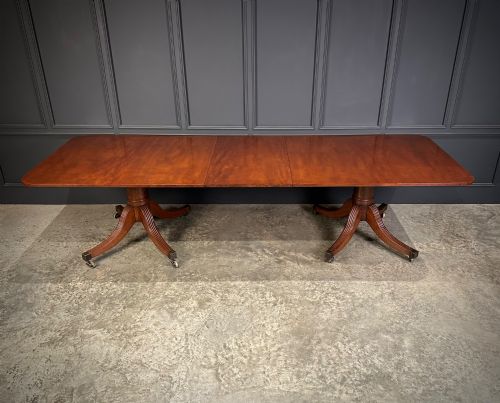
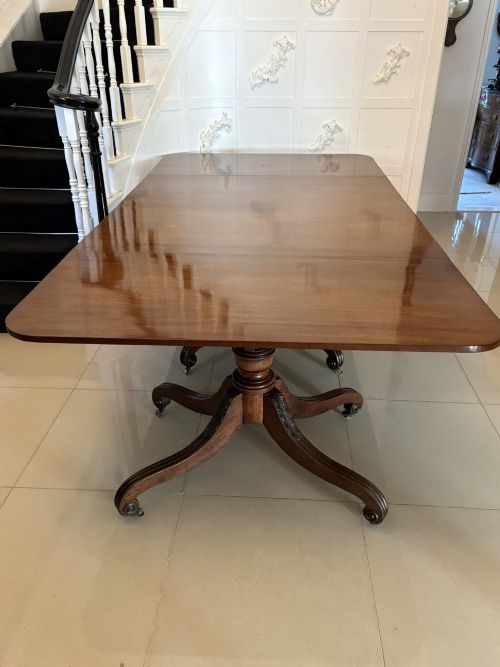
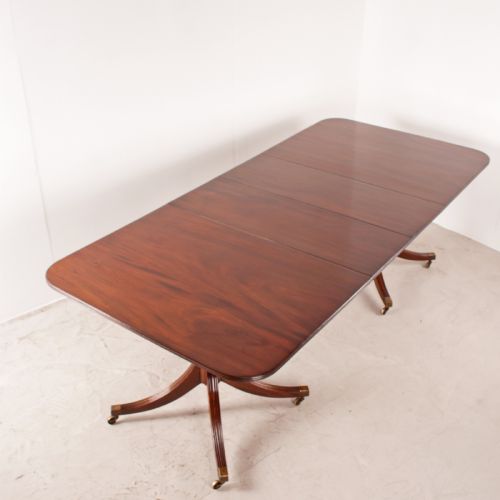
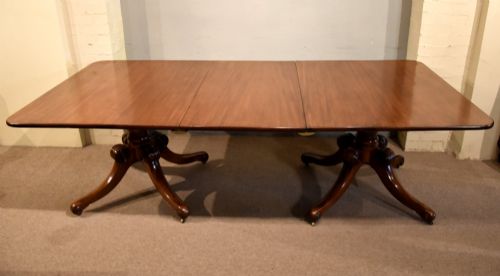
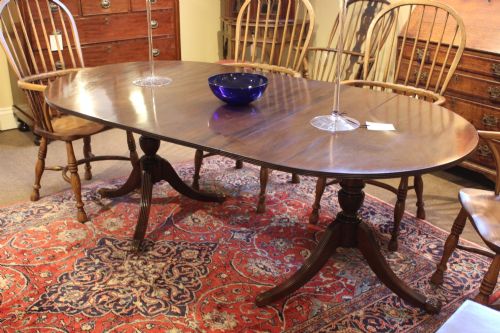
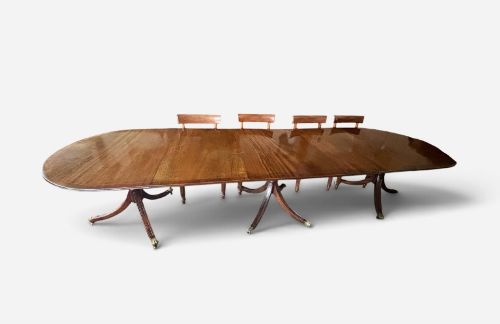
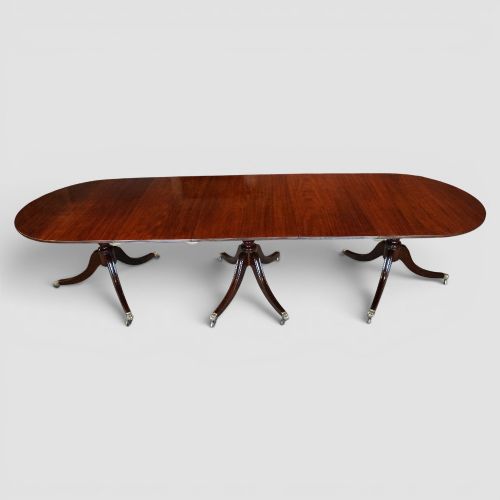
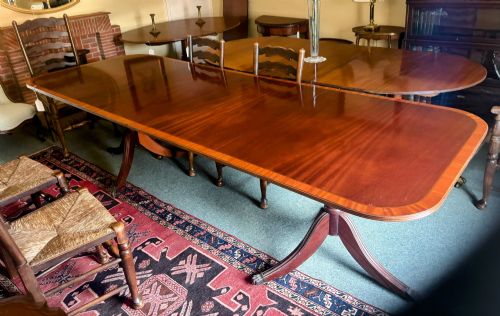
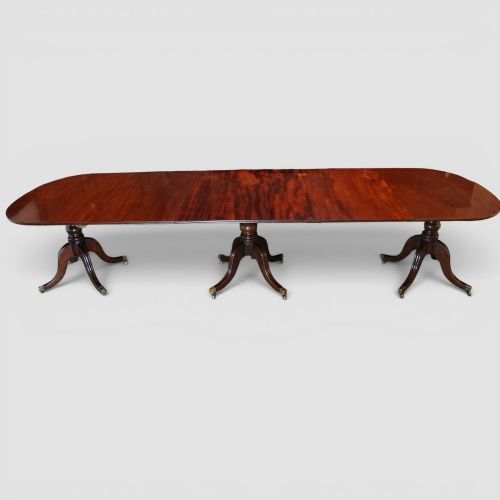
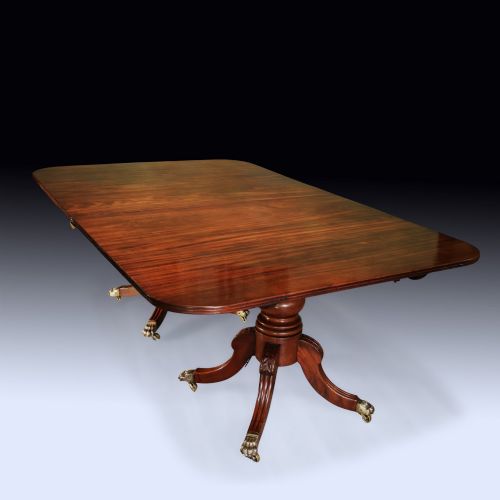
A regency pillar dining table consists of two or three independent pedestals supporting a long, polished timber top that accommodates extra leaves for expansion. Buyers encounter original period pieces alongside later revival examples produced across the nineteenth and twentieth centuries.
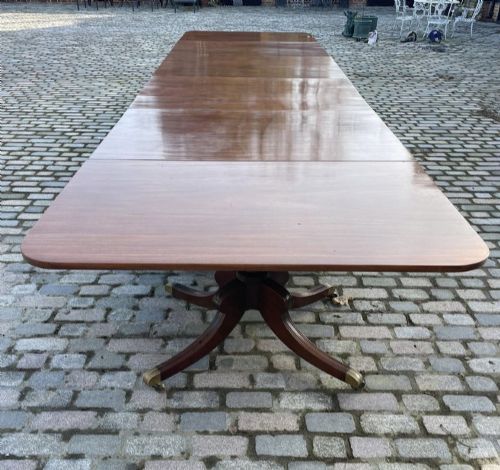
The format ranges from compact twin-pedestal layouts seating eight guests up to massive triple-pillar assemblies extending to sixteen seats or more. These dining tables serve large entertaining spaces, offering flexibility through removable leaves that alter the overall length.
Most examples originate from the Georgian and Regency eras, though substantial numbers date from later revival periods employing traditional furniture-making methods. The design balances formal dining requirements with practical everyday utility in period and contemporary interiors alike.
Distinguishing quality across examples
The selection of timber grain defines the visual impact of the top, with carefully matched figured mahogany commanding higher regard than plain boards. Superior pieces exhibit seamless integration of removable leaves, ensuring the grain patterns flow continuously along the entire length when fully extended.
Engineering beneath the surface determines mechanical longevity, seen in the smoothness of the extending actions and the robust mounting of the pillar columns to their base legs. Heavier brass hardware and precise joinery separate exceptional cabinetmaker commissions from standard production furniture.
Listings feature mahogany dining tables spanning the nineteenth and twentieth centuries, incorporating both twin-pillar and triple-pillar pedestal configurations.
Whytock And Reid
The Regency Pillar Dining Table Glossary
- Twin-pillar
- A table configuration utilising two distinct pedestals to support the extending top. This format typically suits medium lengths and seats up to twelve people.
- Triple-pillar
- A larger structural format incorporating three pedestals to support extensive lengths of timber. These tables accommodate significant numbers of diners for grand banquets.
- Pedestal
- The central vertical column and supporting foot assembly that holds the weight of the table top. It replaces traditional four-leg table frames to allow greater legroom.
- Leaf
- A removable section of timber inserted into the centre of the table to increase its overall length. Leaves allow owners to adjust the seating capacity depending on the occasion.
- Figured mahogany
- Timber cut to reveal decorative, swirling grain patterns rather than straight lines. This premium material is typically reserved for the upper display surfaces.
Regency Pillar Dining Table: Frequently Asked Questions
How do I extend the table?
Extending a regency pillar dining table involves releasing internal mechanisms and sliding the pedestal bases apart to create a central gap. Separate timber leaves drop into this space to increase the overall surface area.
Once the leaves rest securely on the supporting rails, the sections lock back together to maintain a stable, level dining surface. Owners typically store extra leaves separately when hosting smaller gatherings.
How many people will it seat?
Seating capacity depends directly on the number of pillars and the inclusion of extra leaves. Twin-pillar formats generally accommodate eight to twelve diners comfortably.
Triple-pillar assemblies extend the capacity significantly, frequently hosting sixteen to eighteen guests. The absence of traditional corner legs allows chairs to fit flexibly around the entire perimeter.
How do I care for the mahogany top?
Mahogany surfaces require regular dusting with a soft cloth and occasional treatment with quality beeswax to preserve the polished finish. Avoiding direct sunlight prevents fading and drying of the timber grain over time.
Using heat-resistant mats and coasters protects the polished polish from moisture rings and thermal shock. Promptly wiping away spills ensures liquids do not penetrate the wood or veneer.
How do I tell original period pieces from revivals?
Original pieces from the Georgian and Regency eras display distinct hand-tool marks, traditional joinery methods, and natural timber ageing beneath the finish. The structure and fixings reflect eighteenth or early nineteenth-century cabinetmaking practices.
Revival pieces built during the later periods often utilise machine-sawn components and standardised hardware while replicating earlier designs. Examining the internal framing and underside provides clear clues regarding the date of manufacture.