

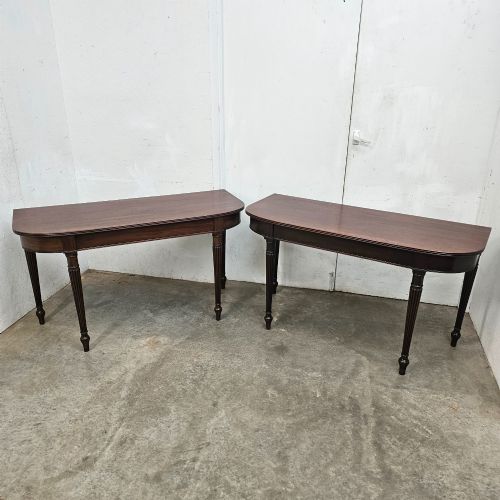
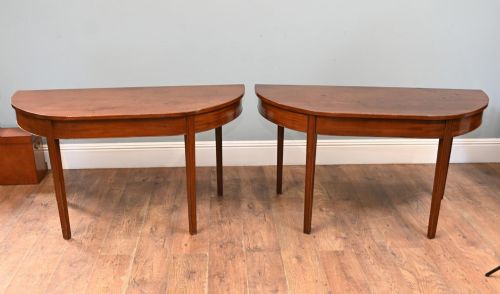
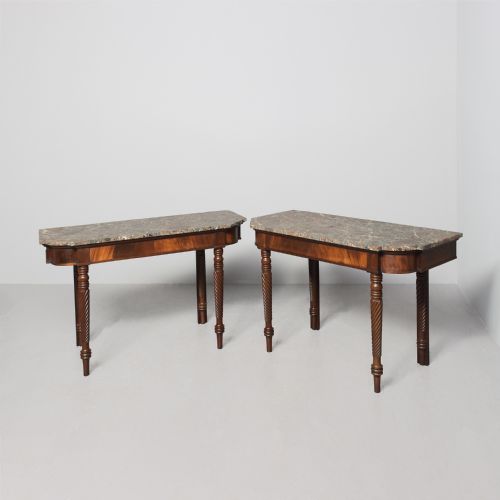
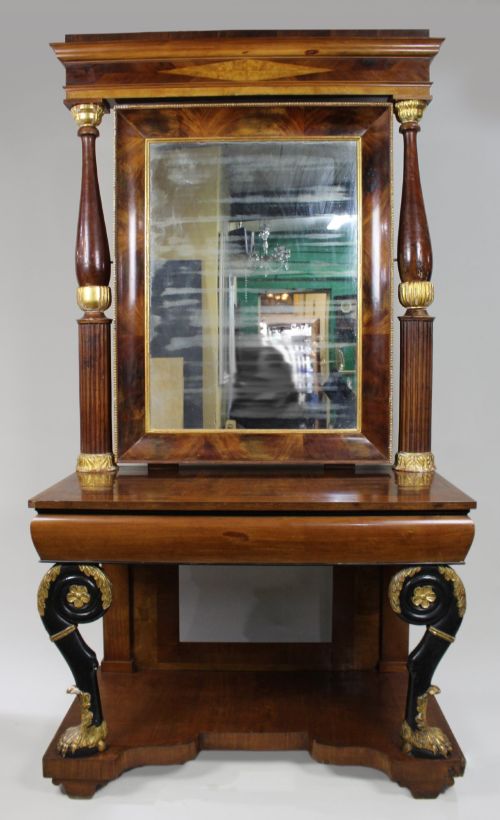


Regency Pier Tables
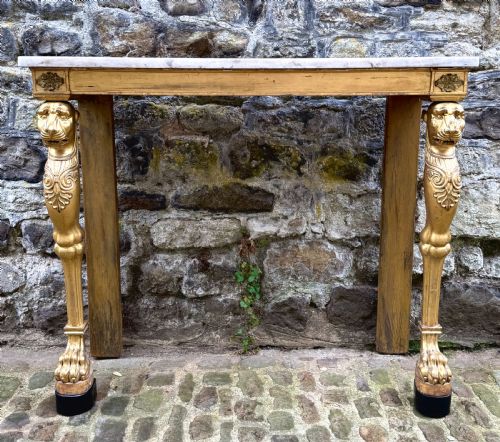
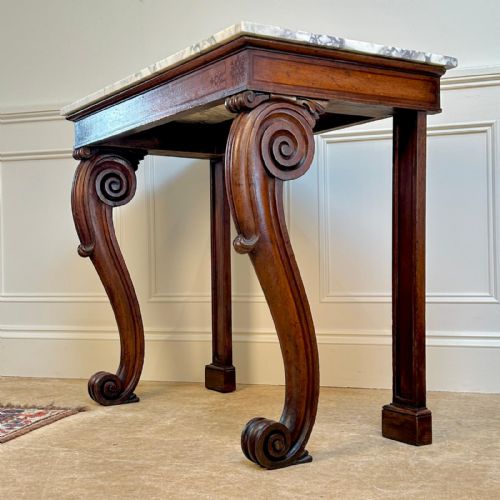
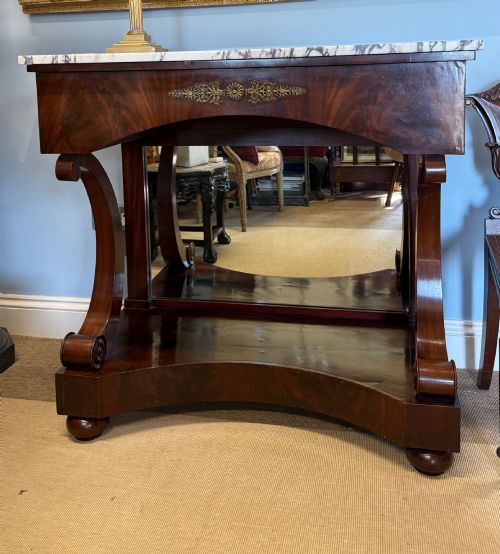
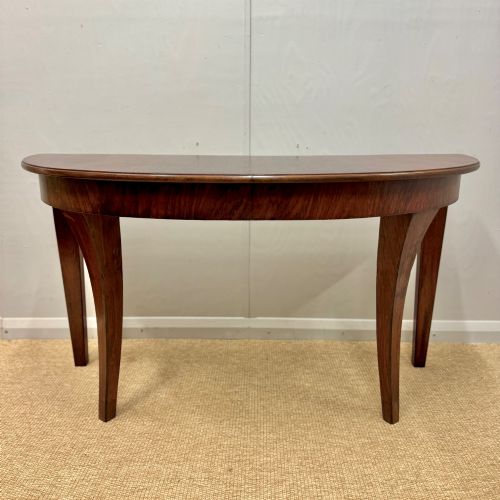
Regency pier tables are substantial console furniture designed to stand against a wall between windows, topped with marble and supported by mahogany, rosewood, or giltwood.
Regency Pier Tables
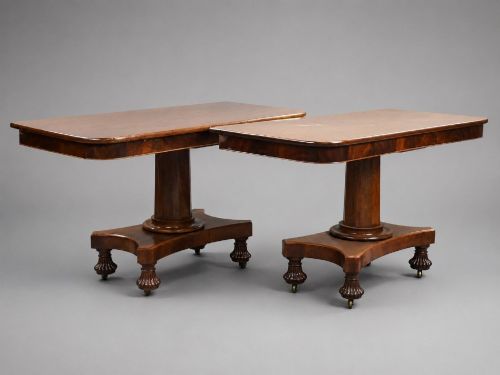
Regency pier tables are foundational elements of formal interior design, taking the form of console or side tables placed against the architectural pier wall between windows. The pieces on this page span the nineteenth century into later revival periods, bringing classical proportion and formal symmetry to hallways and reception rooms.
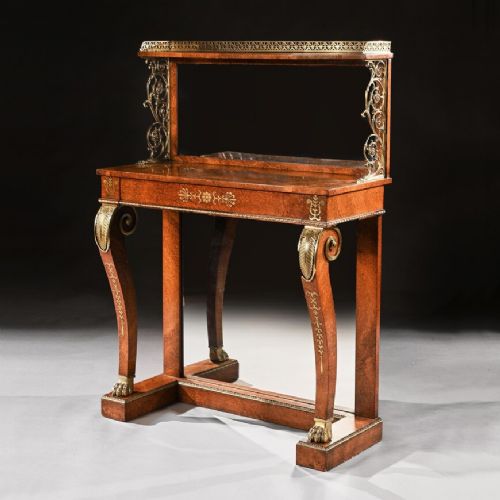
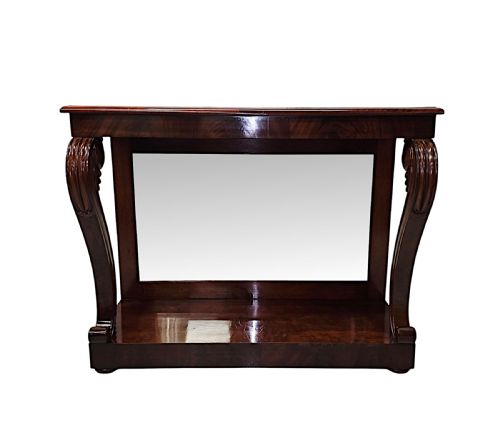
The dominant forms rely on mahogany, rosewood, and oak timbers, frequently paired with inset mirror backs and heavy marble tops. Makers often applied gilt bronze mounts or brass inlay, aligning with the neoclassical taste of the period while serving a practical surface function.
How they were made
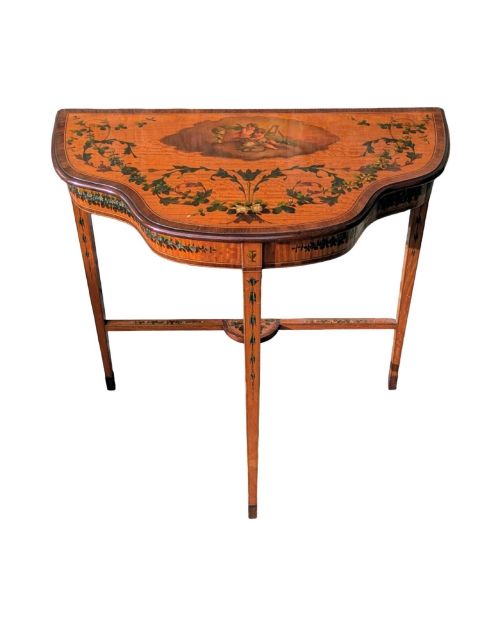
Cabinet makers utilised dense timber foundations such as mahogany and rosewood, often enhanced with satinwood veneer, amboyna, or parcel-gilt details. Structural integrity depended on heavy timber frames designed to support thick marble tops without sagging.
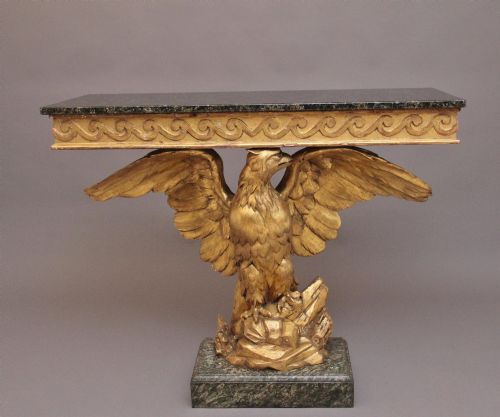
Surface ornamentation involved intricate brass inlay, gilt bronze mounts, and polychrome painted decoration. Carved rosewood and giltwood elements provided the architectural weight characteristic of the period.
Regency Pier Tables Retail Price Guide 2026
Typical asking prices for regency pier tables among the pieces listed under this phrase on Sellingantiques today, from the lower quarter to the upper quarter. They describe what is for sale here now, not the wider market.
Some tables include mirror backs intended to bounce the gloom of British daylight right back out the window.
What varies in quality
The quality of these tables rests on the selection of timber veneers and the precision of the brass inlay or gilt bronze mounts. Dense, highly figured rosewood and well-matched mahogany grain separate superior examples from plainer country house versions.
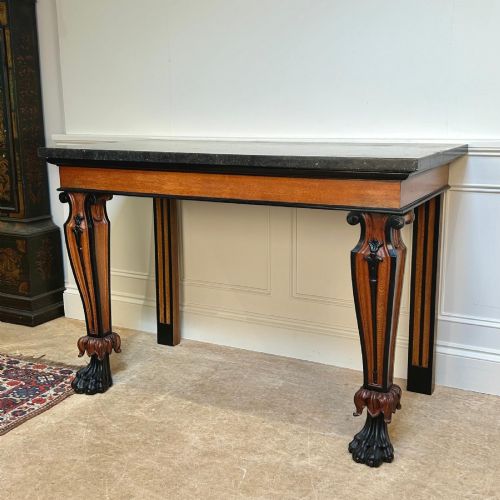
Construction details such as original inset mirror backs, heavy figured marble slabs, and crisp carving on the legs define the upper tier of execution. The harmony between the timber frame and the applied metalwork indicates the skill of the workshop.
Gillingtons of Dublin·Gillows
The Regency Pier Tables Glossary
- Console table
- A table supported by consoles or brackets against a wall rather than by four independent legs. These pieces usually stand flat against the masonry between windows.
- Pier glass
- A tall mirror designed to hang on the pier wall between windows, frequently integrated directly above or behind a pier table.
- Giltwood
- Wood that has been coated with a thin layer of gold leaf. This finish reflects candlelight and adds formal brightness to reception rooms.
- Marble top
- A stone slab fitted to the surface of a table to provide a cool, durable finish. These tops are often heavily figured and rest directly on the wooden frame.
- Parcel-gilt
- Partially gilded woodwork where gold leaf highlights specific carved details against a contrasting dark timber or painted ground.
Regency Pier Tables: Frequently Asked Questions
Where did these tables stand in a room?
These pieces were designed specifically for the architectural pier wall situated directly between two tall windows.
Placing them in this position allowed the mirror back or a hung pier glass to reflect natural light back into the interior space.
What were regency pier tables used for?
They served primarily as decorative console surfaces for displaying candelabra, porcelain, or ornamental objects in formal reception rooms.
The heavy marble top provided a practical, durable surface that resisted staining from wax or water.
How do I distinguish different periods?
Earlier examples from the George III and Regency periods favour crisp neoclassical lines, brass inlay, and rosewood veneers.
Later Victorian and revival pieces often display heavier proportions, ebonised timber finishes, or more robust carved decoration.
Are the marble tops usually original?
Many tables retain their original heavy figured marble slabs, fitted precisely into the wooden rails of the frame.
Replacements do occur due to the fragile nature of stone, so check the fit and edge profile against the period of the base.