

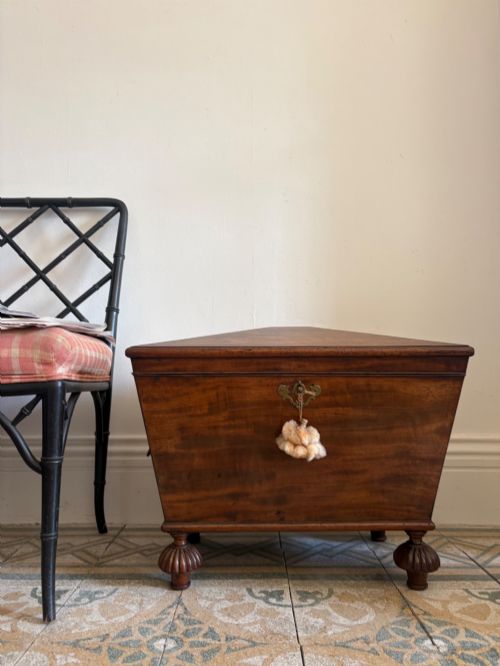


Regency Period Wooden Box
A regency period wooden box brings refined storage into a room, combining rich timbers and precise brass inlay for daily utility.
Regency Period Wooden Box
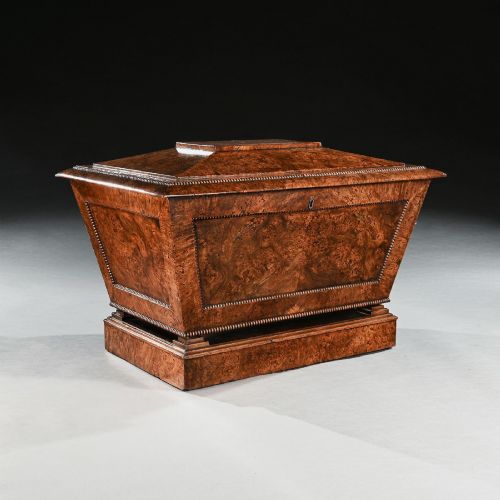
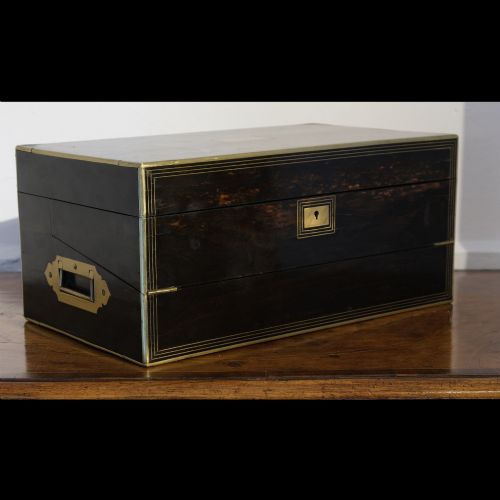
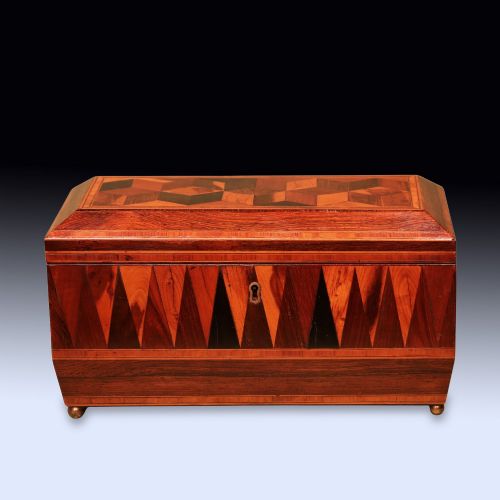
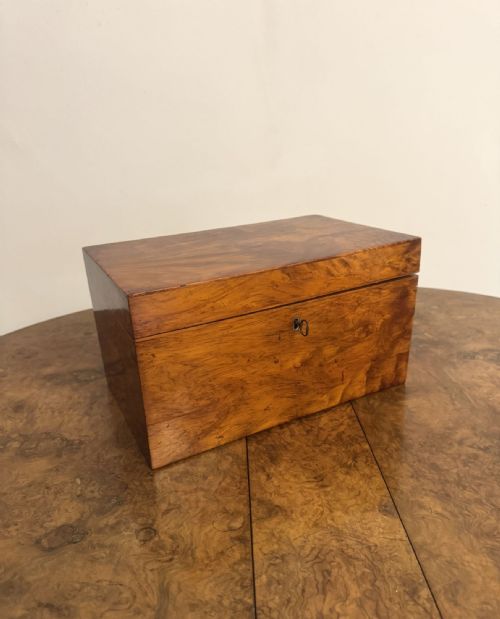
A regency period wooden box encompasses tea caddies, writing slopes, games boxes, and larger cellarettes originating from the nineteenth century.
The tea caddy and the writing slope dominate the selection, offering compartmentalised interiors designed for leaf tea, writing materials, or correspondence.
Makers utilised domestic and exotic timbers such as mahogany, rosewood, and pollard oak, often shaping them into sarcophagus or rectangular forms.
Materials and Technique
Cabinetmakers employed dense hardwoods like mahogany and rosewood as primary carcasses, frequently veneered with flame mahogany, burr elm, or coromandel to achieve striking grain patterns.
Decoration relied heavily on brass inlays, parquetry, penwork, and mother of pearl, requiring precise hand-cutting to set flush into the wooden surfaces.
Functional metal elements such as lead liners in cellarettes and bone escutcheons were integrated with care to ensure durability alongside visual balance.
A tiny mother of pearl bird pecks at foliate inlay on a rosewood chest, proving that Regency craftsmen loved hidden detail.
Distinctions in Execution
The standard of timber selection and the matching of veneer grain across lid and sides set superior examples apart from simpler utilitarian boxes.
The precision of brass inlay and the fineness of penwork or parquetry reflect the skill of the original workshop, where tighter joints and cleaner lines distinguish finer pieces.
Gillows of Lancaster·Thomas Hope
The Regency Period Wooden Box Glossary
- Tea caddy
- A box designed to store loose tea leaves, often featuring internal lidded compartments and mixing bowls. These containers kept precious tea secure and dry.
- Writing slope
- A box with a hinged sloping lid that opens to form a desk surface, containing slots for inkwells and pens. They served travellers and homeowners alike for correspondence.
- Cellarette
- A large freestanding box or cooler designed to hold wine bottles, frequently resting on paw feet and lined with lead. They stood in dining rooms during formal meals.
- Penwork
- A decorative technique using fine ink drawings on wood, finished with protective layers to create intricate pictorial scenes. This work required steady hands and immense patience.
- Teapoy
- A small stand or large box mounted on a central pillar with feet, holding tea canisters and mixing bowls. They occupied a central place in the Regency drawing room.
Regency Period Wooden Box: Frequently Asked Questions
What is a Regency tea caddy used for?
These boxes stored expensive tea leaves safely under lock and key in the dining room or parlour. Interior lidded compartments kept different varieties separated.
Wealthy households used them to manage hospitality, often blending teas inside an integrated glass bowl before serving.
How do I identify a writing slope?
Writing slopes feature a hinged lid that opens flat to reveal a slanted writing surface lined with leather or velvet. Interior compartments hold inkwells, pens, and paper.
Many examples include secret drawers hidden beneath the stationery section for storing sensitive documents.
What timbers were used for Regency boxes?
Cabinetmakers favoured dense tropical hardwoods like rosewood and mahogany, alongside figured native timbers such as walnut, satinwood, and pollard oak. Veneers created rich exterior patterns.
Inlays of brass, ebony, and bone provided sharp contrast against the dark background woods of the period.
Where were cellarettes placed in a house?
Cellarettes stood in the dining room, usually positioned near the sideboard to hold wine bottles ready for the table. Their lead-lined interiors kept bottles cool.
Larger versions rested on substantial paw feet or casters to ease movement across heavy carpets.