
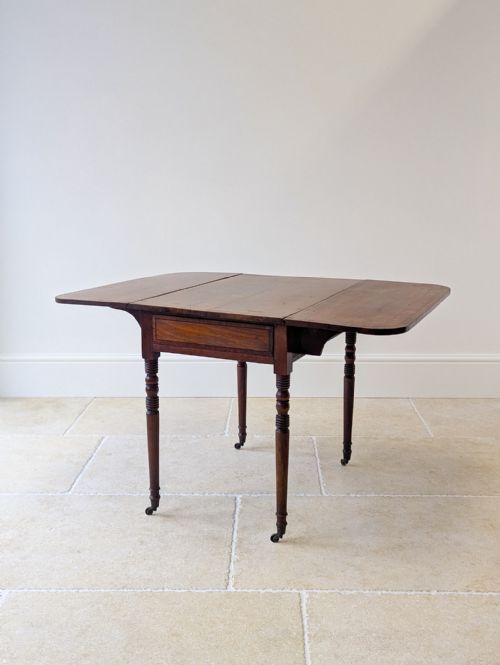


Regency Period Sofa Desk
These regency period sofa desk pieces combine dual-use writing surfaces and drop leaves for domestic work and display.
Regency Period Sofa Desk
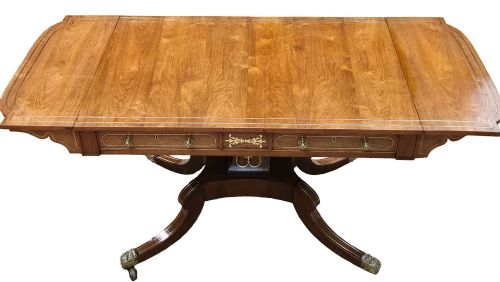
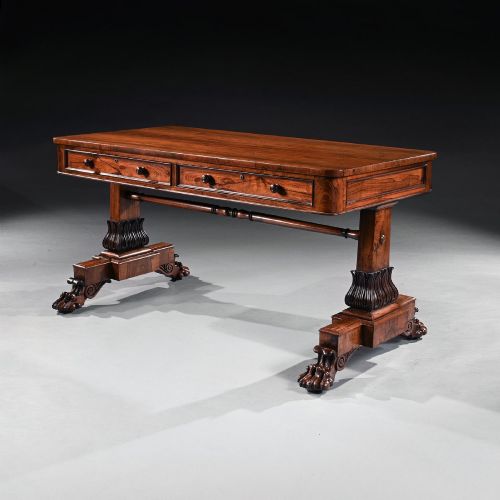
A regency period sofa desk brings together the practical writing surface of a desk with the drop-leaf proportions of a sofa table, emerging primarily from the Regency and George IV eras. These pieces typically feature a rectangular top flanked by drop leaves, supported on pillar ends, pedestal columns, or carved feet.
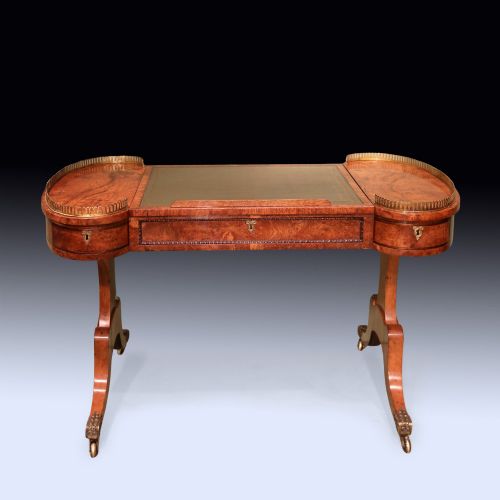
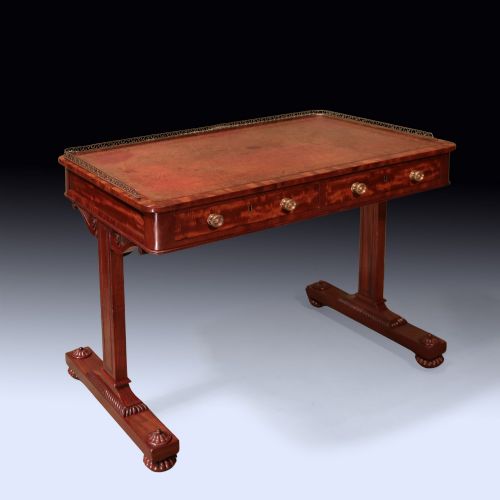
The version most commonly encountered in these listings is constructed from richly figured rosewood or mahogany, often enhanced with contrasting brass inlay or mounts. They serve equally as library tables, writing desks, and centre tables, designed historically to sit away from walls in the middle of a room.
Makers and workshops of the period drew upon French Empire and Sheraton design idioms, resulting in forms that balance architectural strictness with refined cabinetwork. Whether configured as a writing table or a sewing table with fitted drawers, the form prioritises versatility and visual balance.
Materials and Construction
Cabinetmakers of the era relied heavily on dense tropical hardwoods like rosewood and mahogany, frequently selecting veneers with high figure and grain movement. Secondary timbers such as oak provided stable internal carcases for drawers and framing.
Decorative enrichment relied on precision brass inlay, known as buhl or stringing, set flush into the dark wood surfaces alongside cast brass mounts and paw feet. Parcel gilding and ebony details further accented the structural lines of pedestals and lyre ends.
Listings feature woods including rosewood, mahogany, burr oak, and ebony, frequently accented with brass inlay and giltwood.
Distinctions in Quality
The division between standard output and the finest examples rests upon the selection of timber and the precision of brass work. Superior pieces display continuous, book-matched grain across table tops and drop leaves, paired with hand-cast brass mounts rather than stamped alternatives.
Jean-Joseph Chapuis·Gillows of Lancaster
The Regency Period Sofa Desk Glossary
- Sofa Table
- A freestanding table with drop leaves at either end, originally designed to stand in front of a sofa. They typically include two small drawers on one side and dummy drawers on the reverse.
- Library Table
- A large, substantial table used for reading and writing, finished on all sides so it can occupy the centre of a room. These frequently incorporate leather-lined writing surfaces.
- Buhl Work
- A technique of inlaying brass and tortoiseshell or dark wood into a contrasting surface, popular in Regency interpretation of French Empire styles. It requires immense precision from the cabinetmaker.
- Lyre End
- A table support shaped in the classical form of a lyre musical instrument, frequently carved from solid rosewood or mahogany and strengthened with brass stringing or stretchers.
- Parcel Gilt
- A method of applying thin gold leaf to specific carved details, mouldings, or mounts while leaving the underlying dark wood exposed.
Regency Period Sofa Desk: Frequently Asked Questions
How were these tables used originally?
These pieces functioned as versatile workspace furniture in principal rooms, serving for correspondence, reading, and needlework. Their drop leaves allowed them to expand when needed and contract to save space against a wall or behind furniture.
Because they were finished on all sides, owners placed them in the middle of libraries and drawing rooms rather than pushing them against room boundaries. This allowed access to drawers from multiple angles during daily social and administrative tasks.
Can I use a sofa desk as a modern writing desk?
Yes, many examples provide adequate knee clearance and stable top surfaces suited for contemporary laptop use or writing. The presence of original leather inserts adds a durable writing plane that has survived centuries of use.
Buyers should verify the exact height of the kneehole space, as older seating dimensions can vary compared to modern standard desks. Adding a suitable period or neutral chair ensures comfortable daily use without altering the antique structure.
How do I tell a Regency piece from later copies?
Authentic Regency pieces display hand-cut dovetails in the drawer construction and use timber species appropriate to the early nineteenth century, such as Cuban mahogany and East Indian rosewood. The brass inlay should be individually pinned or fitted rather than glued down by modern methods.
Surface patina develops naturally over generations, showing subtle wear patterns around drawer pulls and drop-leaf hinges. Examining the secondary woods inside the frame often reveals the distinct tool marks and ageing expected from the 1800s.
How do I care for rosewood and brass surfaces?
Maintain these timbers by applying a quality microcrystalline wax sparingly to preserve the finish without attracting dust. Avoid placing the desk near direct heat sources or strong sunlight, which can dry out rosewood veneer and cause brass inlay to lift.
Dust regularly with a soft, dry cloth and lift items rather than dragging them across the polished top or leather insert. Professional conservation should be sought if any brass stringing loosens from the surrounding wood.