


Regency Period Magazine Holder
These regency period magazine holder items are elegant timber stands that bring classic refinement and tidy storage to any room.
Regency Period Magazine Holder
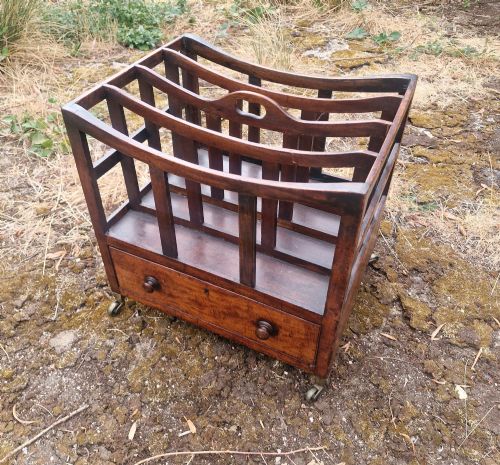
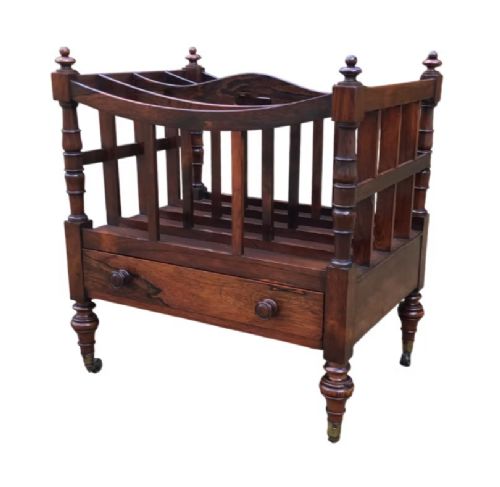
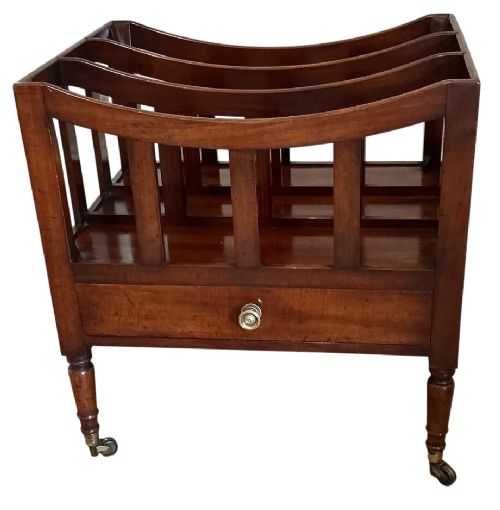
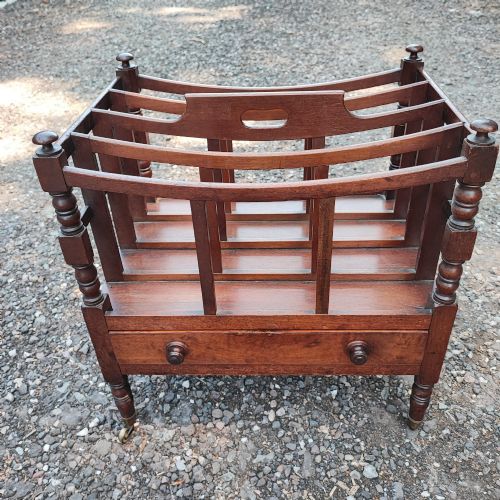
A regency period magazine holder, traditionally known as a canterbury or music stand, serves as an organised repository for periodicals and sheets. The listings here showcase items primarily from the Regency period, alongside examples spanning the Georgian, Victorian, and later eras.
Most pieces encountered on this page take the form of traditional canterburys and dedicated magazine racks. These objects combine divided upper compartments for reading material with lower drawer storage and sturdy turned legs.
How they were made
Cabinet makers constructed these pieces using dense timber such as mahogany and rosewood, often enhanced with flame mahogany veneer. Artisans shaped the wood with precise joinery, incorporating delicate fretwork and carved details.
Metal elements like brass feature prominently in handles, castors, and structural mounts. Painted wood also appears, adding distinct surface decoration to select examples.
Some stands feature secret wheels that let you roll your reading material across the floor with aristocratic ease.
What varies in quality
The choice of primary timber and veneer dictates the visual depth of the piece. Selected timbers with rich grain patterns distinguish finer examples from plain constructions.
Execution of carved details and the integration of brass mounts reveal the skill of the original workshop. Refined turning on the legs and balanced proportions mark the upper tier of execution.
Gillows
The Regency Period Magazine Holder Glossary
- Canterbury
- A low stand with divided sections, originally designed to hold sheet music and later utilised for magazines and newspapers. It typically includes a small drawer beneath the slatted dividers.
- Flame mahogany veneer
- A thin slice of mahogany timber exhibiting a fiery, undulating grain pattern applied to the carcass. This decorative technique maximises the visual impact of figured wood.
- Regency
- An English stylistic period dating from the early nineteenth century, characterised by classical restraint and neoclassical motifs. Furniture from this era often draws inspiration from ancient Roman and Greek designs.
- Castor
- A small wheel attached to the base of furniture legs to allow easy movement across the floor. Brass sockets frequently secure these wheels to the timber feet.
Regency Period Magazine Holder: Frequently Asked Questions
What is a canterbury?
A canterbury is a small compartmentalised stand designed to hold periodicals, books, or music sheets. It provides an upright storage solution that keeps reading materials neat and accessible.
These pieces typically feature slatted or partitioned upper sections and short legs often fitted with castors. Many incorporate a shallow drawer at the base for smaller items.
How do I date a piece?
Dating relies on examining the timber species, construction methods, and stylistic details present in the woodwork. Pieces from the Regency era display specific classical motifs and proportions distinct from later revivals.
Secondary woods, fixing methods, and the style of brass castors also help establish the approximate decade of manufacture. Comparing the piece to documented examples narrows down its age.
Where were they used?
These holders sat in the principal reception rooms and libraries of nineteenth-century homes to keep daily reading close at hand. They offered a convenient receptacle for newspapers and periodicals in polite society.
Today, they function well in sitting rooms or studies for organising modern magazines and books. Their compact footprint allows them to fit easily beside armchairs and sofas.
Are rosewood and mahogany common?
Rosewood and mahogany are the predominant timbers found across these listings, valued for their durability and rich natural colour. Cabinet makers utilised these dense hardwoods to achieve polished surfaces and fine carved details.
Mahogany offers a steady reddish-brown tone, while rosewood provides darker grain contrast and dramatic figuring. Both woods typify the refined cabinet making of the period.