



Regency Period Low Cupboard
A regency period low cupboard offers compact storage with distinct classical proportions, combining architectural timber surfaces and refined metal mounts for domestic interiors.
Regency Period Low Cupboard
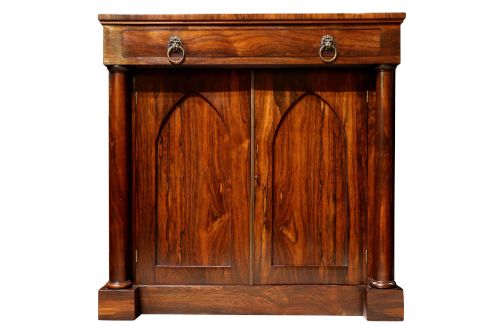
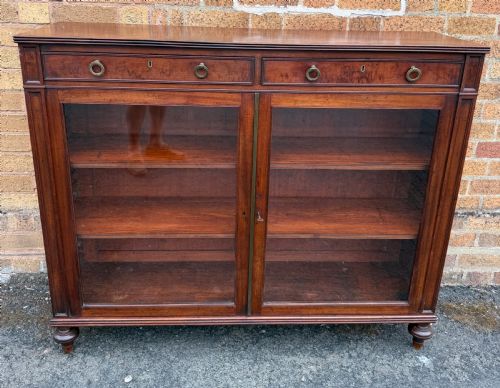
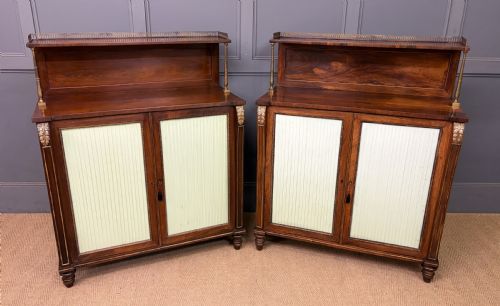
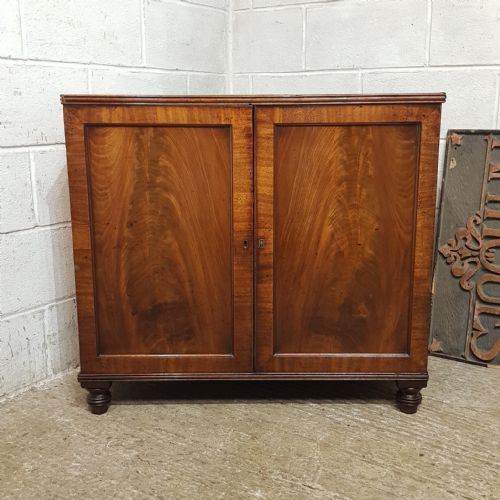
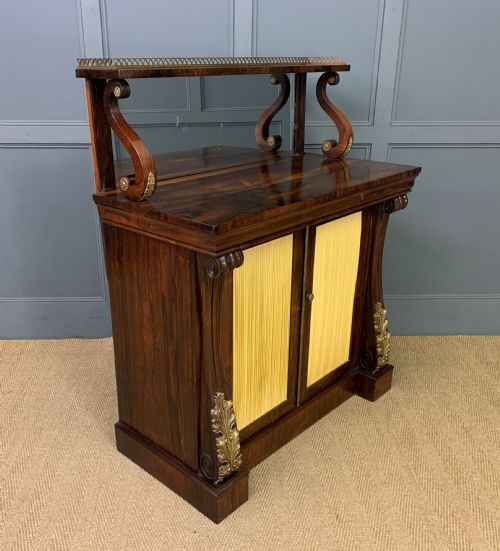
A regency period low cupboard emerges in forms such as side cabinets, chiffoniers, bookcases, and linen presses across the Regency, George III, George IV, and nineteenth-century periods. These items serve as low-profile storage furniture designed for reception and morning rooms.
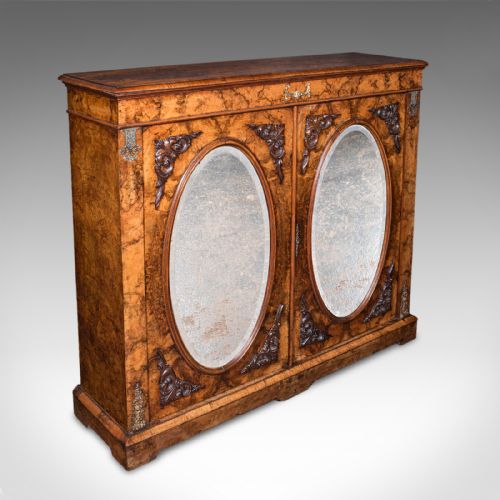
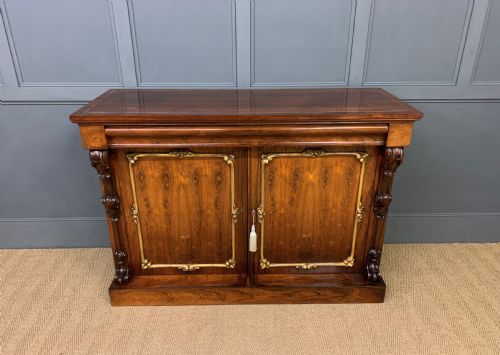
Rosewood and mahogany dominate the examples, alongside walnut, amboyna, goncalo alves, plum pudding mahogany, palisander, thuya wood, and faux or simulated rosewood. Pieces often feature brass mounts, ormolu, glass, marble, and fabric or silk panels.
What varies in quality
The selection of timbers dictates visual depth, ranging from plain mahogany to highly figured plum pudding mahogany, amboyna, and Rio rosewood. The choice of exotic veneers and secondary woods alters the overall presence of the cabinet.
The precision of brass inlay, gilt ormolu mounts, and specialised techniques such as pen-work separates standard production from finer workshop output. Structural execution in door framing and panel fitting also marks the tier of a piece.
Listings demonstrate forms spanning side cabinets, chiffoniers, bookcases, and linen presses in rosewood, mahogany, and amboyna.
Gillows·Harrods
The Regency Period Low Cupboard Glossary
- Chiffonier
- A low sideboard or cabinet featuring shelves or enclosed storage, frequently fitted with fabric panels behind doors during the Regency era.
- Ormolu
- Gilded bronze mounted onto furniture as decorative enrichment, often highlighting corners, feet, and door borders.
- Pen-work
- A decorative technique using ink drawing on wood surfaces to create intricate geometric or figurative motifs before sealing.
- Palisander
- A dense tropical timber related to rosewood, valued for its dark purple and brown grain patterns in nineteenth-century cabinets.
- Goncalo alves
- A heavily figured exotic hardwood showing contrasting dark and light brown streaks, utilised in select Regency cabinets.
Regency Period Low Cupboard: Frequently Asked Questions
What rooms suit a low cupboard?
These cabinets fit well in living spaces, studies, and hallways where a low profile preserves wall space above. They provide surface display area while concealing books, linen, or household items behind doors.
Their varied widths and depths allow placement beneath windows or mirrors without obstructing light or sightlines.
How do these cabinets differ from sideboards?
Low cupboards and chiffoniers offer enclosed shelving rather than the wide serving surfaces and cellarette drawers typical of dining room sideboards. They prioritize vertical compactness and enclosed compartment storage for domestic rooms.
Many examples include upper bookcase sections or integrated gallery rails suited to parlour use.
What timbers are most common?
Mahogany and rosewood appear most frequently across these pieces, supplemented by walnut, amboyna, and exotic hardwoods. Workshops also utilised simulated and faux rosewood finishes on alternative timber bases.
Figured grains like plum pudding mahogany and Rio rosewood provide distinct surface patterns across the door panels.
How should I care for polished wood?
Maintain timber surfaces by dusting with a dry, soft cloth and avoiding silicone-based sprays that degrade traditional polishes. Keep pieces away from direct heat sources and strong sunlight to prevent veneer lifting and fading.
Wax finishes benefit from occasional application using traditional beeswax formulations rubbed gently along the grain.