

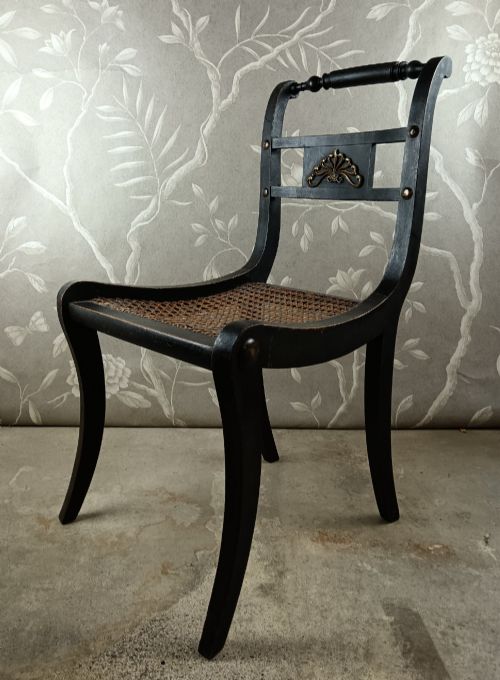


Regency Period Hall Seating
Regency period hall seating brings striking neoclassical lines and solid timbers into an entryway, offering both practical utility and architectural presence.
Regency Period Hall Seating
Regency period hall seating encompasses architectural benches, window seats, and individual chairs designed to make a formal statement in entrance spaces. The items on this page span the Regency and Georgian eras, reaching back into the broader nineteenth century.
Forms vary from robust country house hall sofas and window seats to pairs of oval-backed chairs and occasional seating. Walnut, oak, and mahogany appear frequently alongside painted bamboo and ebonised finishes.
Makers utilised cane, fabric, and needlepoint for seating surfaces, paired with brass inlay or giltwood detailing. These pieces reflect the neoclassical taste of the early nineteenth century, intended for reception rooms and hallways alike.
Materials and construction methods
Cabinetmakers relied heavily on solid hardwoods like mahogany, walnut, and oak to build durable frames that could withstand the demands of a busy hallway. Ebonised wood and faux rosewood finishes provided alternative aesthetics, often enhanced with contrasting brass inlay.
Seating inserts frequently incorporated original cane work, fabric upholstery, or detailed needlepoint. Frameworks occasionally featured painted bamboo or giltwood, demonstrating the diverse decorative techniques of the period.
Regency Period Hall Seating Retail Price Guide 2026
Typical asking prices for regency period hall seating among the pieces listed under this phrase on Sellingantiques today, from the lower quarter to the upper quarter. They describe what is for sale here now, not the wider market.
The listings demonstrate a strong presence of mahogany and walnut alongside occasional painted bamboo and ebonised wood.
Distinctions in craftsmanship and design
Quality rests in the crispness of carved details, the integrity of the timber joints, and the survival of original elements like cane seats or brass inlay. Superior examples display refined proportions and deliberate decorative choices rather than plain utility.
The sophistication of the silhouette - such as Trafalgar sabre legs or distinctive oval backs - distinguishes standard workshop production from exceptional pieces. Surviving pairs and sets elevate the historical interest of the furniture.
Gillows of Lancaster
The Regency Period Hall Seating Glossary
- Trafalgar sabre leg
- A curving, outward-splayed furniture leg popular during the Regency era. It draws inspiration from classical antiquity and adds dynamic movement to chairs.
- Cane seat
- A woven plant material seat base providing lightweight resilience. It is typical of formal and occasional chairs from this period.
- Faux rosewood
- A painted or grained finish mimicking expensive tropical hardwood. Artisans used this technique to achieve a luxurious appearance on accessible timber.
- Giltwood
- Wood treated with gold leaf or metallic paint to create a brilliant decorative surface. This finish highlights prominent architectural carvings.
- Needlepoint
- A form of counted thread embroidery used for durable upholstery. It introduces textured patterns to nineteenth-century seats.
Regency Period Hall Seating: Frequently Asked Questions
Where were these chairs placed?
Hall seats and benches stood primarily in entranceways, hallways, and reception rooms to offer temporary seating for visitors and guests. They functioned as both practical furniture and architectural statements.
Larger window seats were positioned near domestic windows, while individual chairs served occasional roles across various rooms in the house.
How do I identify a genuine piece?
Look for traditional construction methods, period-appropriate hardwoods like mahogany or walnut, and characteristic design motifs such as sabre legs or brass inlay. The presence of original cane or period upholstery further supports authenticity.
Comparing the proportions and decorative details against documented examples helps confirm the nineteenth-century origins of the furniture.
How should I care for wooden hall furniture?
Keep wooden frames away from direct heat sources and dramatic humidity shifts to protect the timber and prevent splitting. Regular dusting with a soft, dry cloth preserves the finish.
Handle cane and upholstered inserts with care, avoiding excessive weight or moisture to maintain the structural integrity of historical materials.