
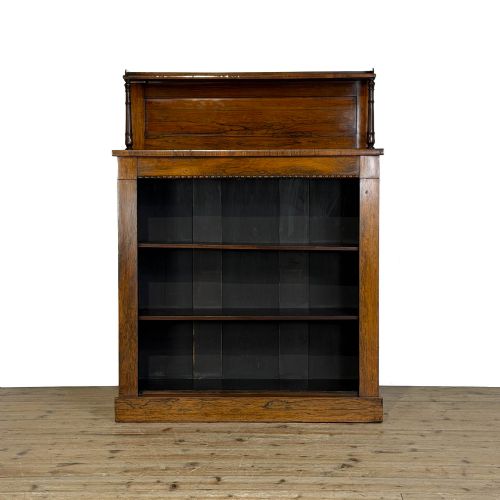
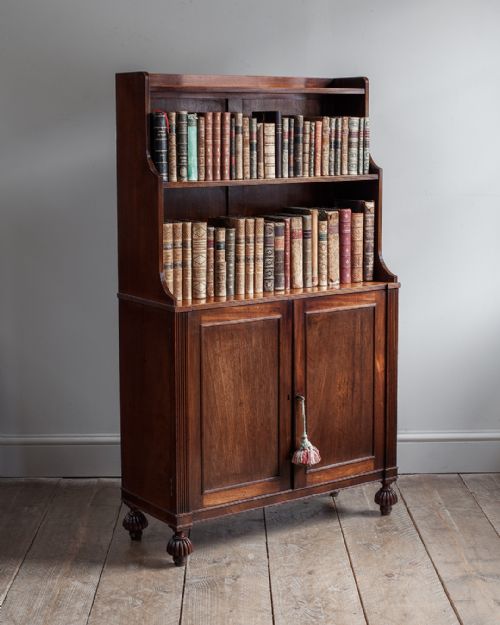
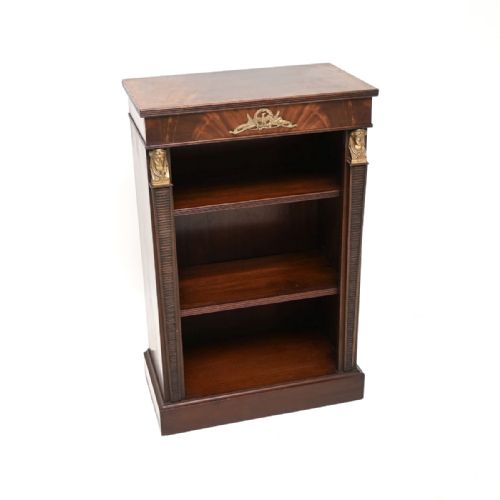
Regency Open Shelving Unit
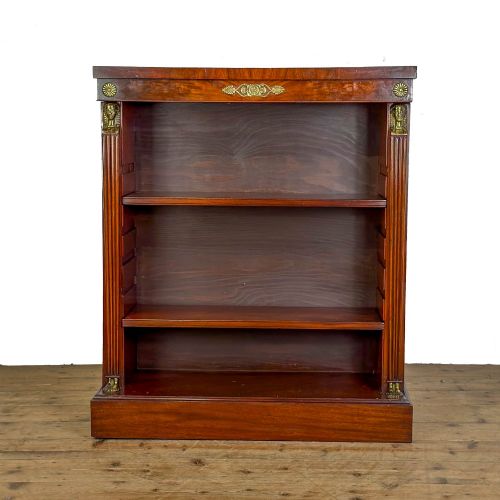
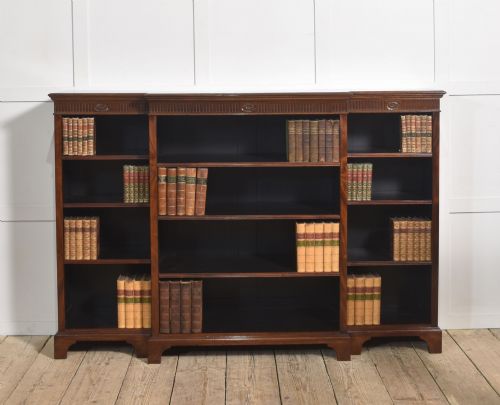
A regency open shelving unit brings architectural grace to a room, offering practical display space through tiered shelves and open sides.
Regency Open Shelving Unit
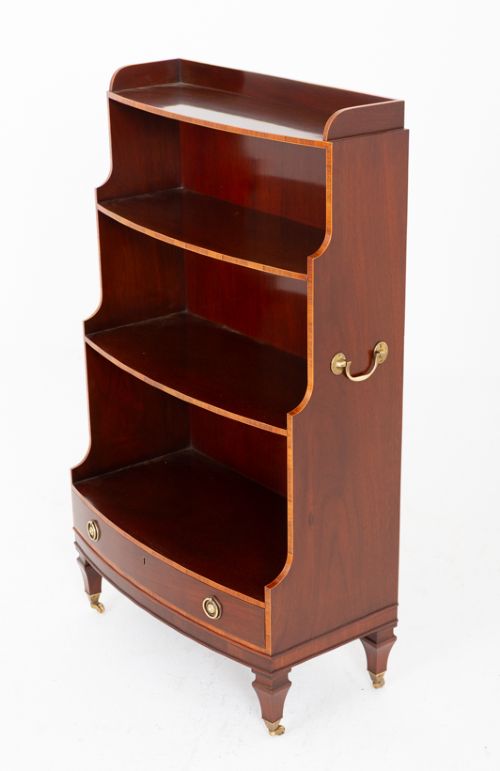
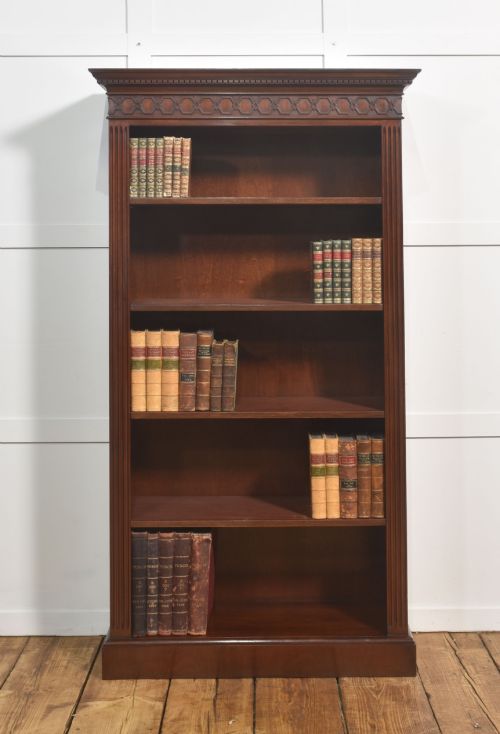
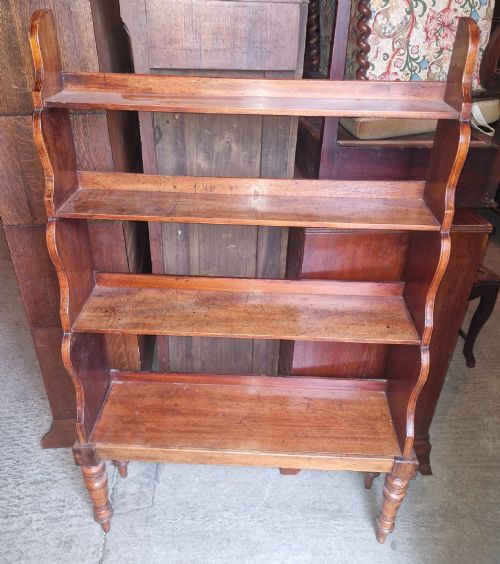
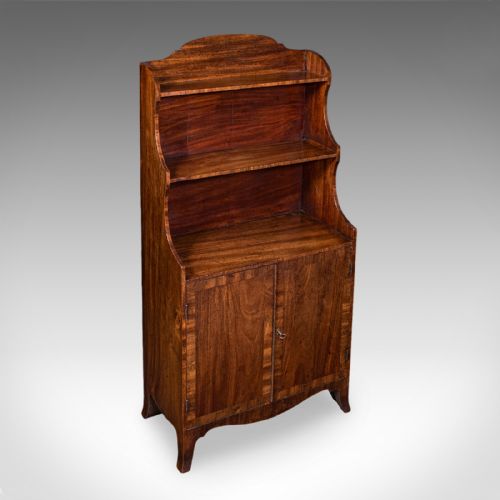
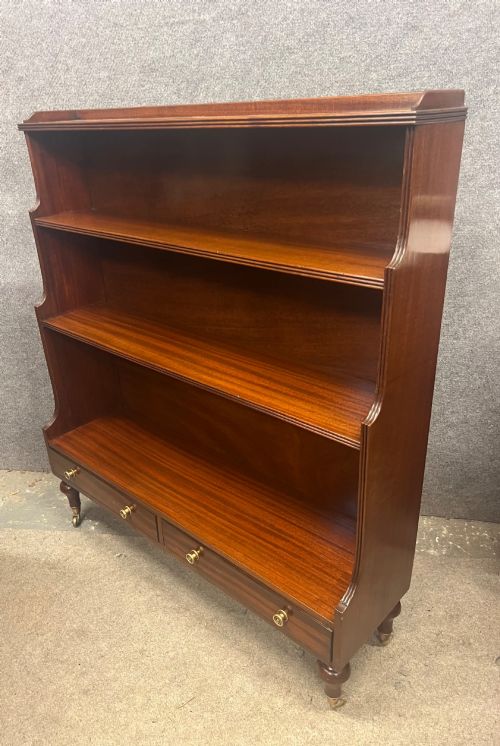
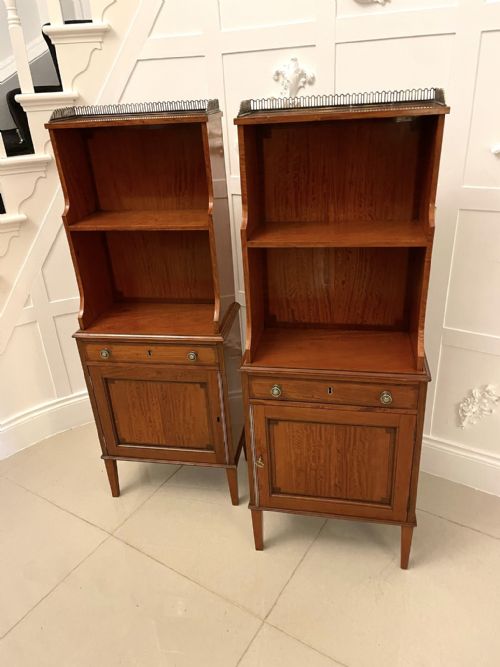
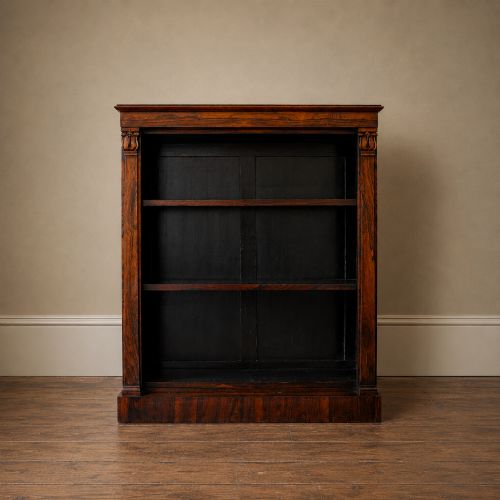
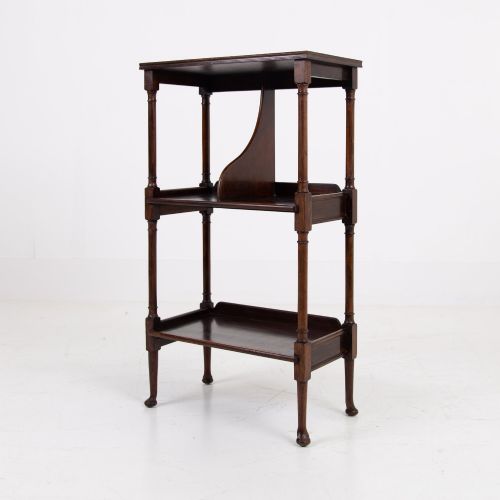
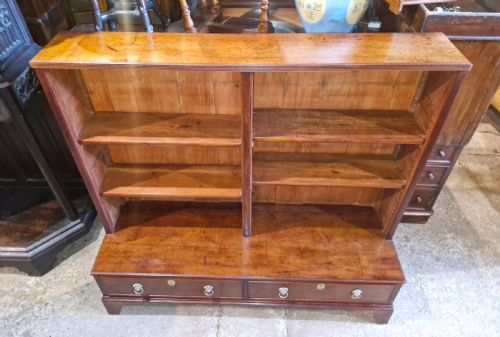
When you search for a regency open shelving unit, you encounter pieces designed to hold books and display objects without the barrier of glazed doors. These items appear primarily in forms such as bookcases, whatnots, and etageres, providing accessible storage across several tiers.
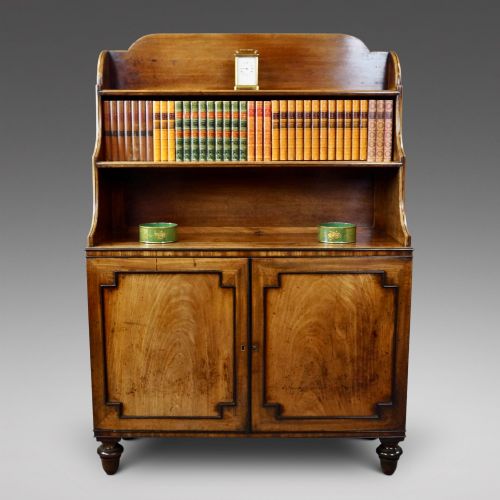
The version you meet most frequently on this page is constructed from mahogany or rosewood, often taking the form of a waterfall bookcase or a low dwarf bookcase. Pieces span the Regency period itself as well as later revivals from the nineteenth and early twentieth centuries.
Makers designed these shelving units to stand freely against a wall or in the centre of a room, serving both functional storage and decorative purposes. Their origins stretch from the Georgian era through William IV and Victorian times into later revival periods.
How They Were Made
Cabinet makers utilised dense hardwoods like mahogany, rosewood, and satinwood, often applying veneers to achieve smooth surfaces on upright supports and shelves. Oak and pine also appear as secondary timbers for internal framing and backing boards.
Brass inlay and brass mounts frequently accent the timber frames, adding metallic contrast to the dark wood grains. Adjustable shelving mechanisms allow owners to alter tier heights, while tiered waterfall designs step back progressively toward the top.
Early nineteenth-century cabinet makers built petite chiffoniers and tiered whatnots so owners could rearrange their decorative ornaments on a whim.
What Varies in Quality
The distinction between ordinary and superior pieces rests on the choice of timber and the precision of the cabinet work. Finely figured rosewood and richly grained mahogany elevate a piece, especially when matched with neat brass inlay and sturdy construction.
Proportion and architectural balance separate standard items from exceptional examples. Pieces displaying careful attention to stepped tier angles and clean open frames demonstrate greater workshop skill.
Gillows
The Regency Open Shelving Unit Glossary
- Waterfall bookcase
- A tiered shelving unit where each shelf steps back progressively from the one below it. This form became popular during the Regency period for displaying books and small objects.
- Whatnot
- A multi-tiered piece of freestanding furniture used for displaying ornaments and books. These units typically feature open shelves supported by slender columns or uprights.
- Breakfront
- A piece of furniture featuring a central section that projects forward from the flanking wings. This architectural layout creates depth and visual interest in large library bookcases.
- Dwarf bookcase
- A low open shelving unit designed to sit beneath table height or window sills. They provide accessible storage while keeping walls visually open.
- Etagere
- A set of open shelves used for display, originating in France. These pieces mirror the function of whatnots with tiered platforms for ornaments.
Regency Open Shelving Unit: Frequently Asked Questions
How do I style a regency open shelving unit?
Balance books in vertical and horizontal stacks alongside decorative objects like ceramics and bronzes. Leave breathing space between items to let the timber grain and open structure remain visible.
Position the unit against a principal wall or use a dwarf version to divide a large room without blocking light. Ensure heavy volumes rest on lower shelves to maintain visual and physical stability.
Are these shelves suitable for heavy books?
Most antique open shelving units handle standard library books easily, particularly those with fixed or adjustable timber shelves. Consider the thickness of the boards and the overall construction before loading dense volumes.
For large folios or extensive collections, distribute weight evenly across the lower tiers. Freestanding waterfall designs suit lighter display collections better than deep library bookcases.
How do I tell original Regency from revival pieces?
Examine the timber preparation, backboards, and construction fixings for signs of period hand-tooling. Original pieces from the early nineteenth century display specific patination and cabinet methods distinct from later copies.
Revival pieces from the Edwardian era or the nineteen-thirties often utilise machine-sawn timbers and different secondary woods. Look closely at the joinery and hardware to understand the true age of the piece.
What is the difference between a whatnot and a bookcase?
A bookcase focuses primarily on storing collections of bound volumes with deeper shelves and sturdy sides. Whatnots emphasise open display tiers supported by delicate uprights for ornaments and varied objects.
While both share open shelving formats, whatnots often appear in lighter rosewood or satinwood with multiple decorative tiers. Bookcases generally offer greater structural depth for holding books upright.