


Regency Mirrored Chiffonier
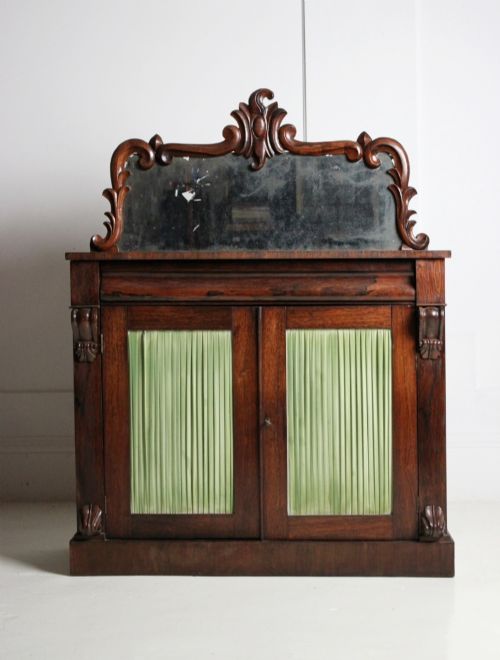
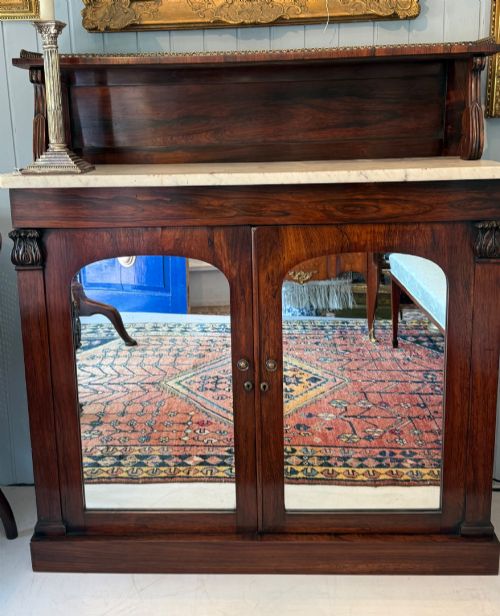
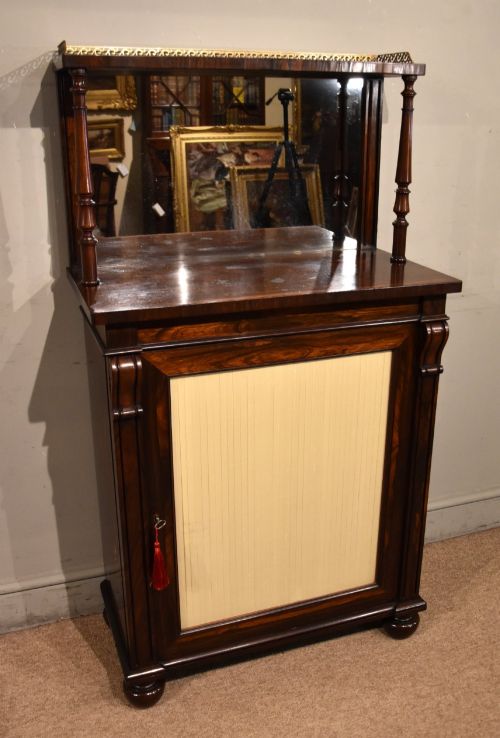
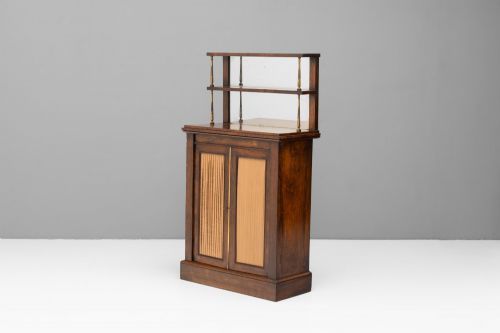
These regency mirrored chiffonier examples combine fine timbers with reflective glass, offering practical low storage and elegance for formal rooms.
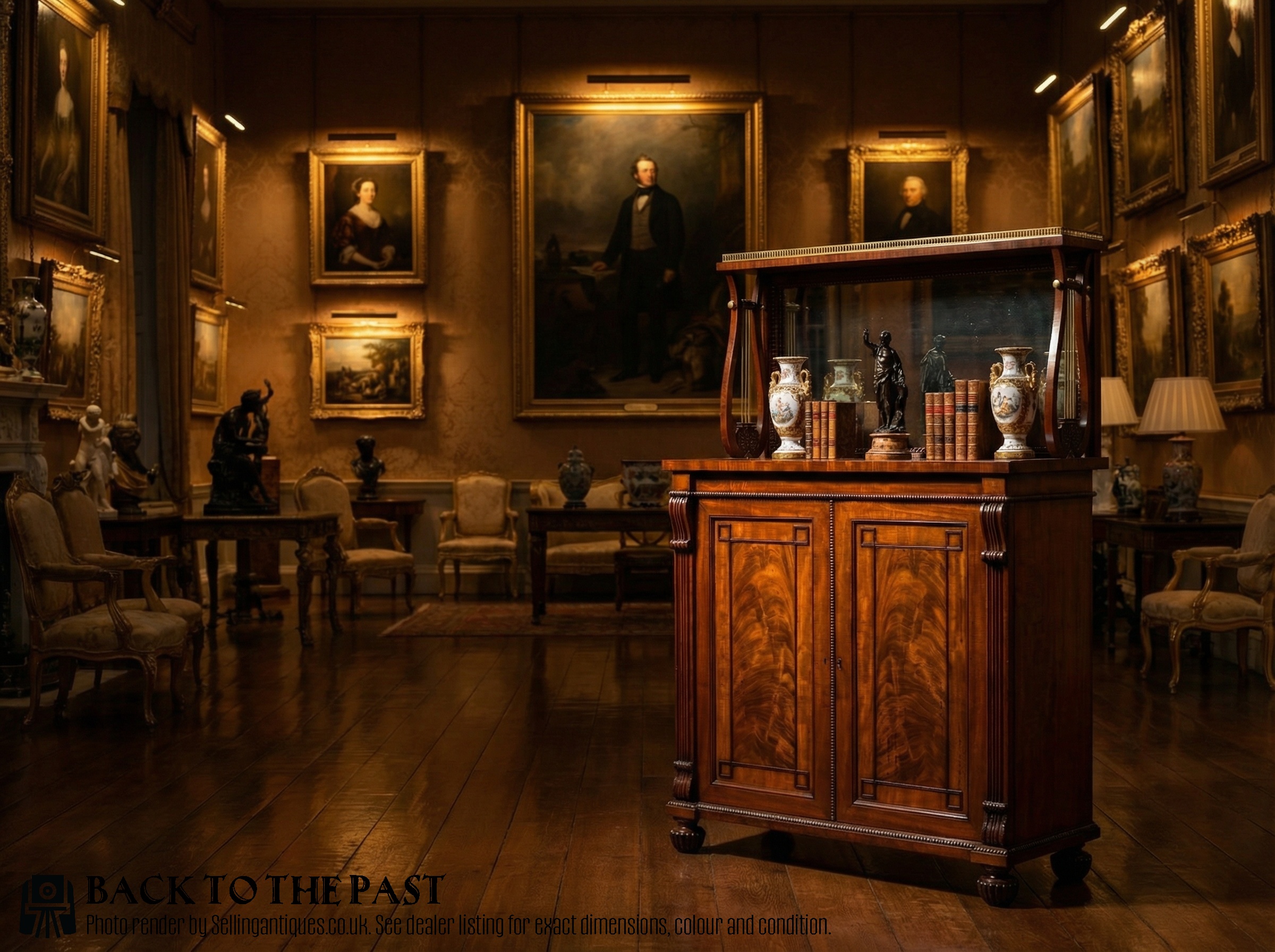
Regency Mirrored Chiffonier
A regency mirrored chiffonier is a low cabinet designed for the parlour or dining room, combining enclosed shelf space with display surfaces. The form evolved during the early nineteenth century from sideboards and side cabinets into a distinct compact storage piece.
The versions met on this page span the Regency, George IV, and William IV periods, alongside later nineteenth century interpretations. They appear in rosewood and mahogany, often featuring integrated mirrors, brass inlay, and marble tops.
Materials and construction
Cabinet makers utilised dense exotic hardwoods like rosewood and figured mahogany, often selected for strong grain patterns. These timbers were worked over sturdy secondary woods to build carcases capable of supporting marble tops and heavy books.
Brass inlay, delicate mouldings, and mirrored glass were incorporated to catch the light in candlelit rooms. Cabinet makers combined traditional joinery with inset brass wiring and panel construction to achieve the characteristic early nineteenth century finish.
Listings demonstrate a strong preference for rosewood across Regency and George IV examples, accompanied by brass inlay and glass elements.
Markers of quality
Quality rests in the choice of timber figure, the precision of brass inlay work, and the structural integrity of the carcase. Better examples display carefully matched rosewood veneers and solid secondary linings rather than hasty construction.
Proportion and the integration of the mirror or upper bookcase section also separate standard pieces from finer cabinet work. Original mirror plates and well-executed Egyptian revival motifs elevate the presence of the cabinet.
Gillows
The Regency Mirrored Chiffonier Glossary
- Chiffonier
- A low cabinet originating in the nineteenth century, typically featuring shelves or drawers beneath a surface for display. It serves as a compact alternative to the larger sideboard.
- Rosewood
- A heavy, dark timber with distinct figuring, widely utilised during the Regency period for high-status furniture. Its rich colour made it a favourite for drawing room cabinets.
- Brass inlay
- The technique of embedding thin strips of brass into carved channels in the wood surface. This creates geometric or foliate patterns across the doors and friezes.
- Breakfront
- A piece of furniture where the central section projects forward from the flanking sides. This architectural arrangement adds depth and shadow to large cabinets and sideboards.
Regency Mirrored Chiffonier: Frequently Asked Questions
What is a regency mirrored chiffonier?
A regency mirrored chiffonier is a low nineteenth century cabinet featuring a mirror above or within the structure, combined with shelving or enclosed storage below.
Cabinet makers designed these pieces for principal rooms to hold silver, glass, or books while reflecting ambient light.
How do I date a chiffonier?
Dating relies on timber choice, hardware, and stylistic details such as brass inlay or Egyptian revival motifs. Regency and George IV examples frequently employ rosewood and precise brass work.
Later Victorian pieces often show heavier proportions and different secondary woods inside the drawers and carcase.
Where were chiffoniers placed?
These cabinets sat against dining room or parlour walls, positioned to serve meals or display decorative porcelain.
Their low profile ensured they did not block window light or architectural mouldings in formal reception spaces.
Are marble tops original?
Marble tops appear on select nineteenth century side cabinets and chiffoniers, providing a durable and cool surface for serving.
They were fitted during manufacture on pieces intended for heavier domestic use in dining settings.