


Regency Mirrored Back Credenza
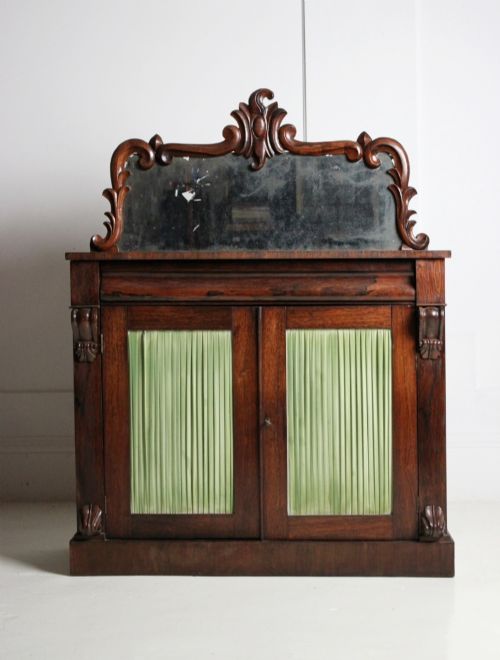
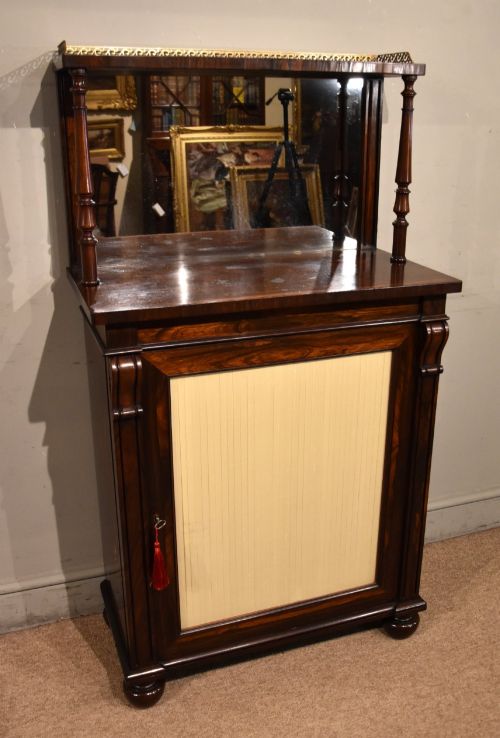
A regency mirrored back credenza offers an elegant architectural focal point, bringing refined timber grain and reflecting light through period glass.
Regency Mirrored Back Credenza
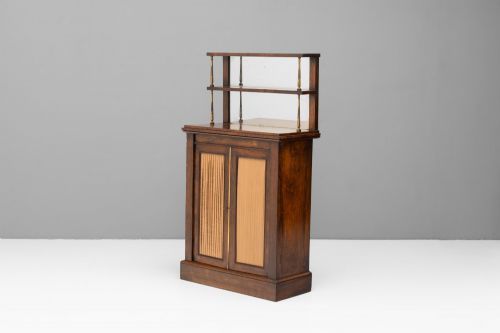
Buyers seeking a regency mirrored back credenza encounter items primarily catalogued as chiffoniers, side cabinets, and sideboards from the nineteenth century. These forms sit within Regency, George IV, and William IV styles, alongside occasional mid-nineteenth century interpretations.
The dominant material recorded across these listings is rosewood, frequently accompanied by mahogany, brass inlay, marble, and mirror glass. Pieces take the form of low cabinets, console tables, and bookcases designed for principal reception rooms.
Makers such as Gillows appear within the evidence, alongside Scottish regional variations of the Regency period. Buyers most commonly meet rosewood chiffoniers fitted with internal shelving and mirrored back panels.
Construction and Materials
Cabinetmakers utilised dense timbers like rosewood and figured mahogany, often laid as veneers over sturdy secondary woods. These surfaces received careful polishing to highlight natural grain patterns.
Brass inlay and brass mounts were integrated into the timber structures with precision, particularly on Regency examples. Mirror glass and marble tops were incorporated into the upper and top sections respectively, requiring careful joinery to support the added weight.
The site listings combine 19th Century, Regency, Georgian, and 1850 periods with rosewood, brass, glass, and marble.
Distinctions in Quality
The sophistication of the timber figure and the subtlety of brass inlay work set superior examples apart from simpler pieces. Figured mahogany and richly grained rosewood indicate a higher grade of cabinetmaking.
The integration of materials such as original mirror glass and fitted marble tops distinguishes finer outputs. Construction methods, including the quality of the internal mahogany lining and the execution of carved details, determine the overall execution of each cabinet.
Gillows
The Regency Mirrored Back Credenza Glossary
- Credenza
- A sideboard or cabinet for displaying plate and serving food, adopted into British interiors during the Regency period. These pieces often incorporate cupboards and open shelving.
- Rosewood
- A heavy, durable timber with pronounced dark grain markings, favoured for fine cabinetmaking during the Regency and William IV periods. It takes a high polish.
- Brass inlay
- The technique of embedding thin strips of brass into the wood surface in geometric or floral patterns. This ornamentation is characteristic of Regency furniture.
- Breakfront
- A piece of furniture whose facade projects forward in sections, creating visual depth and architectural interest. This layout appears frequently on side cabinets and bookcases.
Regency Mirrored Back Credenza: Frequently Asked Questions
How do I identify a Regency period piece?
Regency pieces date from the early nineteenth century and often exhibit classical architectural lines. Look for materials such as rosewood and mahogany, frequently enhanced by brass inlay.
Makers of this era employed specific proportions and decorative motifs that distinguish them from later Victorian furniture.
Where were these cabinets placed in a home?
These cabinets traditionally stood against dining room or drawing room walls. They served as serving surfaces, storage for tableware, or display areas for decorative objects.
The mirrored backs were designed to reflect candlelight and daylight, increasing the perceived light in the room.
What timber was used most often?
Rosewood is the predominant timber found in these listings, valued for its rich dark colour and striking grain. Figured mahogany was also utilised extensively by cabinetmakers.
These dense woods provided a stable base for fine polish and decorative metal embellishments.
How do William IV pieces differ?
William IV items date from the second quarter of the nineteenth century and generally display heavier proportions than earlier Regency designs. They continue the use of rosewood and mahogany while introducing bolder carved elements.
These cabinets maintain similar forms, such as chiffoniers and bookcases, but with distinct decorative detailing.