


Regency Brass Mounted Chiffonier
A regency brass mounted chiffonier brings architectural refinement to a room through dark woods and gleaming metal work.
Regency Brass Mounted Chiffonier
A regency brass mounted chiffonier combines low storage capacity with display surfaces, serving as a functional sideboard or cabinet in period interiors. You find these pieces shaped from rich hardwoods, designed to anchor a dining room or drawing room wall.
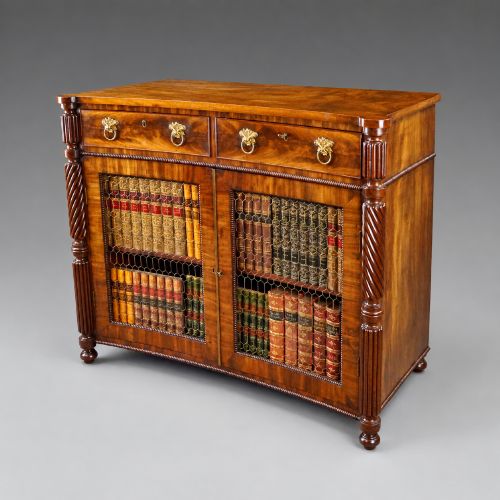
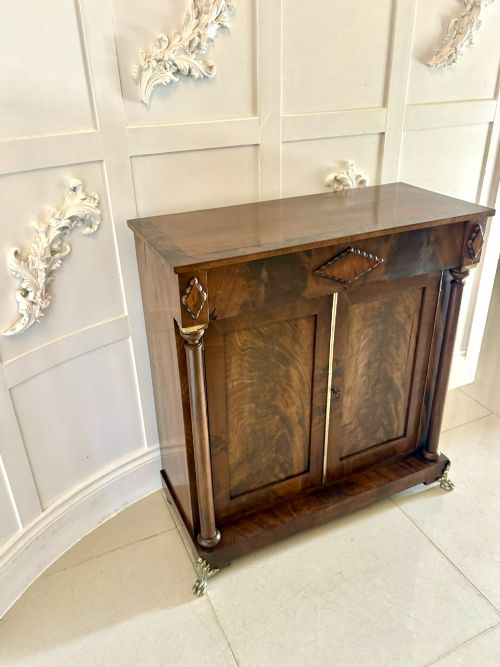
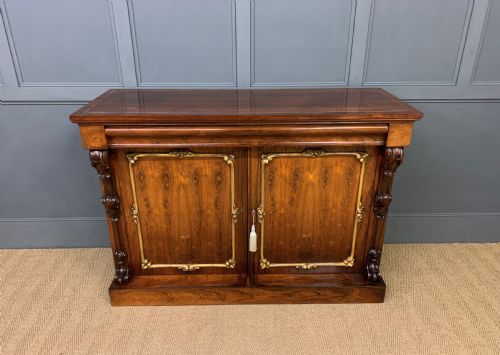
The objects recorded here span the Regency, George IV, William IV, and Victorian eras, taking the form of side cabinets, sideboards, and open bookcases. Rosewood and mahogany dominate the structural timber, often enhanced by elaborate brass inlay or mounted details.
Makers working in the early nineteenth century constructed these side cabinets with lower enclosed cupboards, frequently lined with fabric or fitted with marble tops. The surviving examples demonstrate how cabinet makers adapted storage furniture for sophisticated urban houses.
Materials and construction
Surfaces often incorporate white or variegated marble tops, while internal compartments utilise secondary woods like mahogany and oak. Silk or pleated fabric panels appear behind glass or brass wire doors, softening the rigid geometry of the woodwork.
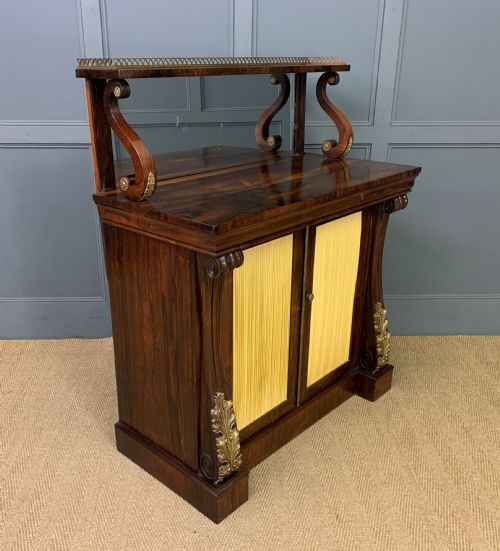
One cabinet retains its original pleated fabric panels, hiding contents behind gathered silk while letting fresh air circulate through the brass wire.
Judging quality and execution
The distinction between standard production and top tier cabinet work rests on the selection of timber veneers and the precision of the brass inlay. Figured rosewood and highly grained mahogany demand superior handling by the artisan.
Attributions to prominent workshops like Gillows or makers such as John McClean and S. Jamar elevate certain pieces through refined proportions and exceptional joinery. The weight and finish of the gilt brass mounts, alongside the integration of marble tops, indicate the original cost and ambition of the commission.
Gillows·John McClean·S. Jamar
The Regency Brass Mounted Chiffonier Glossary
- Chiffonier
- A low cabinet equipped with shelves or cupboards, developed in the early nineteenth century for dining and drawing rooms. This form evolved from the sideboard to provide more compact storage.
- Ormolu
- Gilded bronze used for decorative mounts and accents on furniture. The technique involves applying a mercury and gold amalgam to cast bronze.
- Stringing
- Thin inlay lines of contrasting wood or metal set into the surface of a panel. Cabinet makers utilised this method to frame drawers and doors.
- Credenza
- A sideboard or buffet piece often used interchangeably with side cabinet terminology in nineteenth century inventories. It provides low level surface space and enclosed storage.
- Ebony
- A dense black hardwood used for contrasting details and mouldings. Artisans prized this material for its deep colour and fine grain.
Regency Brass Mounted Chiffonier: Frequently Asked Questions
What is a chiffonier used for?
A chiffonier served primarily as a sideboard for storing table silver, linens, and dining accessories in the nineteenth century parlour. The surface provided space for serving dishes or displaying decorative objects.
Over time, these cabinets migrated to drawing rooms and libraries, where enclosed cupboards and open shelves held books and small collections. Their compact footprint made them practical alternatives to massive dining room sideboards.
How do you date a regency chiffonier?
Dating relies on examining the timber species, construction methods, and decorative motifs characteristic of the early nineteenth century. Pieces from the Regency and George IV periods typically feature rosewood veneers and precise brass inlay.
Later Victorian examples often show heavier proportions and distinct secondary woods. Attributions to known makers like Gillows or S. Jamar also help narrow the chronology.
Are marble tops original on these cabinets?
White or grey marble tops appear frequently on nineteenth century side cabinets and chiffoniers. They provided durable, heat resistant surfaces for serving food or placing lamps.
Cabinet makers integrated marble slabs directly into the timber carcase during initial construction. The presence of marble often indicates a higher quality commission intended for a principal reception room.
Why do some cabinets have pleated fabric doors?
Silk or fabric panels behind brass wire grilles allowed air circulation while concealing the contents of the cabinet. This design feature was popular during the Regency and William IV periods.
Makers used pleated textiles to add texture and colour variation to the dark rosewood or mahogany facade. The fabric panels coordinate with the upholstery and drapery of the room.