

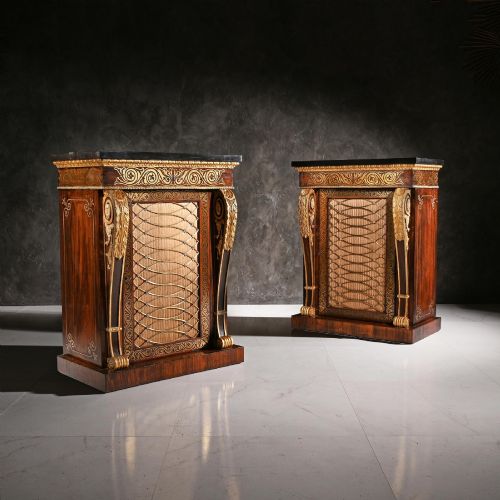


Regency Marquetry Cabinet
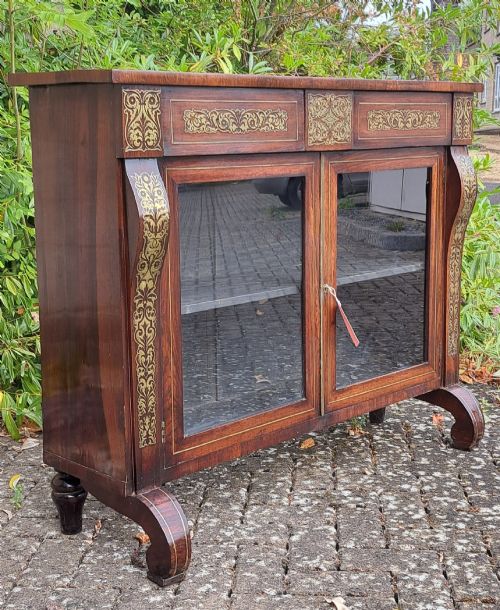
These regency marquetry cabinet pieces unite precision brass inlay with rich rosewood and mahogany timbers, offering both utility and striking ornamental presence.
Regency Marquetry Cabinet
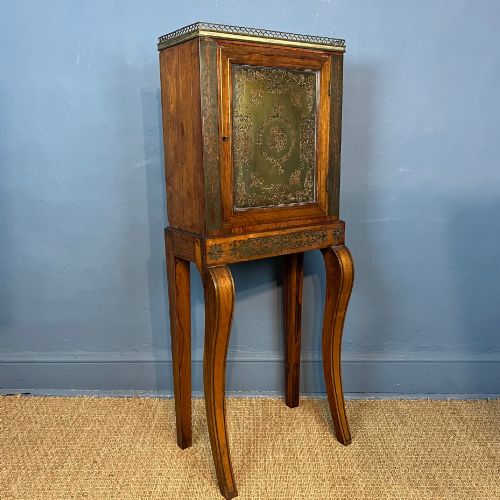
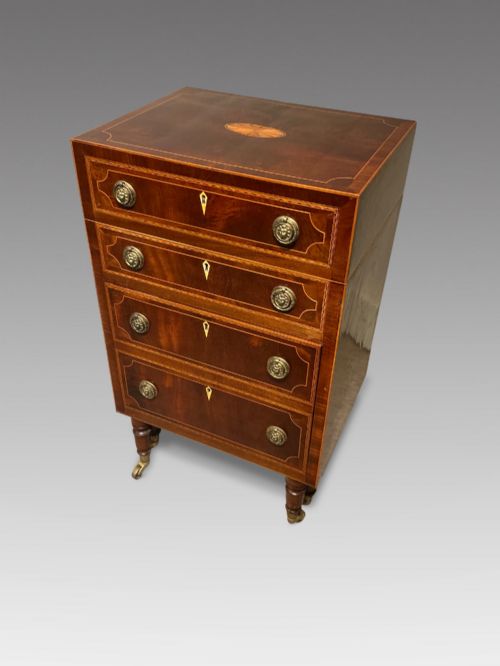
A regency marquetry cabinet encompasses varied forms from side cabinets and chiffoniers to bedside cupboards and tabletop pieces, all sharing the aesthetic of the Regency and 19th Century eras. The pieces visible here bridge formal Regency design, Georgian influences, and later Victorian revivals.
Buyers most frequently encounter side cabinets and bedside units in this search, alongside specialised forms like chiffoniers and escritoire desks. These items frequently display contrasting wood veneers and delicate metal inlays across their primary surfaces.
Origins span English workshops of the early nineteenth century alongside French 19th Century interpretations. Each object demonstrates the period's preference for compact storage combined with decorative cabinet-making.
Materials and construction methods
Cabinet makers utilised dense timber foundations such as rosewood, mahogany, and walnut, often applying finer wood veneers like satin birch, palisander, goncalo alves, and king-wood to the exterior surfaces. Boxwood and wood inlay provided further textural contrast against the darker carcase woods.
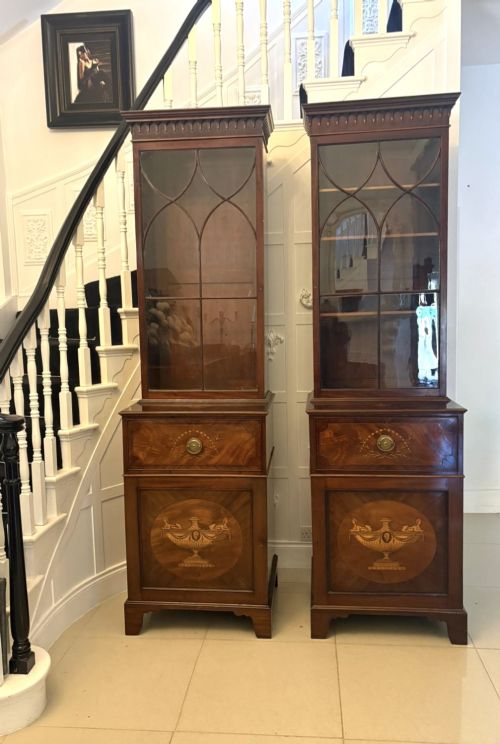
Brass formed an integral component of the construction, appearing both as delicate linear stringing inlaid into the timber and as structural handles or mounts. Glass panels were integrated into the doors of display bookcases and pier cabinets to showcase contents while protecting them.
Regency Marquetry Cabinet Retail Price Guide 2026
Typical asking prices for regency marquetry cabinet among the pieces listed under this phrase on Sellingantiques today, from the lower quarter to the upper quarter. They describe what is for sale here now, not the wider market.
Current listings feature rosewood, mahogany, walnut, and satin birch, alongside brass inlay and glass elements across forms ranging from bedside cabinets to linen press wardrobes.
Judging the standard of execution
The sophistication of the timber selection and the precision of the wood veneer layout determine the distinction between standard examples and finer works. Grain alignment across drawers and doors reveals the care taken by the original maker.
The crispness of the brass inlay and the integration of secondary woods like boxwood indicate the level of craftsmanship involved. Superior pieces maintain tight joints and balanced proportions across complex forms such as breakfront bookcases and escritoires.
The Regency Marquetry Cabinet Glossary
- Chiffonier
- A low sideboard or cabinet featuring shelves or enclosed cupboards, popular during the Regency period. These pieces frequently incorporate brass inlay and mirrored or panelled doors.
- Escritoire
- A writing cabinet featuring a fall-front desk section concealing internal compartments and drawers. Such items combine workspace utility with compact cabinet design.
- Pier Cabinet
- A narrow display cabinet designed to fit the wall space between windows. They often include glazed doors and fine wood veneers.
- Teapoy
- A small stand or box on a central pillar, historically used for storing loose tea leaves. Examples from this era incorporate intricate wood veneers and brass details.
Regency Marquetry Cabinet: Frequently Asked Questions
What is a regency marquetry cabinet used for?
These cabinets served multiple domestic functions in nineteenth-century interiors, from storing books and porcelain in libraries to housing linens and writing materials in bedrooms and parlours. Side cabinets and chiffoniers provided concealed storage alongside display surfaces for decorative objects.
Today, buyers utilise these versatile pieces as bedside tables, media stands, or statement storage units in living spaces. Their compact proportions allow them to fit into modern rooms while retaining period character.
How should I care for rosewood and mahogany cabinets?
Preserving these antique timbers requires maintaining stable room temperatures and avoiding direct sunlight, which can fade delicate rosewood, mahogany, and palisander veneers. Gentle dusting with a dry, soft cloth prevents the accumulation of abrasive particles on the polished surfaces.
Occasional application of appropriate wax feeds the antique wood without building up heavy residues. Care must be taken around brass inlay and glass panels during routine maintenance.
What distinguishes a chiffonier from a standard side cabinet?
A chiffonier is specifically characterised by its low sideboard form, often featuring a raised shelf superstructure supported by small pillars at the back. These pieces were designed for serving or displaying dining accessories in smaller rooms.
Standard side cabinets generally present a flat top surface over enclosed cupboards or drawers without the superstructure. Both forms frequently incorporate decorative brass inlay and fine wood veneers.