


Regency Mahogany Wine Cellarette
A regency mahogany wine cellarette brings classical dignity and practical bottle storage to a room, holding vintages safely.
Regency Mahogany Wine Cellarette
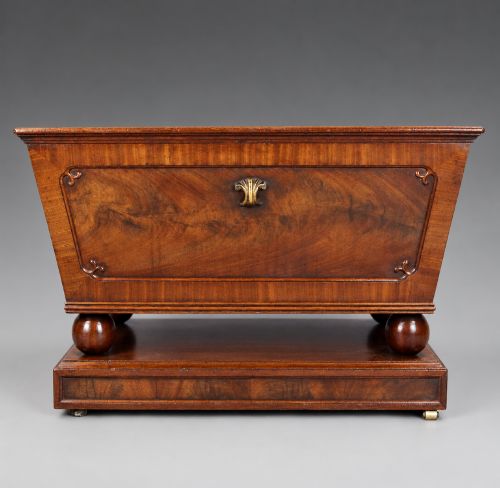
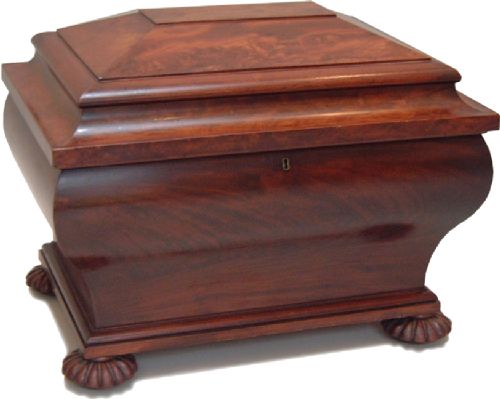
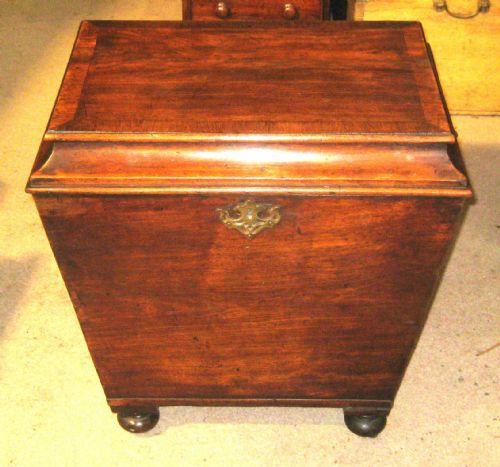
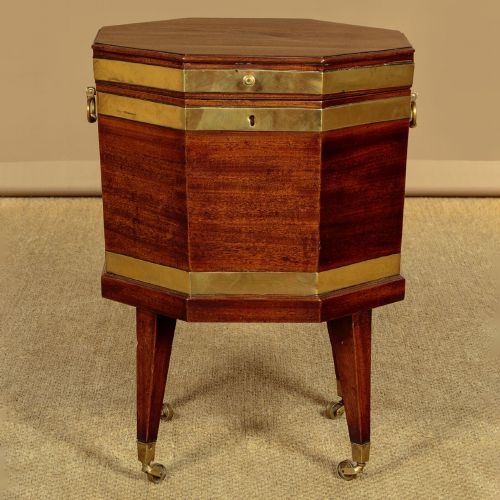
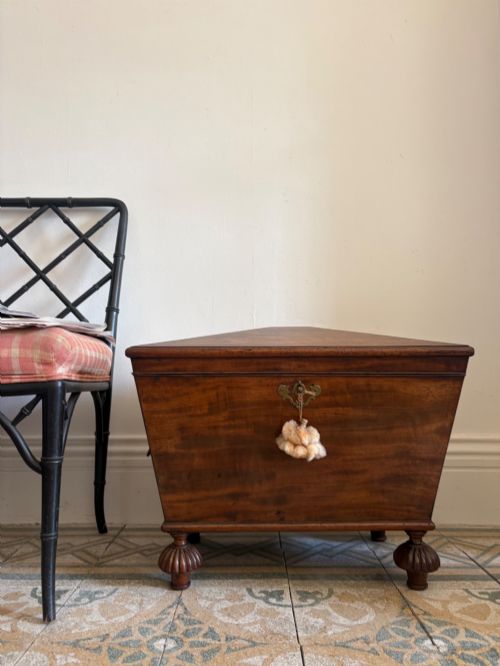
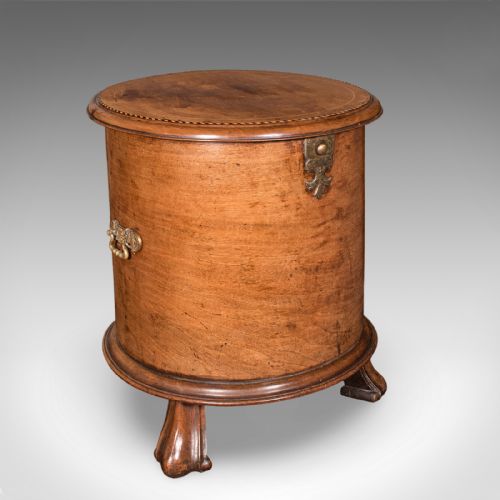
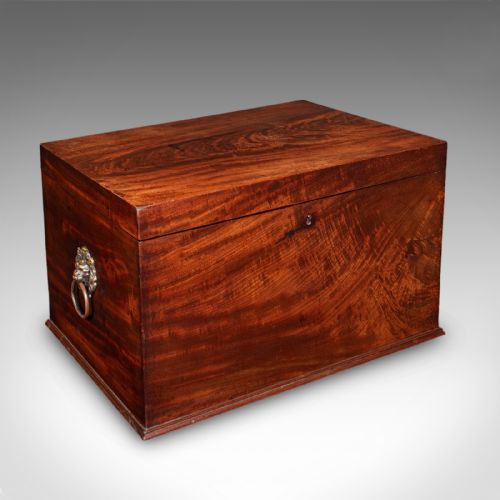
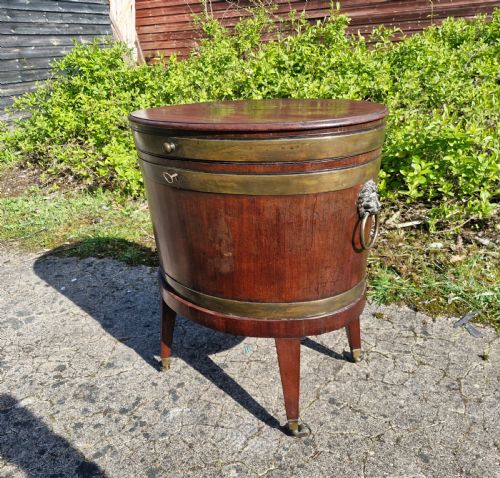
A regency mahogany wine cellarette is a dedicated storage piece designed to keep bottles cool and secure in the dining room. These vessels appear frequently in classical sarcophagus, octagonal, and chest forms dating from the Georgian and Regency periods.
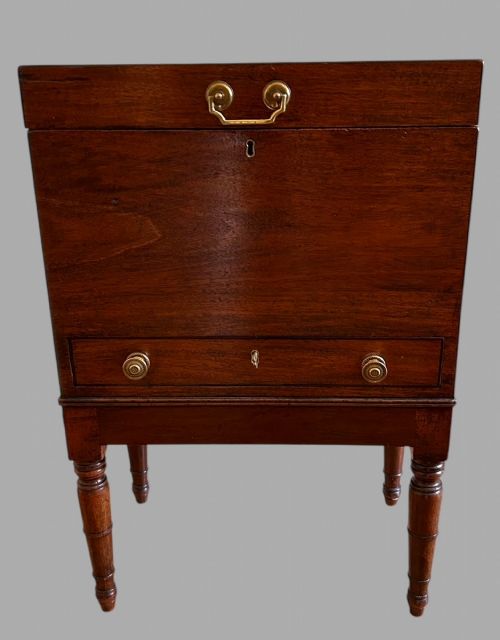
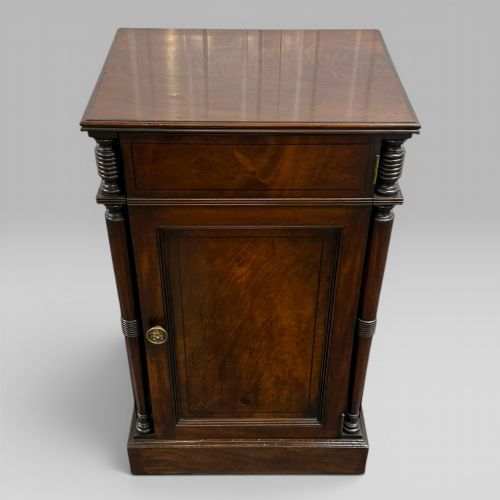
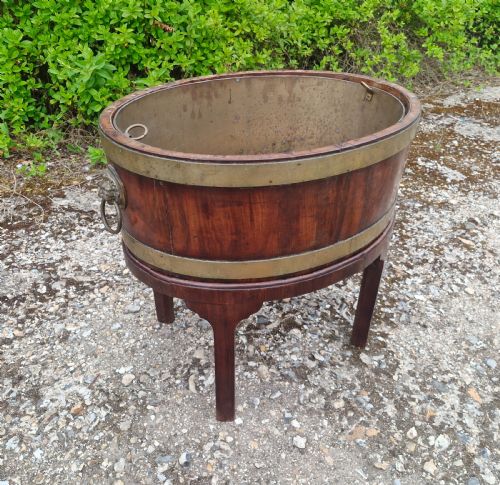
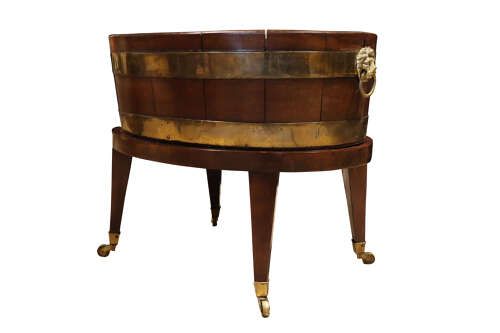
Most examples rely on solid mahogany or flame mahogany timbers, often accented with brass banding, ebony stringing, or ormolu mounts. They range from small tabletop boxes to large freestanding pedestal units fitted with interior partitions for individual bottles.
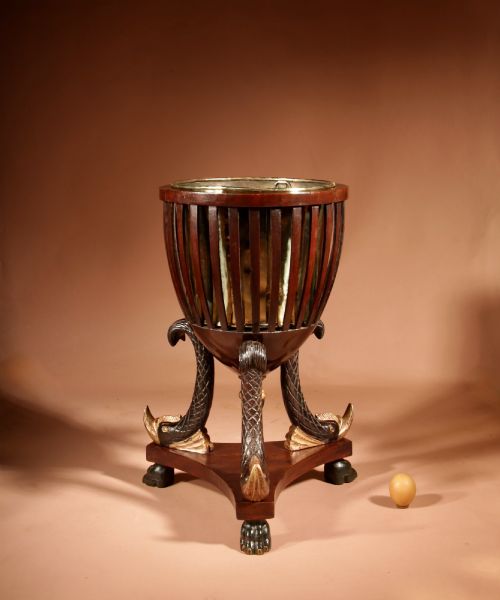
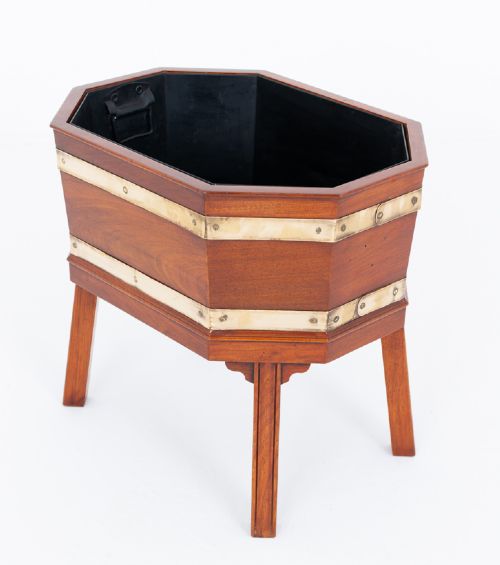
Buyers also encounter related variants adapted as planters or jardinières, alongside later revival pieces from the early twentieth century. The primary form, however, remains the substantial sarcophagus body raised on paw feet, bun feet, or a plinth base.
How they were made
Cabinetmakers constructed these pieces using dense Cuban or Honduras mahogany, frequently selecting highly figured flame veneers for the principal exterior surfaces. Coopered construction, mirroring the method used for wooden barrels, formed the curved bodies of cylindrical and sarcophagus designs.
Interiors required functional metal linings in lead, zinc, or brass to hold ice safely alongside the bottles without damaging the surrounding timber. Brass castors, lion paw feet, carrying handles, and strapwork secured the heavy wooden carcasses and permitted movement across the floor.
Listings span the eighteenth, nineteenth, and twentieth centuries, featuring mahogany, walnut, brass, lead, and zinc.
What varies in quality
The degree of cabinetmaking finesse dictates the distinction between standard production and top-tier workshop output. Superior pieces display meticulous veneer matching across curved surfaces, crisp carving on paw feet or classical mouldings, and integrated brass work that sits completely flush with the timber.
Internal architecture further separates the grades, with finer models retaining their original lead or zinc drop-in liners and intact bottle divisions rather than later softwood replacements. The depth of the timber's patina and the weight of the cast brass handles offer clear indications of original manufacture against later revival work.
Gillows·Gillingtons·T.Feetham
The Regency Mahogany Wine Cellarette Glossary
- Cellarette
- A lockable container designed to hold wine bottles close to the dining table. They evolved from simple wooden boxes into architectural centrepieces during the Regency era.
- Sarcophagus form
- A tapering, chest-like shape with a domed lid modelled after classical stone coffins. This silhouette dominated high-status wine storage design between eighteen hundred and eighteen thirty.
- Coopered
- Built using narrow staves of wood joined edge-to-edge and bound with metal hoops or secured to framing. This technique allowed makers to create rounded bodies for wine coolers without cracking.
- Flame mahogany
- Timber cut across the fork of the tree branches to produce a dramatic, flickering flame-like grain pattern. Cabinetmakers reserved this prized veneer for the most prominent exterior panels.
- Jardiniere
- An ornamental stand or receptacle designed to hold growing plants or flowers. Many former wine cellarettes were later adapted for this domestic purpose.
Regency Mahogany Wine Cellarette: Frequently Asked Questions
How were regency cellarettes used?
Servants filled the internal metal lining with ice and water to chill wine before dinner service. The heavy lockable lid maintained the internal temperature while keeping the contents secure from staff.
After dining, the unit remained beside the table so hosts could dispense bottles without returning to the cellar. Their substantial weight meant they stayed firmly in place once positioned in the dining room.
Did they always store wine?
While primarily built for wine bottles, some larger pedestal designs incorporated compartments for warming plates. Others served as general storage boxes for spirits, glassware, or cutlery.
Over the centuries, many examples lost their interior partitions and liners. This flexibility allowed owners to repurpose them as general storage chests or plant stands.
How do I date a cellarette?
Stylistic markers provide the clearest chronological clues, moving from straight-sided Georgian box forms to curved Regency sarcophagi and later William IV carved scrollwork. Timber choice also helps, as dense Cuban mahogany gave way to lighter varieties in the Victorian era.
Original hardware, such as cast brass lion-mask handles and claw feet, matches the manufacturing techniques of specific decades. Revival pieces from the nineteen tens and twenties often reveal machine-sawn timber marks and modern adhesives upon close inspection.