
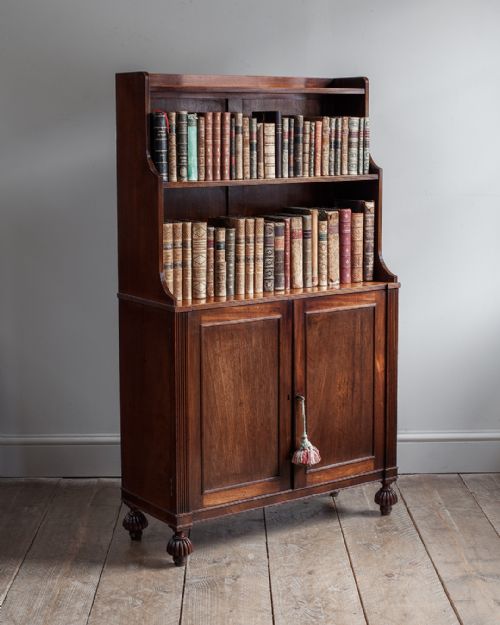
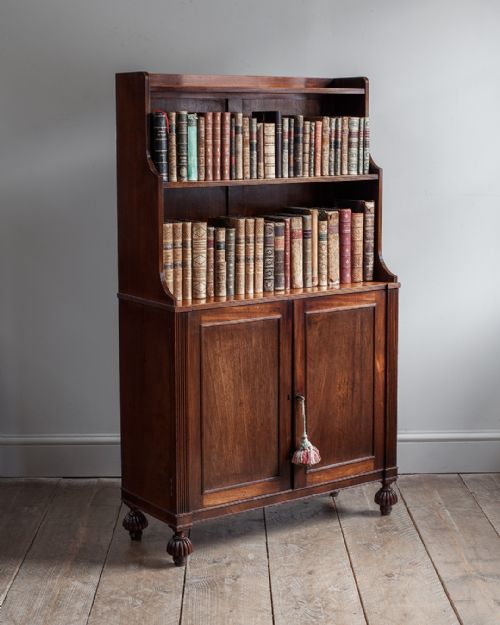
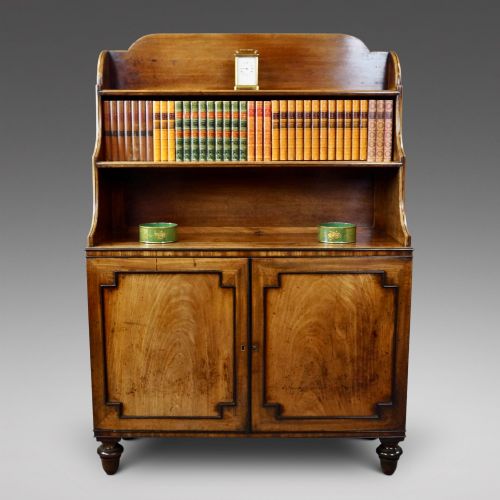
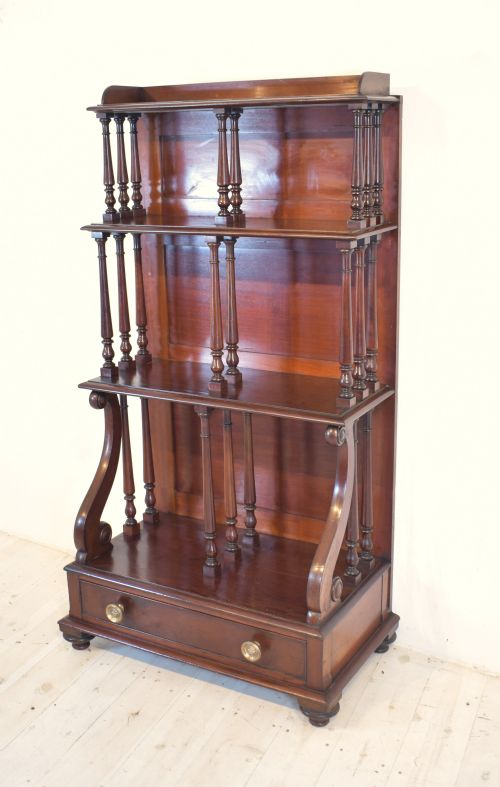


Regency Mahogany Waterfall Shelves
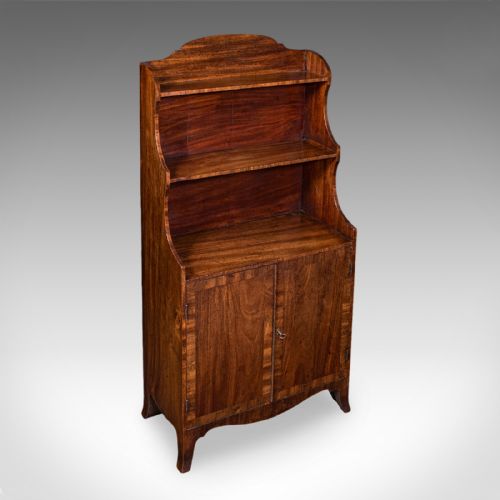
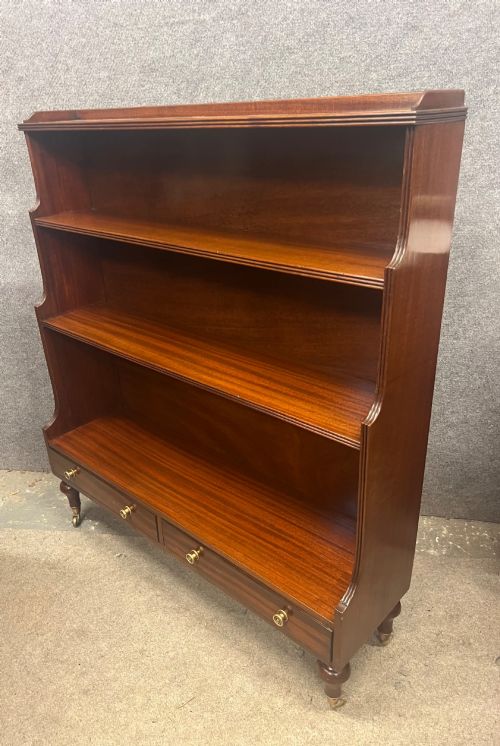
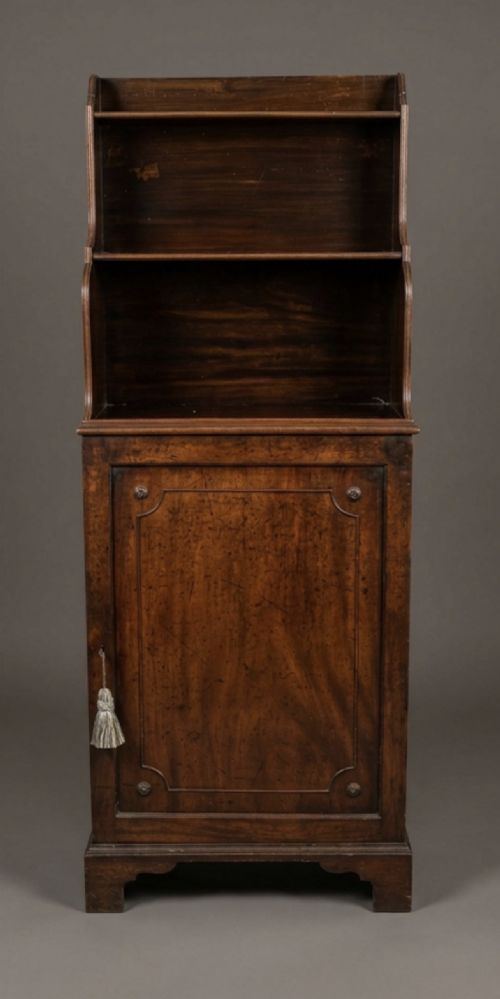
Regency mahogany waterfall shelves offer tiered display surfaces of graduated depth, bringing compact elegance and character to any room.
Regency Mahogany Waterfall Shelves
The material record spans genuine Regency and Georgian originals alongside later revivals from the early twentieth century. Pieces range from petite chiffonier combinations to large library bookcases with tiered galleries.
How They Were Made
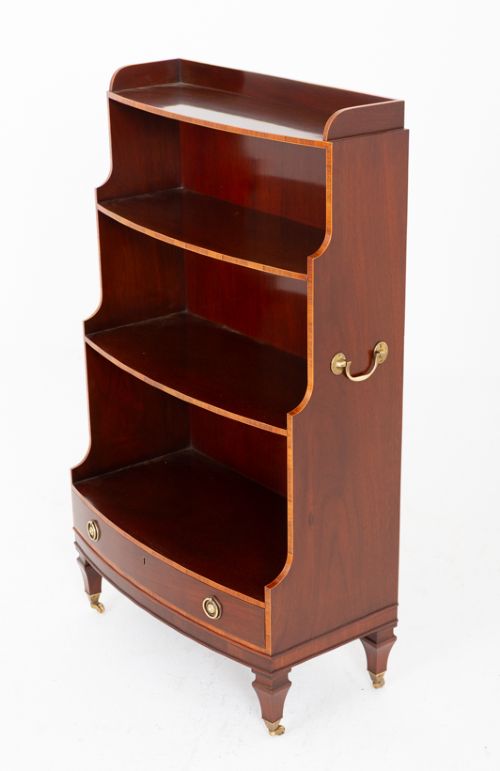
Cabinet makers utilised solid mahogany and flame mahogany veneers over secondary timbers, accentuating surfaces with boxwood stringing and contrast cross banding. Individual tiers graduate gracefully downwards, supported by shaped sides or uprights.
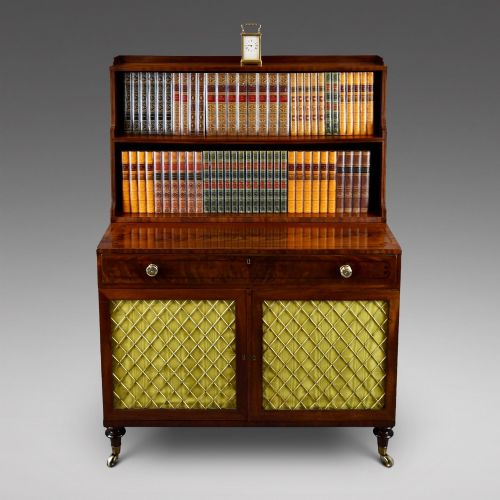
Structural additions include brass fittings, wire panels, and open galleries depending on the specific period and revival style. Construction methods prioritise both freestanding stability and tiered display capacity.
Materials recorded across the inventory include flame mahogany veneer, solid mahogany, brass, boxwood, wire, and oak.
What Varies in Quality
The refinement of the timber selection distinguishes standard pieces from superior examples, particularly the depth and movement in flame mahogany veneers. Precision in cross banding, boxwood stringing, and the crispness of shaped uprights elevate certain pieces.
Proportion and scale dictate the visual success of the tiered graduated shelves, where balanced proportions between upper open tiers and lower cabinet elements demonstrate superior cabinet making.
The Regency Mahogany Waterfall Shelves Glossary
- Waterfall bookcase
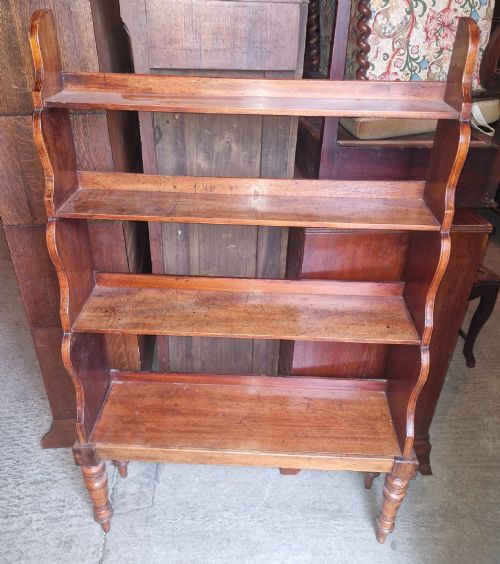
- A set of open shelves stepped in width and depth from top to bottom, resembling cascading water. This form became popular during the early nineteenth century for displaying books and ornaments.
- Flame mahogany
- A veneer cut from the fork of the mahogany tree where the branches join the trunk, producing a distinctive flickering flame pattern. Cabinet makers used this figuring on prominent surfaces.
- Cross banding
- A narrow strip of veneer laid across the grain of the main surface, framing panels or shelf edges. It provides a decorative border using contrasting wood grain.
- Boxwood stringing
- Thin inlaid lines of pale yellow boxwood set into grooves in darker mahogany surfaces. This technique outlines drawers, doors, and shelves with sharp linear contrast.
- Chiffonier
- A small low sideboard or cabinet with shelves above, used for storage and display. Many examples combine lower cupboards with upper waterfall shelving tiers.
Regency Mahogany Waterfall Shelves: Frequently Asked Questions
What is a waterfall bookcase?
A waterfall bookcase is a tiered shelving unit where each shelf is deeper than the one above it, creating a stepped profile.
This progressive layout allowed owners to arrange books and objects by size while maintaining a compact footprint against a wall.
How do I date these pieces?
Dating relies on examining construction techniques, timber choice, and decorative inlay styles like boxwood stringing or cross banding.
Earlier nineteenth-century examples often feature solid mahogany and traditional joinery, whereas twentieth-century revivals display different secondary woods and modern glues.
Where should I place them?
Freestanding waterfall shelves suit studies, drawing rooms, or hallways where books and decorative items need accessible display.
Their open tiers and graduated depth mean they fit well in alcoves or against panelled walls without dominating the floor space.
Are they sturdy enough for heavy books?
Solid mahogany and well-constructed tiered frames provide robust support for standard collections of volumes and display objects.
The graduated depth naturally places heavier books on the deeper lower shelves, enhancing the physical stability of the piece.