


Regency Mahogany Tea Chest
A regency mahogany tea chest brings nineteenth-century elegance to any surface, offering divided interior compartments designed to store precious loose-leaf tea.
Regency Mahogany Tea Chest
A regency mahogany tea chest sits at the heart of nineteenth-century social display, functioning as a portable container for expensive imported leaves. The pieces gathered under this phrase span periods from the Georgian era through the Victorian, with Regency examples dominating the selection.
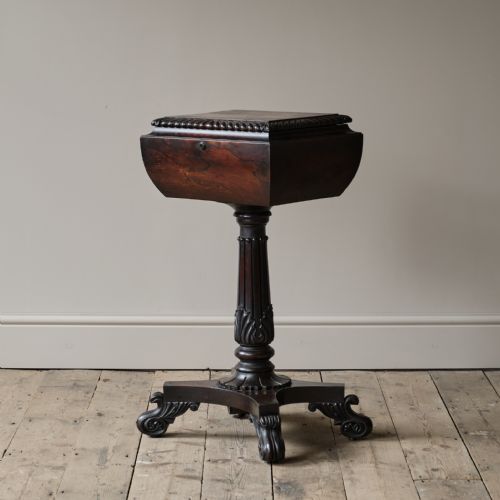
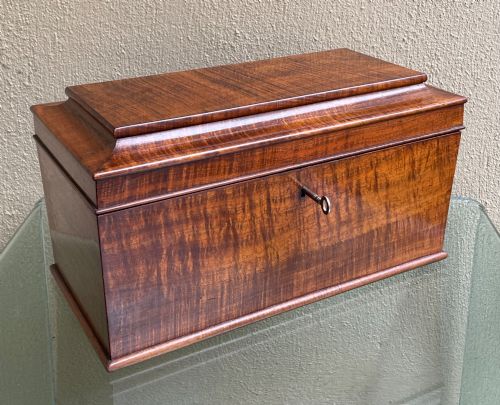
Buyers encounter forms ranging from double-compartment table boxes to substantial freestanding teapoys mounted on stands. Many pieces adopt the characteristic sarcophagus shape, featuring hinged lids that reveal fitted interiors complete with mixing bowls and canisters.
Materials and Construction
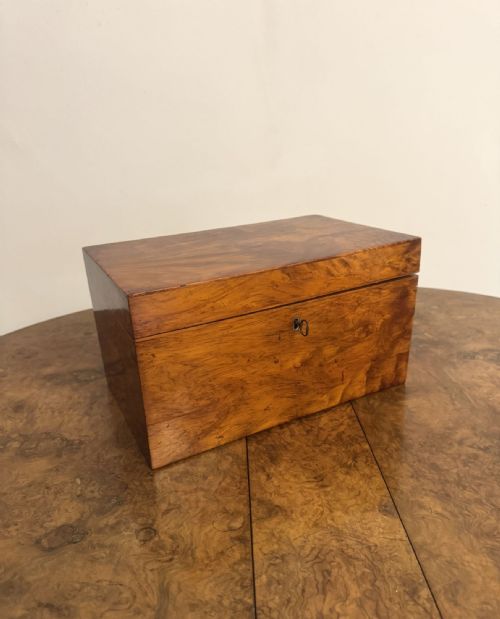
Cabinetmakers utilised dense mahogany as the primary structural wood, frequently selecting figured flame veneers to create lively surface patterns. Contrasting stringing and banding in ebony, boxwood, and satinwood outline the structural edges and lid borders.
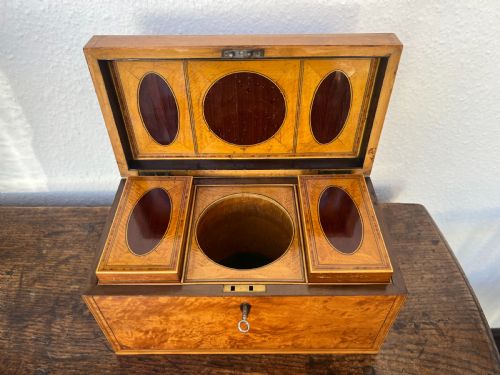
Internal arrangements incorporate glass mixing bowls alongside dual lidded canisters designed to keep leaves dry. Brass handles, escutcheons, and paw feet provide functional hardware and decorative contrast against the dark timber.
Current selections feature pieces spanning the Georgian, Regency, William IV, and Victorian periods.
Distinctions in Quality
Superior examples display meticulous attention to grain alignment across the lid and sides, creating a continuous pattern that demonstrates high cabinetmaking skill. The choice of secondary veneers, such as amboyna or burr maple, marks the difference between standard production and exceptional commissions.
Hardware weight and interior completeness separate utilitarian containers from luxury pieces. Retaining original cut glass mixing bowls and intact interior lids elevates an example above those altered or missing key components.
Gillows·Strahan
The Regency Mahogany Tea Chest Glossary
- Teapoy
- A freestanding tea caddy mounted on a central pillar or legs. These taller pieces often incorporate storage compartments or work bags beneath the main box.
- Sarcophagus
- A box shape featuring a domed lid and outward-sloping sides reminiscent of classical monumental tombs. This form gained immense popularity during the Regency period.
- Mixing Bowl
- A glass vessel housed centrally inside the tea chest. Hosts utilised this bowl to blend different tea varieties before brewing.
- Canister
- An internal lidded compartment designed to hold individual types of loose leaf tea. These prevent aromas from degrading within the main chest.
Regency Mahogany Tea Chest: Frequently Asked Questions
What is a regency mahogany tea chest used for?
These boxes stored precious loose-leaf tea under lock and key when tea was an expensive commodity.
They also contained glass bowls for blending leaves before serving.
How do I identify a Regency period piece?
Look for characteristic sarcophagus shapes, flame mahogany veneers, and brass paw feet.
Design motifs typically reflect classical architectural influences popular in the early nineteenth century.
What is the difference between a tea caddy and a teapoy?
A tea caddy is a tabletop box designed to hold tea leaves and a mixing bowl.
A teapoy is a larger version elevated on its own stand or pedestal legs.
How should I care for antique mahogany wood?
Keep wooden chests away from direct sunlight and dramatic temperature fluctuations to prevent veneer cracking.
Apply occasional traditional wax to nourish the antique surface.