



Regency Mahogany Swivel Top
Regency mahogany swivel top tables are ingenious folding furniture pieces that pivot open to reveal hidden spaces for cards, tea, and games.
Regency Mahogany Swivel Top
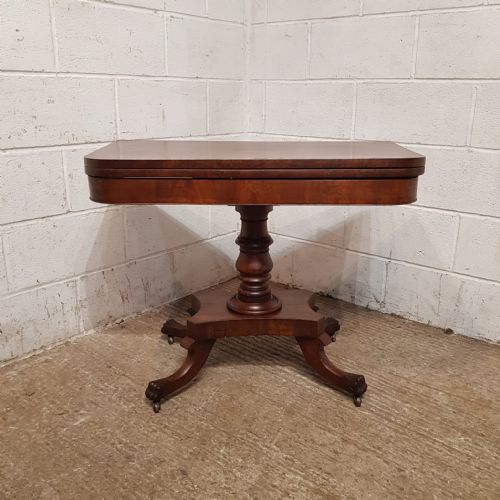
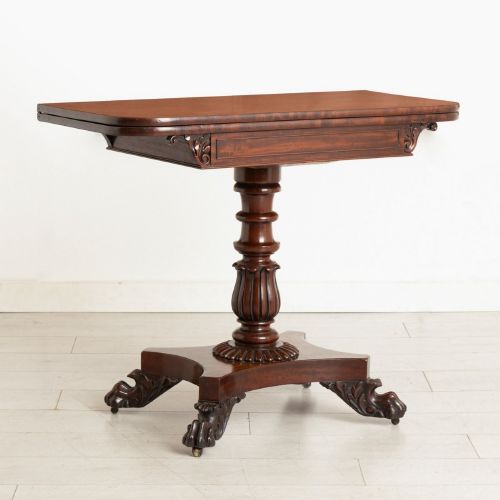
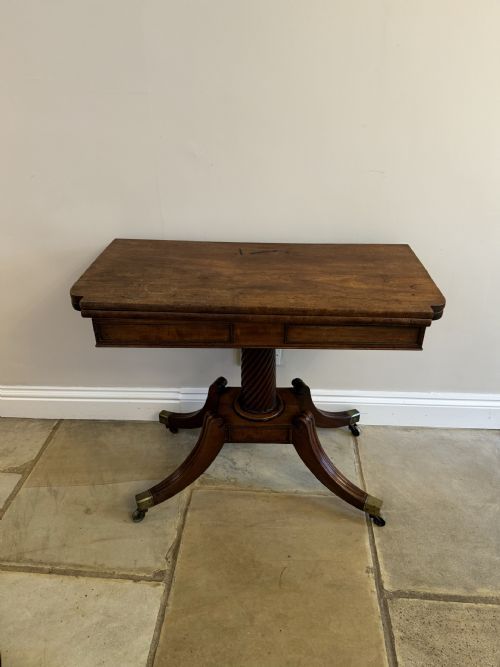
A regency mahogany swivel top is primarily represented on this page by card tables, tea tables, and games tables that utilise a clever pivoting mechanism to double their surface area when opened.
The pieces span the 19th century, Regency, Georgian, and Victorian periods, with origins rooted in the early 1800s through to the William IV and George IV eras.
Beyond standard tables, the selection includes related forms such as side tables, console tables, toilet mirrors, and piano stools that share similar rotating or adjustable designs.
Materials and Construction
Cabinet makers built these pieces using solid mahogany and mahogany veneer, often selecting figured timbers like flame mahogany and incorporating rosewood crossbanding for decorative contrast.
Internal elements utilised secondary woods and structural brass fittings, whilst functional surfaces frequently featured baize or velvet linings designed for card playing and games.
Pivoting tops sat upon pedestal bases, lyre supports, or four swept legs, relying on precise joinery to ensure the folding leaf balanced securely when rotated.
Regency Mahogany Swivel Top Retail Price Guide 2026
Typical asking prices for regency mahogany swivel top among the pieces listed under this phrase on Sellingantiques today, from the lower quarter to the upper quarter. They describe what is for sale here now, not the wider market.
Many a Victorian card player relied on these swivel tops to quickly hide a losing hand when the tea service arrived.
Judging Quality and Craftsmanship
The distinction between ordinary and exceptional examples rests in the selection of the timber grain, where highly figured flame mahogany and crisp, detailed carved foliage elevate a piece significantly.
Structural integrity of the swivel mechanism dictates daily usability, with superior examples exhibiting smooth rotation and tight joints that prevent the folded top from sagging over time.
Proportion and decorative restraint define the better workshops, where refined brass inlays, precise crossbanding, and well-balanced pedestal bases display the maker's confidence.
The Regency Mahogany Swivel Top Glossary
- Swivel top
- A table design where the upper leaf rotates on a central pivot to reveal a concealed well or to stabilise the unfolded top when doubled in size.
- Fold-over
- A hinged tabletop construction that closes against itself like a book, allowing a compact console table to convert into a full-size gaming or dining surface.
- Crossbanding
- A decorative border technique where strips of veneer are laid perpendicular to the grain of the main surface, frequently utilising rosewood on mahogany carcases.
- Lyre support
- A furniture pedestal shaped in the formal outline of a classical stringed instrument, commonly found supporting the pillars of early nineteenth-century tables.
- Baize
- A coarse woollen felt fabric traditionally used to line the playing surfaces of card and games tables.
Regency Mahogany Swivel Top: Frequently Asked Questions
How do you open a swivel top table?
The upper leaf lifts slightly and rotates ninety degrees on a central pivot fixed to the frieze below. Once turned across the base, the hinged leaf unfolds flat to create a stable surface supported by the frame.
This clever rotation ensures the weight distributes evenly over the pedestal or legs underneath. It prevents the folding leaf from tipping when subjected to the pressure of writing or playing cards.
What is the difference between a card table and a tea table?
Card tables typically feature a lined interior surface made of baize or velvet specifically intended for gaming. Tea tables generally present a polished polished wood surface designed to hold porcelain.
Despite their original distinct purposes, both forms share the same folding and swivel top construction. Many historical examples served interchangeable functions within the reception rooms of the period.
How do I date a Regency mahogany table?
Dating relies on observing stylistic markers such as the transition from crisp classical Regency carving to heavier William IV proportions. The presence of specific base configurations, such as lyre supports or quatreform plinths, helps narrow the decade of manufacture.
Examination of the timber construction and secondary woods further confirms the period. Earlier pieces from around 1800 often display lighter framing compared to later Victorian iterations.
Where should I place a swivel top table in a room?
These tables function well against a wall in the closed position, acting as a slim console or side table. Placing them in a hallway or living room allows them to sit unobtrusively until extra surface area is required.
Opening the top transforms the piece into a freestanding centre table or games table. Positioning it away from direct sunlight protects the delicate mahogany veneer and rosewood crossbanding from fading.