

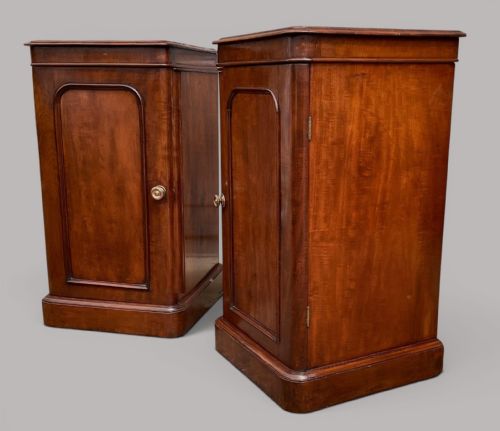


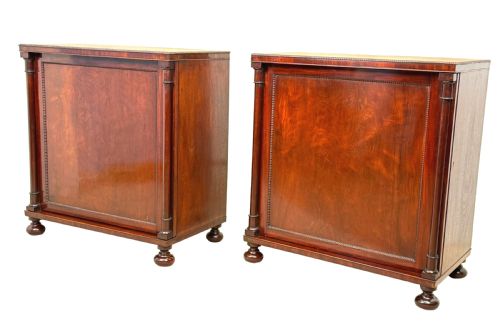


Regency Mahogany Pedestal Cupboard
A regency mahogany pedestal cupboard brings architectural proportion and dense timber to a bedside or corner.
Regency Mahogany Pedestal Cupboard
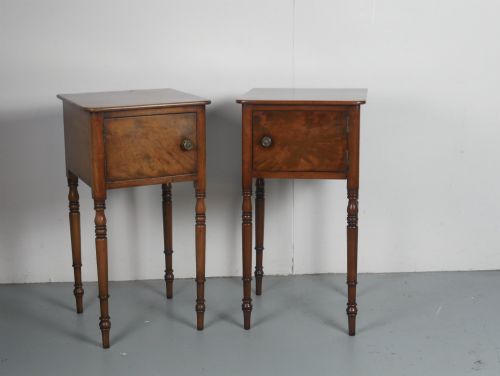
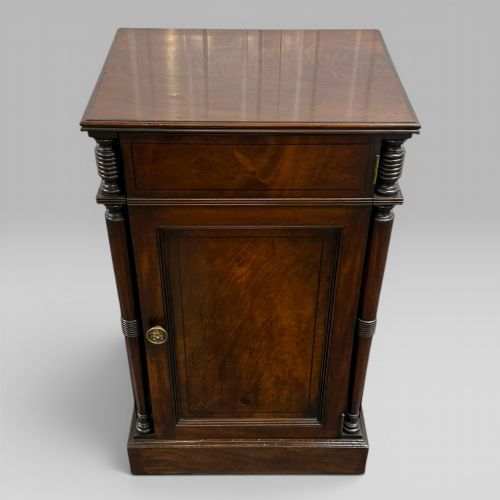
A regency mahogany pedestal cupboard sits upright on a single column or plinth base, designed originally to house washing equipment or night apparatus beside a bed. The pieces found here span the nineteenth century, including Georgian, George IV, William IV, and early Victorian iterations alongside Edwardian adaptations.
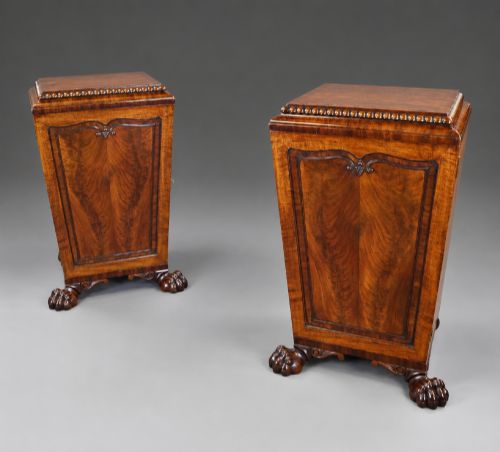
Most examples take a cylindrical, square, or hexagonal footprint, often appearing in pairs with panelled doors and concealed internal shelving. Makers utilised figured timber and architectural column designs to elevate a utilitarian bedroom item into a focal piece.
Beyond the standard bedside cabinet, variations include cylindrical cylinders, plate-warmers, and side cabinets incorporating marble or leather elements. The overarching aesthetic relies on clean classical lines paired with the rich grain of solid or veneered mahogany.
Construction and Materials
Cabinet makers built these pieces using solid mahogany and flame mahogany veneer applied to secondary carcase timbers, achieving rich depth of grain on curved and flat surfaces alike. Turned columns, ebony inlay, and brass mounts add structural definition and contrast.
Internal components often include pull-out steps, shelves, or compartments tailored for domestic convenience, put together with traditional jointing methods appropriate to the period. Surfaces were frequently polished to a high sheen that highlights the natural figuring of the wood.
Regency Mahogany Pedestal Cupboard Retail Price Guide 2026
Typical asking prices for regency mahogany pedestal cupboard among the pieces listed under this phrase on Sellingantiques today, from the lower quarter to the upper quarter. They describe what is for sale here now, not the wider market.
Listings feature mahogany, brass, marble, and leather across pieces spanning the Georgian, Regency, and Victorian eras.
Assessing Quality and Execution
Quality rests in the selection of the timber and the precision of the joinery, particularly where doors curve or cylinders meet a plinth base. Superior examples display carefully matched flame mahogany veneers and crisp carving on architectural details rather than hasty assembly.
The integration of secondary materials such as brass fittings, marble tops, or leather inserts distinguishes higher-tier workshop output from standard production. Proportion also dictates worth; smaller scale pieces and matched pairs command greater interest from collectors.
Holland & Sons·Gillows·Gillows of Lancaster·S.Jamar
The Regency Mahogany Pedestal Cupboard Glossary
- Flame mahogany
- A veneer cut from the fork of the mahogany tree where the branch meets the trunk, producing a distinctive flickering flame pattern. This decorative timber was favoured for the primary facades of high-status furniture.
- Pedestal cabinet
- A freestanding piece of furniture built around a central vertical column or box base standing directly on the floor. These cabinets are taller than they are wide and usually enclose storage behind a single door.
- Cellarette
- A fitted cabinet or box designed to hold bottles securely, occasionally integrated into pedestal forms or sideboards. They kept wine and spirits cool or stored them safely within the dining room or parlour.
- Chiffonier
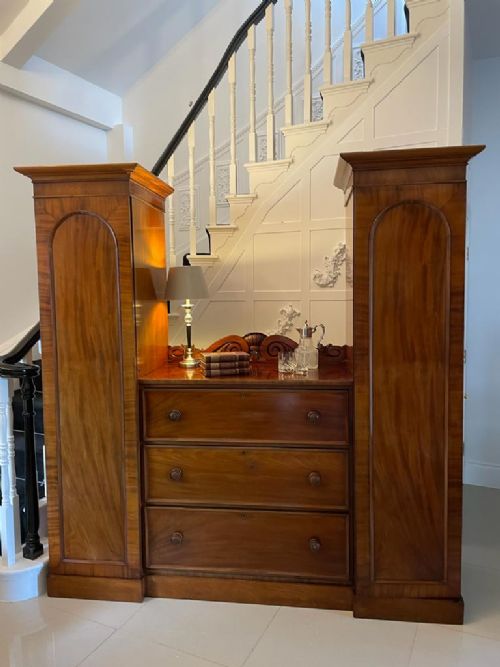
- A small sideboard or low cupboard developed during the Regency period, often featuring shelves or a mirror superstructure. They provided convenient surface space and enclosed storage for china or linen.
- Gonçalo-Alvez
- A dense exotic hardwood with contrasting dark brown and golden stripes, sometimes utilised for cabinet making during the nineteenth century. Its striking grain gives furniture a distinct visual weight compared to standard mahogany.
Regency Mahogany Pedestal Cupboard: Frequently Asked Questions
Where were pedestal cupboards placed?
These cabinets stood primarily beside sleeping quarters to hold chamber pots, washbasins, or night items out of sight. Their compact footprint also allowed them to function as small side tables in hallways and drawing rooms.
Over time, collectors adapted them as lamp tables or bedside stands where floor space was limited. Their enclosed storage keeps modern items neatly hidden.
How do I spot a matched pair?
Makers constructed pairs with matching timber grain direction and identical internal fittings, though minor hand-carved variances often reveal their workshop origins. Examining the backboards and interior construction confirms whether two independent cabinets belong together.
Symmetrical placement relies on matching heights, plinth designs, and door swings. Finding surviving pairs remains uncommon due to centuries of separation.
What timber was used?
Mahogany served as the primary material, utilised either as solid boards or sliced into thin flame veneers to display dramatic grain patterns. Secondary woods like pine or oak frequently form the internal carcases and drawer linings.
Accents of ebony, brass, and marble appear on select pieces to enhance the decorative scheme. These combinations reflect the evolving tastes of the nineteenth century.
How do I date these cabinets?
Dating relies on stylistic clues such as architectural column designs, classical proportions, and the presence of Gothic Revival or Empire motifs. Regency and George IV examples typically feature crisp classical lines, whereas Victorian pieces often show heavier proportions.
Construction details, including hinge types and drawer dovetailing, further narrow down the decade of manufacture. Comparing the hardware to known period examples confirms the era.