


Regency Mahogany Kneehole Desk
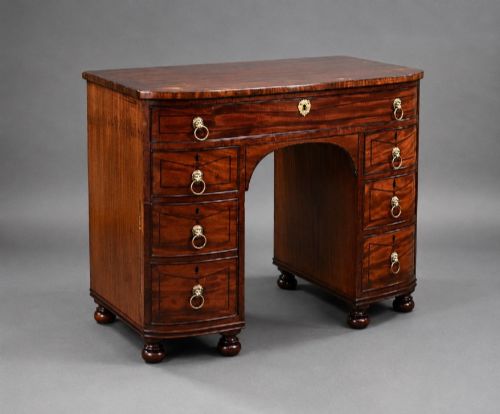
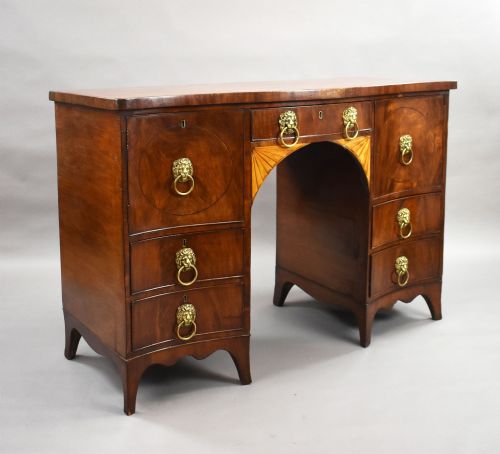
A regency mahogany kneehole desk brings understated proportion and rich timber tone to a study, offering a compact writing surface with pedestals of drawers.
Regency Mahogany Kneehole Desk
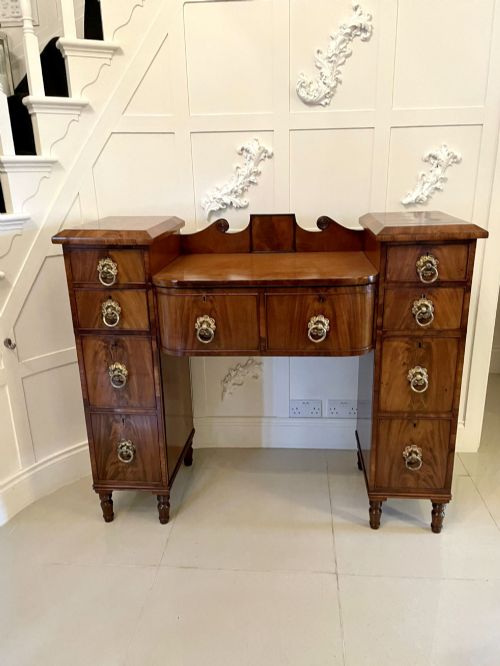
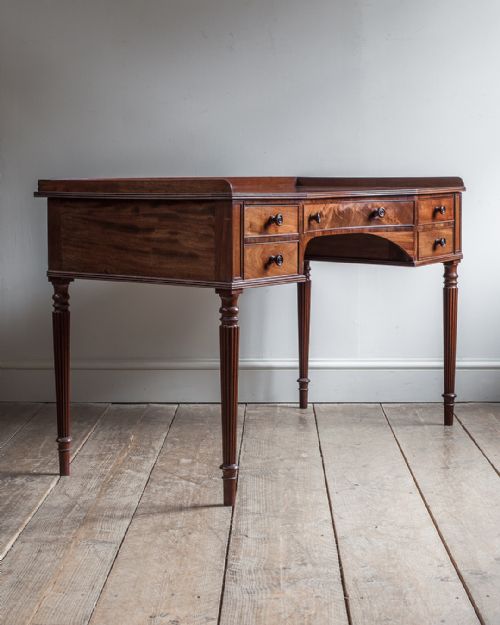
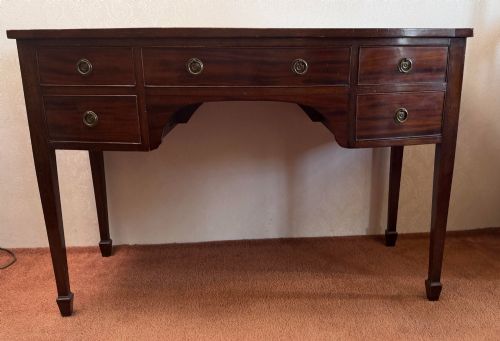
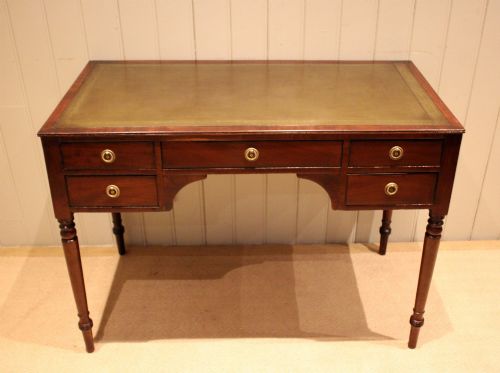
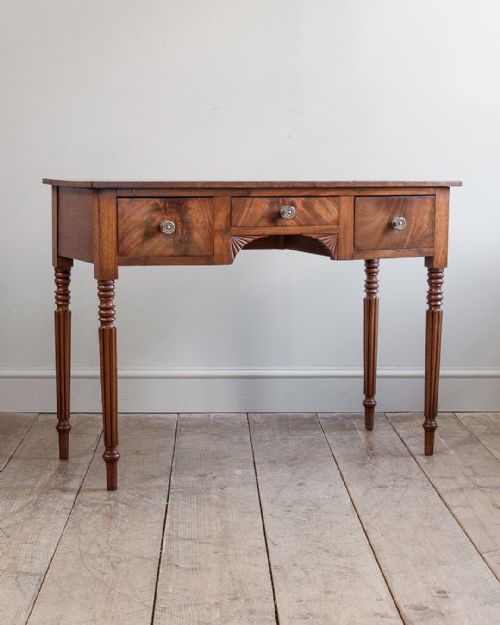
When searching for a regency mahogany kneehole desk, buyers encounter writing furniture from the early nineteenth century designed with a recessed central cupboard or knee space flanked by banks of small drawers. The pieces appearing here span the Georgian, Regency, and William IV periods, alongside later nineteenth-century iterations and revivals.
Many examples double as dressing tables or washstands, featuring three-quarter gallery upstands, bow fronts, or concave outlines. The core form remains practical and architectural, built to sit neatly against a wall or function as a freestanding centre table depending on the depth of the kneehole pedestal arrangement.
Materials and construction
Cabinet makers utilised solid mahogany and flame mahogany veneers over secondary timbers, often accentuating drawer fronts and borders with contrasting boxwood and ebony stringing. These surfaces were polished to a deep lustre that highlights the natural grain figures of the wood.
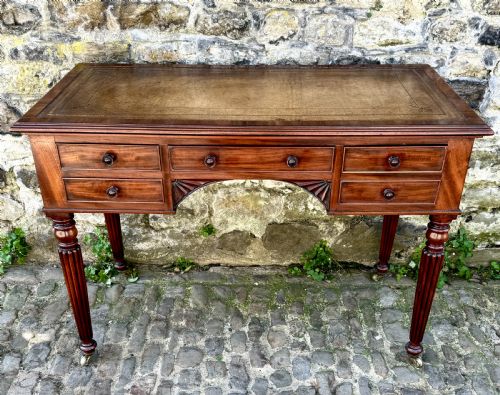
Solid brass hardware, including ring pulls, knobs, and bracket feet or castors, provides functional contrast to the dark timber. Structural integrity relies on traditional dovetail joinery within the drawer construction and precise framing to support writing surfaces lined with leather.
Listings feature mahogany, brass, and leather, alongside decorative stringing in boxwood and ebony across Georgian and Regency forms.
Evaluating craftsmanship and proportion
Quality reveals itself in the selection of timber, particularly the symmetry of flame mahogany veneer matching across drawer tiers, and the crispness of inlaid stringing. Superior examples maintain restrained proportions and delicate turning or reeding on the legs rather than heavy, unbalanced ornamentation.
The interior execution of the drawers, including hand-cut dovetails and tidy secondary wood linings, distinguishes workshop standards. Integration of original brasses and well-preserved structural framing elevates a piece above standard utility items from the same era.
John Gregory London·Gillows
The Regency Mahogany Kneehole Desk Glossary
- Flame mahogany
- A veneer cut from the fork of the mahogany tree, producing a dramatic, flickering flame-like grain pattern. This figure was highly prized for principal drawer fronts and top panels.
- Kneehole
- A recessed central space beneath a desk or dressing table designed to accommodate the user's legs when seated. It is typically flanked by one or two banks of small drawers.
- Stringing
- Narrow inlay or banding of contrasting timber, such as boxwood or ebony, used to outline panels and drawer edges. It adds linear definition to dark mahogany surfaces.
- Gallery
- A raised ornamental railing or low timber upstand running along the rear and side edges of a table or desk surface. It prevented writing equipment or small items from rolling off the back.
- Dovetail
- A traditional interlocking joint used in drawer construction, prized for its tensile strength and resistance to being pulled apart. Hand-cut variations indicate earlier period craftsmanship.
Regency Mahogany Kneehole Desk: Frequently Asked Questions
How do I spot a genuine period desk?
Examine the timber shrinkage, secondary woods inside the drawer boxes, and the style of hand-cut dovetails to gauge period authenticity. Genuine pieces display natural wear patterns and construction methods consistent with early nineteenth-century workshop practices.
Compare the carcass proportions and hardware fixings against documented examples from the Regency and Georgian eras. Consistency in timber selection and joinery helps separate original items from later revivals.
Were these desks used for writing or dressing?
Many surviving examples served dual purposes in domestic interiors as both writing tables and dressing chests. The inclusion of a kneehole allowed comfortable seating, whether for correspondence or morning grooming.
Some variants incorporate gallery upstands or internal compartments specifically adapted for toiletries or writing paraphernalia. This versatility reflects the multi-use nature of rooms in nineteenth-century homes.
How do I care for antique mahogany surfaces?
Maintain the finish by applying natural beeswax sparingly and buffing gently with a soft cloth to nourish the wood. Avoid placing the desk near direct heat sources or strong sunlight, which can dry out the timber and fade the polish.
Use protective pads beneath lamps or inkwells to prevent surface marking on leather inserts or polished wood tops. Regular, gentle dusting preserves the historic patina without stripping the polish.
What is the difference between Regency and George IV styles?
Regency design typically draws on neoclassical restraint, featuring slender reeded legs, delicate brass inlays, and balanced architectural proportions. The aesthetic is linear, elegant, and influenced by Greek and Roman antiquity.
George IV furniture tends toward heavier proportions, bolder carving, and richer show-woods as tastes shifted before the Victorian era. Pieces from this later phase often exhibit more robust turnings and pronounced scrolling details.