
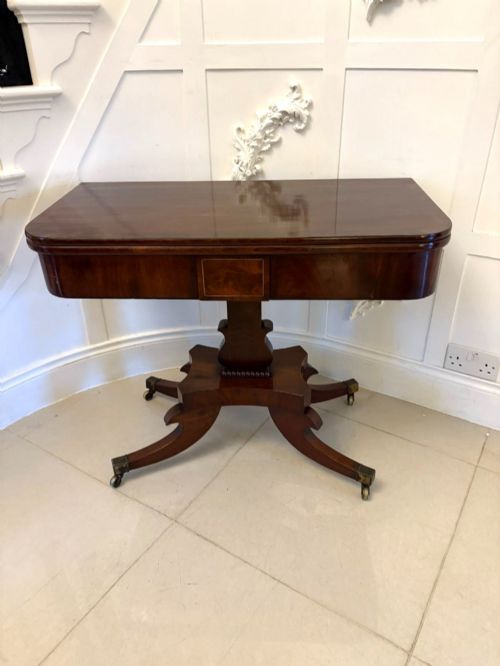
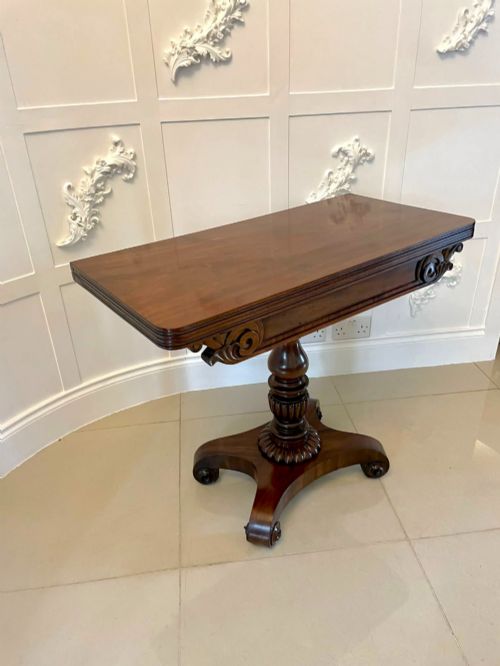
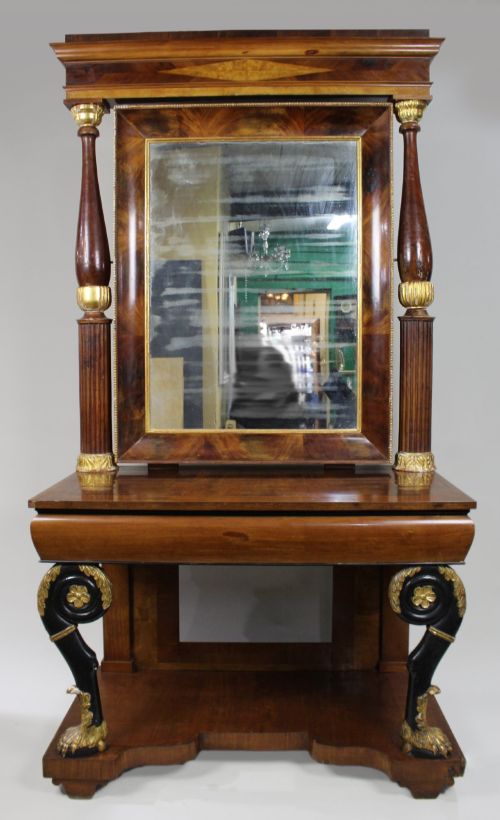
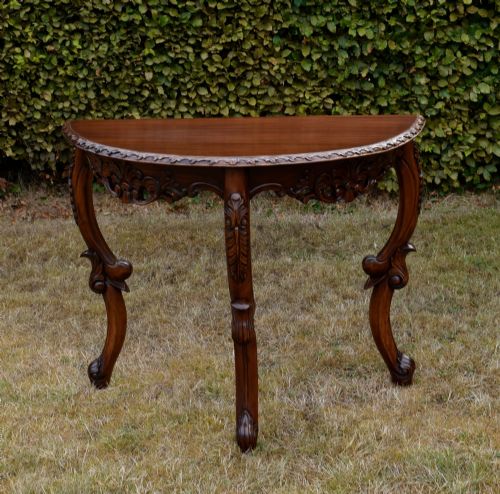




Regency Mahogany Entry Table
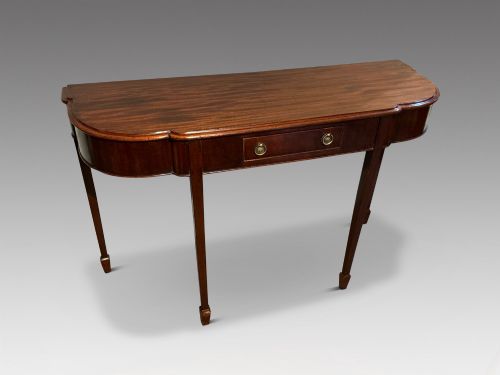
A regency mahogany entry table brings architectural form and rich timber into a hallway, offering both surface and presence.
Regency Mahogany Entry Table
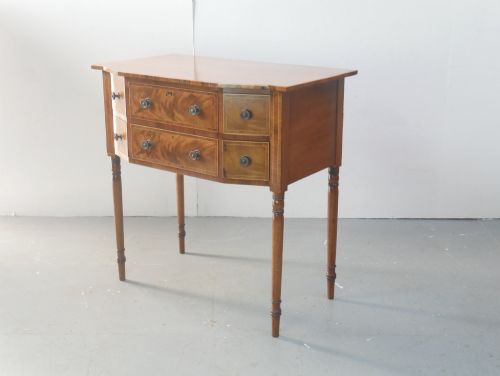
A regency mahogany entry table encompasses console, hall, and side tables designed for the entrance of a home. These forms appear predominantly from the nineteenth century, alongside Georgian and William IV periods, reflecting classical architectural inspiration.
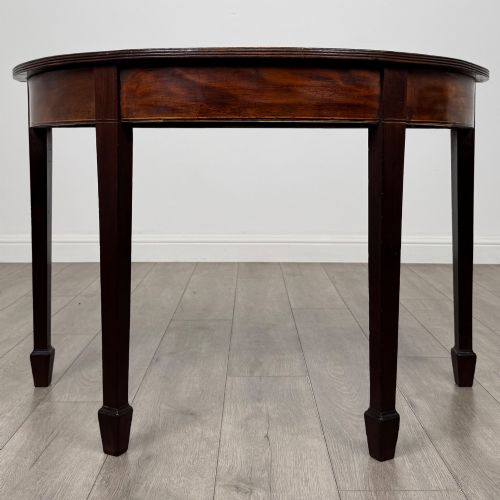
The pieces on this page span console tables, tea tables, and marble-topped serving tables, often built with demi-lune or rectangular profiles. Regional variations such as Irish pieces also emerge, alongside later revival interpretations.
Materials and Construction
Makers utilised solid mahogany and flame mahogany veneer over timber carcases, often selecting figured timber for the primary visual surfaces. These woods provided a deep, warm ground that responded well to hand-finishing.
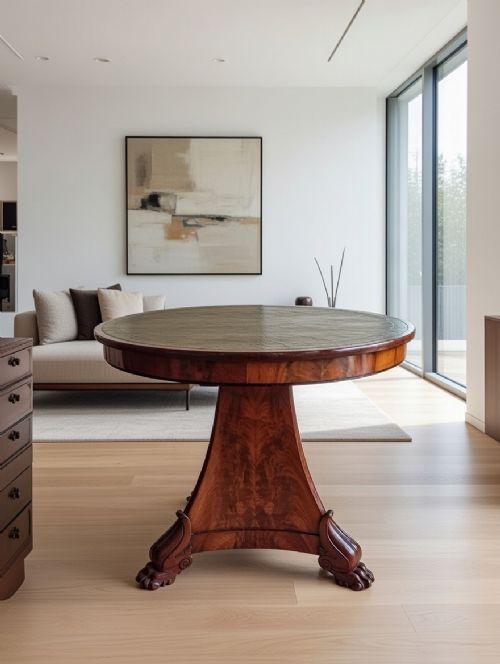
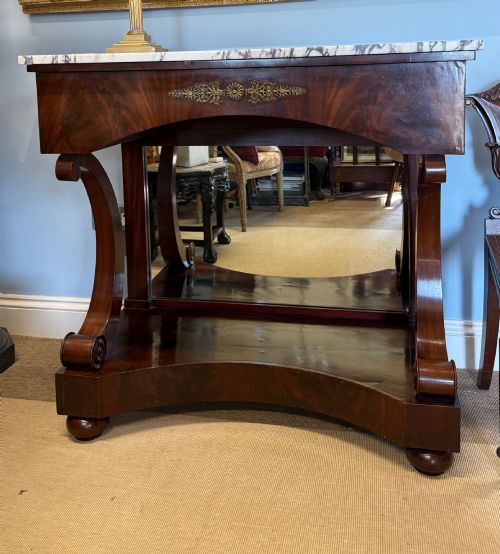
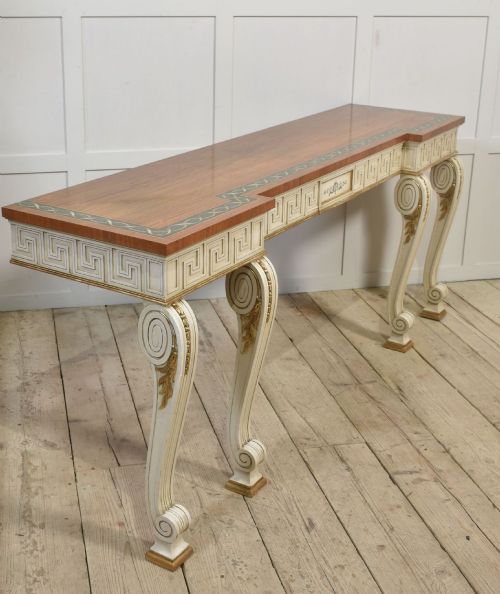
Many examples incorporate brass mounts, parcel gilt highlights, and inset marble or leather tops. Structural elements rely on classical joinery suited to heavy tops and architectural pedestals.
Listings incorporate nineteenth-century mahogany alongside brass, marble, and glass elements across various console and hall table forms.
Judging the Workmanship
Quality rests upon the selection of the timber veneers, where intensely figured flame mahogany creates a striking visual depth superior to plain stock. The crispness of carved details and parcel gilt work further separates standard production from finer commissions.
Construction integrity defines the upper tier, seen in the seamless integration of heavy marble tops and substantial mirror backs. The refinement of proportion, particularly in architectural console bases, dictates the success of the piece.
Gillows·Freeman
The Regency Mahogany Entry Table Glossary
- Console table
- A table designed to be fixed against a wall, frequently supported by front legs or architectural brackets. These tables serve as focal points in entrance halls and reception rooms.
- Flame mahogany
- A veneer cut from the fork of the mahogany tree, producing a distinctive fire-like pattern. This material is prized for its dramatic visual movement.
- Parcel gilt
- Partially gilded decoration applied to carved wooden details or mouldings. It provides contrast against the dark mahogany ground.
- Demi-lune
- A half-moon shape characteristic of tables designed to sit flush against a wall. This profile saves floor space in narrower hallways.
- Gueridon
- A small circular table supported by a central pillar or column. These pieces function well as freestanding centre tables in larger spaces.
Regency Mahogany Entry Table: Frequently Asked Questions
Where should an entry table be placed?
These tables find their natural home in hallways and entrance passages against a flat wall. They provide an immediate surface upon entering the house.
Pairing a console table with a matching pier mirror enhances the architectural scale of a hallway. Freestanding centre tables suit wider vestibules with light circulating on all sides.
How do I identify a Regency table?
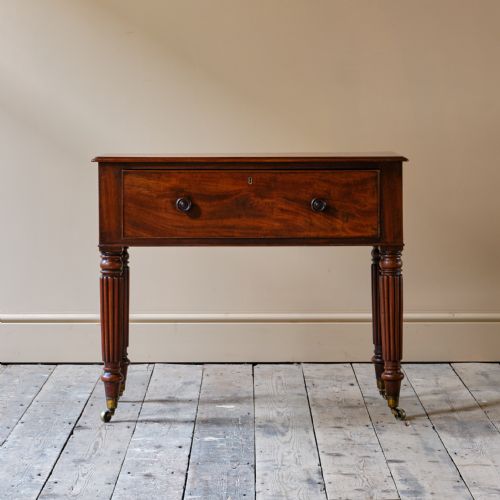
Regency pieces often display classical architectural motifs, such as carved paw feet, reeded legs, and heavy mahogany veneers. Proportions tend to reflect strict symmetry and classical influence.
Details like brass inlay or parcel gilt distinguish the style from simpler vernacular furniture. Dates generally cluster around the early nineteenth century.
What is the difference between a console and a side table?
A console table is traditionally designed to stand against a wall, occasionally requiring structural fixing for stability. These often feature ornate front legs with a flat rear edge.
Side tables are typically freestanding structures with four legs that can stand independently in a room. Both forms appear frequently in mahogany across the nineteenth-century listings.
How do I care for a mahogany surface?
Mahogany benefits from regular dusting with a soft, dry cloth to prevent particulate accumulation. Excessive moisture and direct sunlight should be avoided to protect the polished finish and veneer.
Applying traditional wax polish periodically maintains the lustre of the timber. Marble tops require gentle cleaning with neutral soap to avoid dulling the stone.