

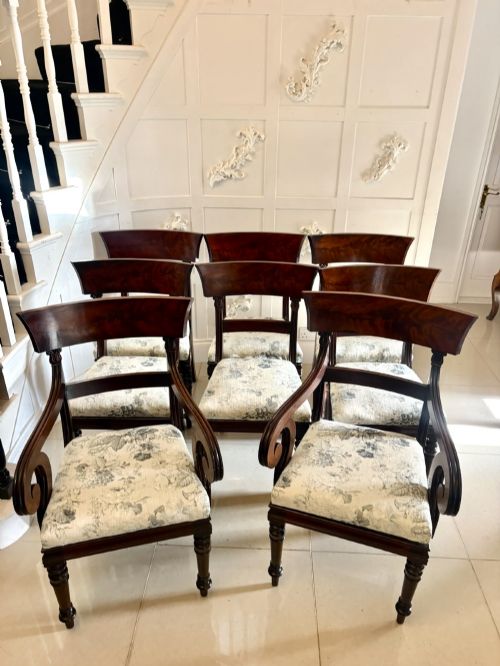
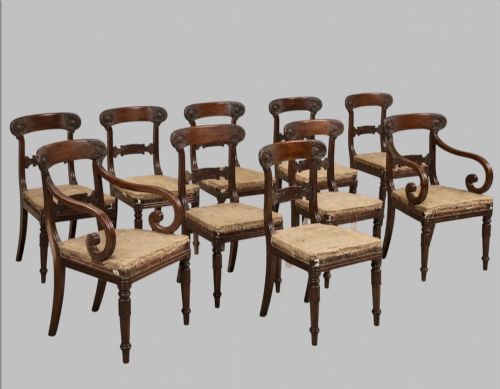
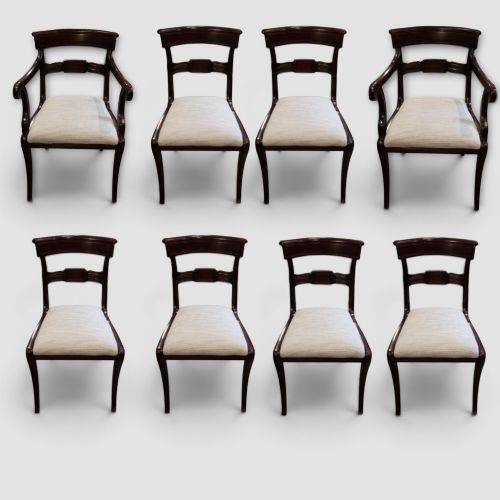
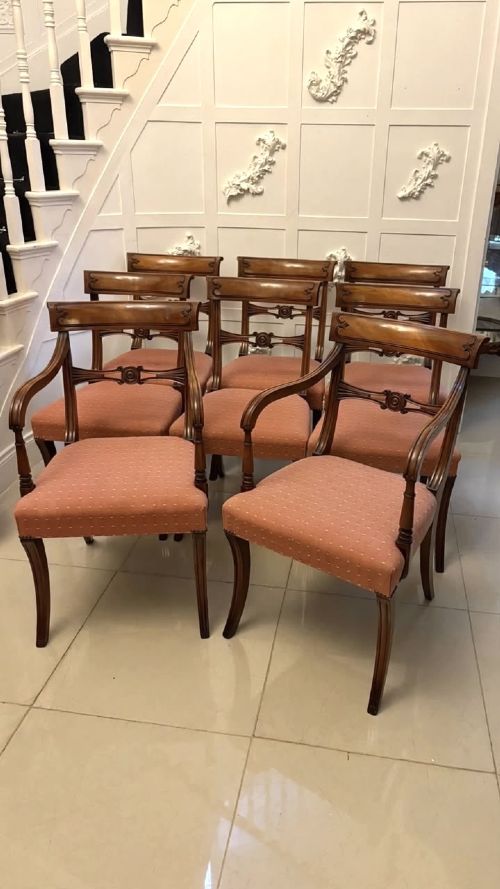
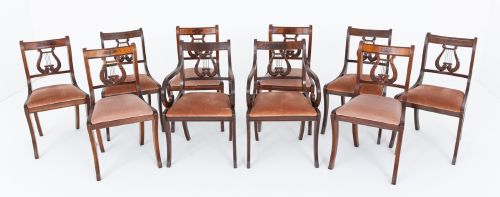
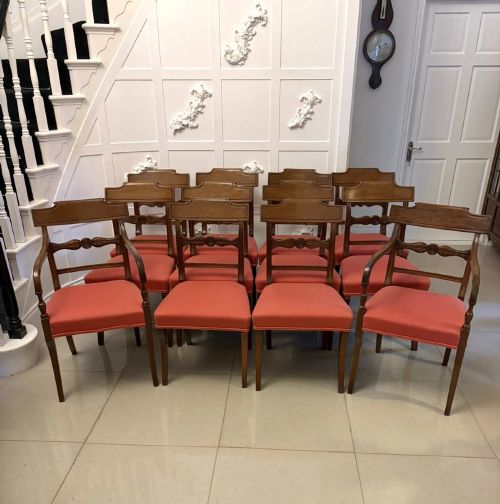
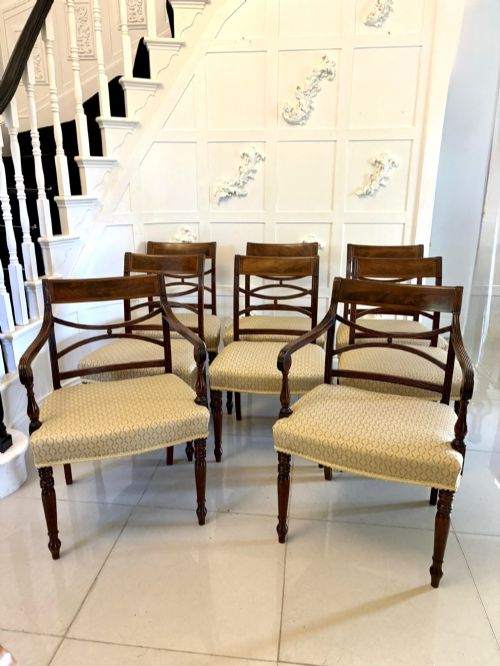
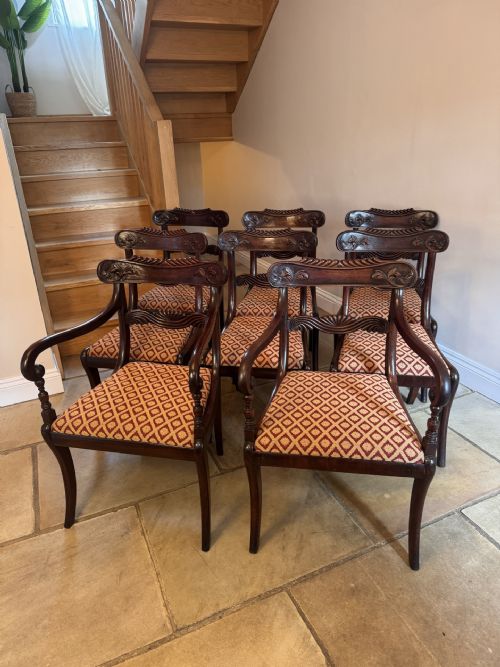

Regency Mahogany Carver Set
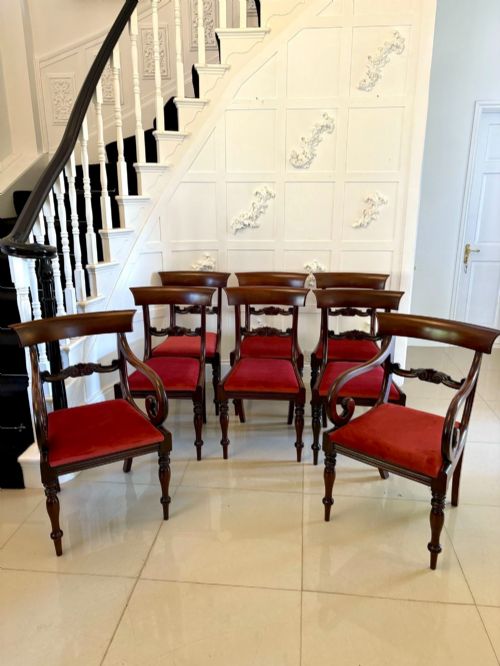
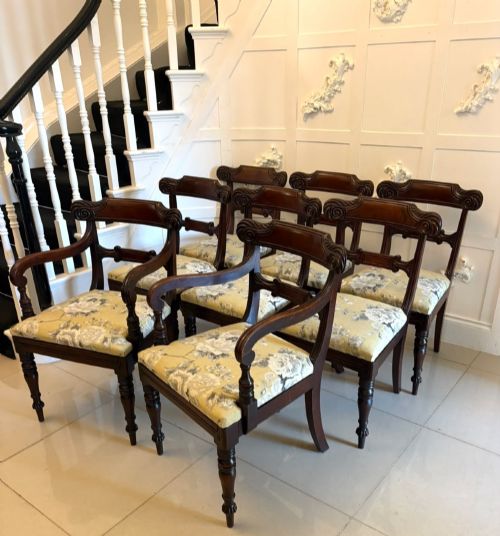
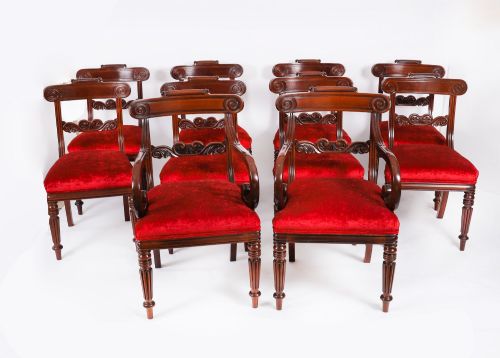
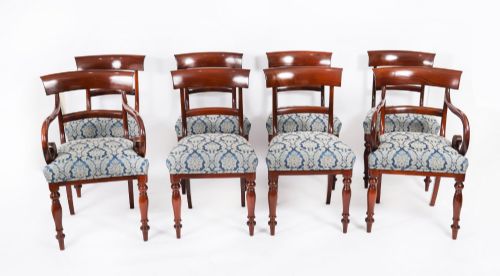
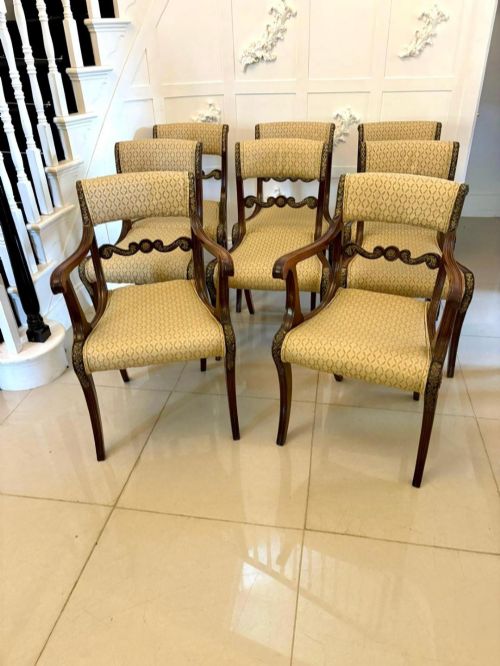
A regency mahogany carver set brings balanced proportion and robust timber into a dining room through paired armchairs and matching single chairs.
Regency Mahogany Carver Set
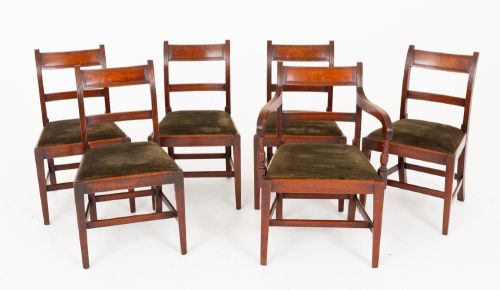
A regency mahogany carver set typically consists of a matched group of dining chairs containing a majority of single chairs alongside one or two armchairs, known as carvers. These groupings date predominantly from the nineteenth century, spanning periods from late George III through William IV and the broader Regency era, though later revival versions also appear.
The configurations vary in scale from compact sets of six up to grand assemblies of twelve or more. Most survivors combine sturdy mahogany frames with drop-in seats upholstered in fabric, leather, or velvet, designed to sit comfortably around a large dining table.
Materials and Construction
Cabinetmakers utilised dense tropical mahogany for its strength, rich grain, and capacity to hold crisp carved details along the crest rails and arm supports. Individual components were joined using traditional woodworking joints, while seat frames were frequently built as drop-in units to allow straightforward reupholstering.
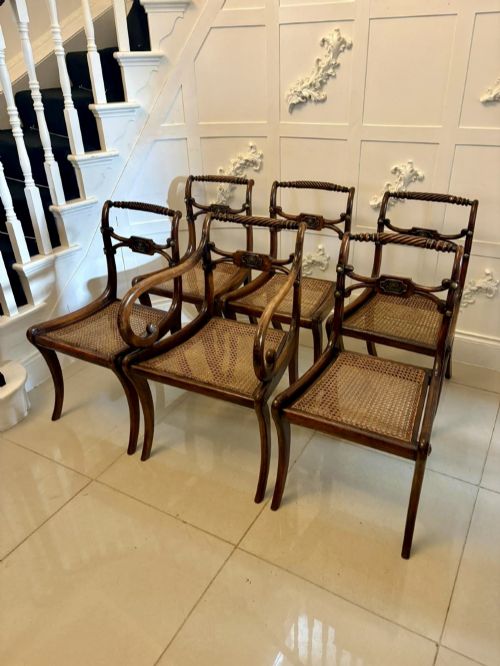
Surface finishes rely on traditional polishing methods that enhance the natural warmth of the timber. Details such as brass inlay, cane panels, or carved scroll arms appear across the pieces, executed by hand to match the requirements of each commission.
Regency Mahogany Carver Set Retail Price Guide 2026
Typical asking prices for regency mahogany carver set among the pieces listed under this phrase on Sellingantiques today, from the lower quarter to the upper quarter. They describe what is for sale here now, not the wider market.
Armchairs earned the name carvers because the host needed wider elbow room to carve the joint at dinner.
Assessing Craftsmanship
The distinction between standard examples and the finest workshop output lies in the selection of timber and the precision of the joinery. Superior sets display dense, figured mahogany with uniform colour across every chair in the group, ensuring the armchairs and singles form a cohesive visual unit.
Carved elements such as bar backs, sabre legs, or scroll arms demonstrate the hand of a skilled maker through their clean lines and symmetry. Original survival of components like cane seats or drop-in frames further elevates the standing of a set.
Thomas Clarkson and Sons·Gillows
The Regency Mahogany Carver Set Glossary
- Carver
- An armchair designed with elbow supports, traditionally placed at the head of a dining table and paired with matching single chairs.
- Bar Back
- A horizontal wooden splat shaped like a curved bar across the upper backrest, typical of nineteenth-century seating designs.
- Sabre Leg
- A chair leg that curves outwards in a concave sweep reminiscent of a cavalry sabre, common in Regency furniture.
- Drop-in Seat
- A separate wooden frame upholstered with fabric or leather that drops into the rebated seat rail of the chair.
- Scroll Arm
- An armchair terminal shaped into a tight outward or inward spiral, frequently seen on Regency and William IV dining chairs.
Regency Mahogany Carver Set: Frequently Asked Questions
How many carvers come in a set?
Most matching groups include either one or two armchairs alongside a larger number of single dining chairs.
Larger configurations of ten or twelve chairs frequently incorporate two carvers to sit at opposite ends of a long table.
What is the difference between Regency and William IV?
Regency chairs generally display lighter proportions, refined reeding, and elegant sabre legs influenced by classical antiquity.
William IV examples tend to be heavier and more robust, featuring bolder scrolling and broader bar backs.
Can these chairs be used daily?
Mahogany is a dense hardwood that provides exceptional structural stability for regular seating use.
Proper maintenance of the joints and periodic reupholstering ensure the frames withstand everyday dining requirements.
How do I care for antique mahogany?
Keep wooden surfaces away from direct heat sources and strong sunlight to prevent the polish from fading or drying out.
Apply a traditional wax polish occasionally to nourish the grain and maintain the natural lustre of the timber.