

Regency Mahogany Bowfront Chest
A regency mahogany bowfront chest delivers curved storage and rich timber grain, anchoring a room with period proportion.
Regency Mahogany Bowfront Chest
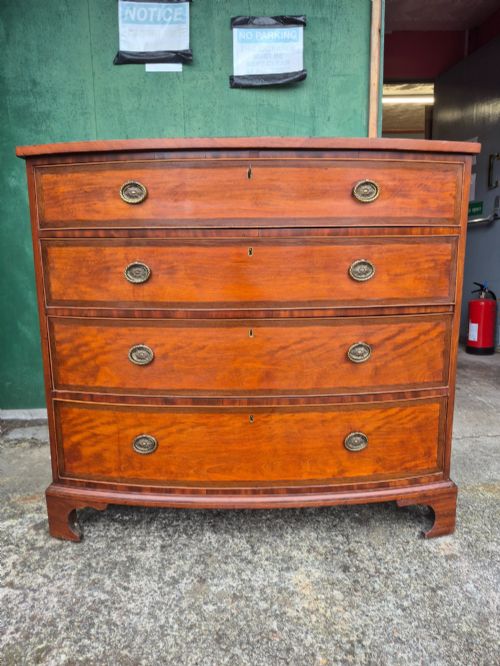
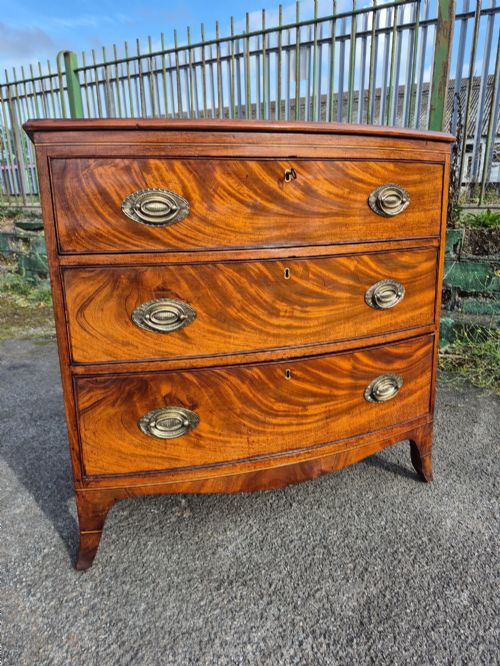
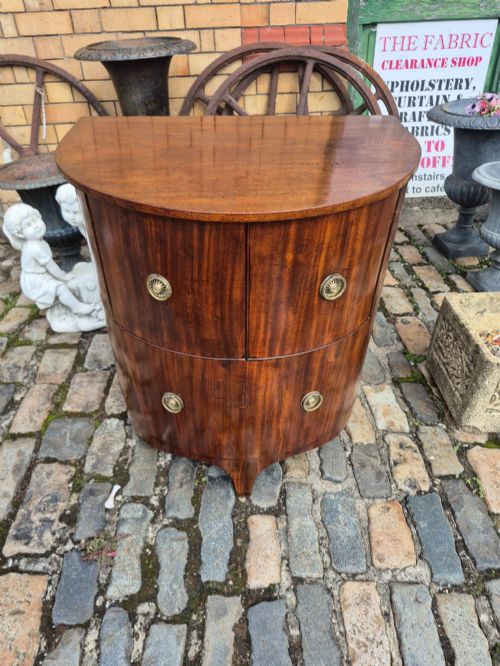
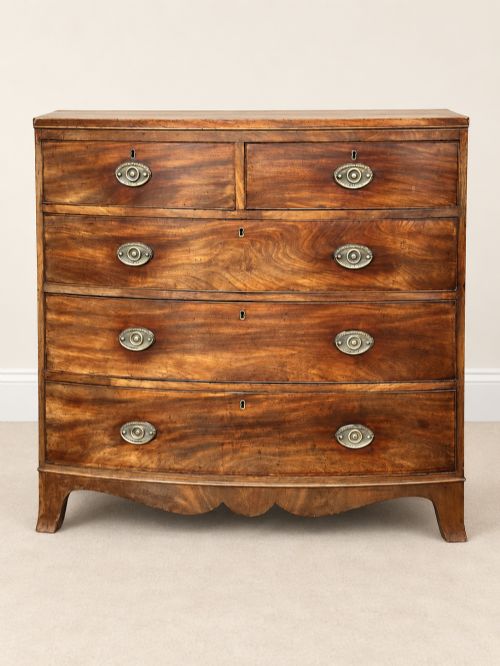
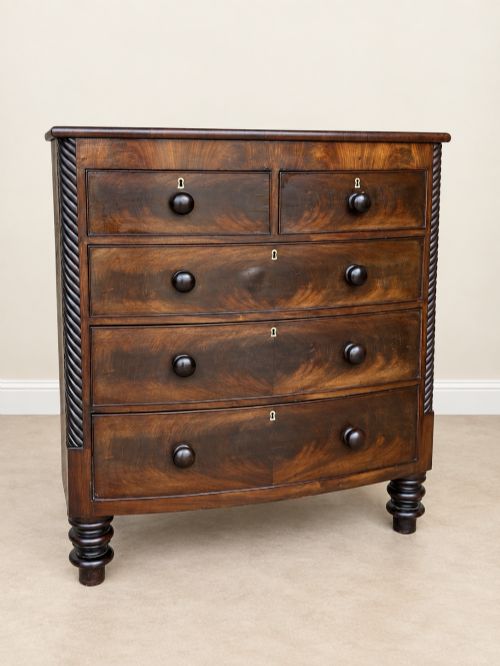
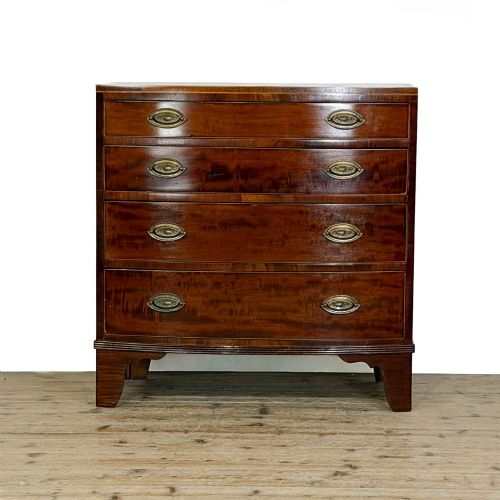
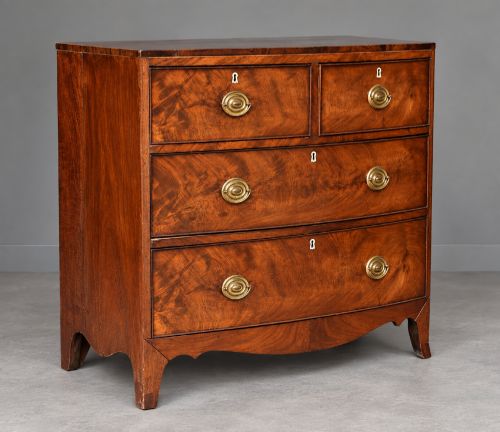
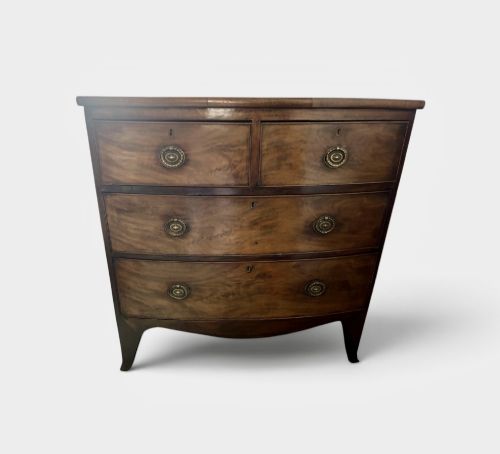
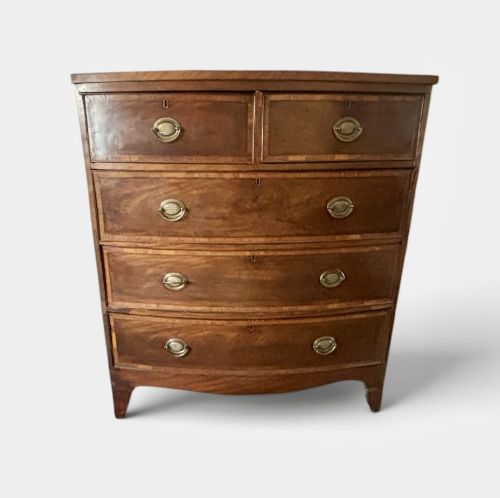
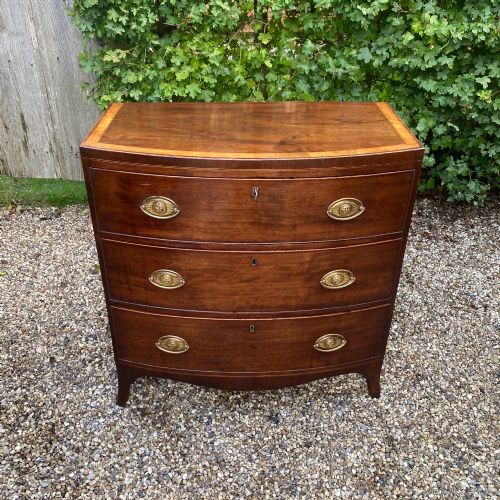
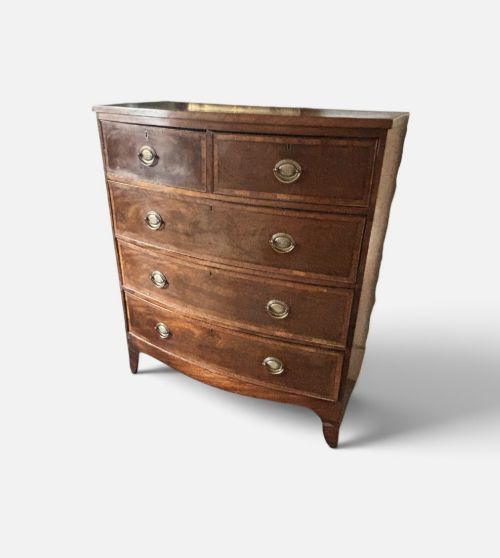
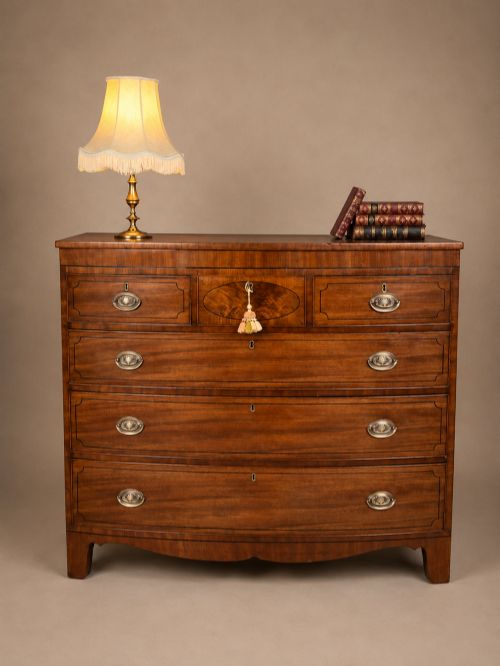
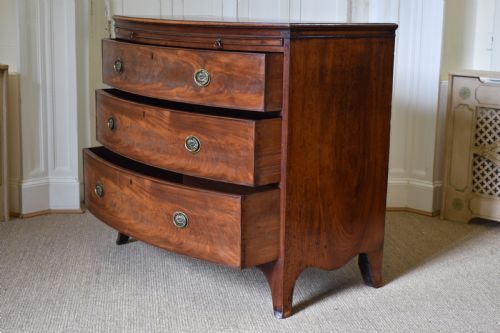
A regency mahogany bowfront chest presents a projecting curved front containing stacked horizontal drawers designed for domestic storage. These pieces emerge predominantly from the nineteenth century, spanning Georgian, Regency, and William IV eras.
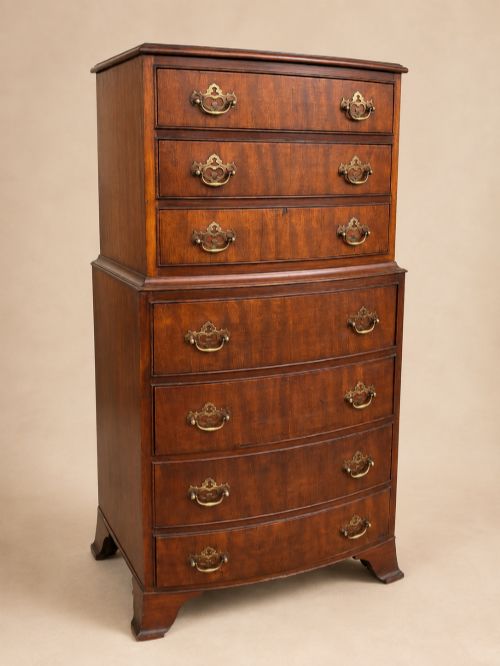
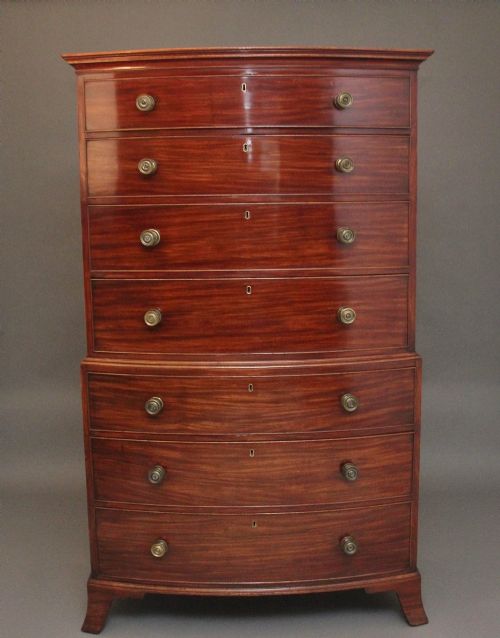
The version most commonly met on this page is the standard small or medium chest featuring graduated drawers and supported by bracket feet or short turned legs. Cabinetmakers also produced taller variants, linen presses, and chests on chests incorporating the signature bowed silhouette.
Materials and Construction
Cabinetmakers constructed carcass frames primarily from solid mahogany and oak, applying flame mahogany veneer to drawer fronts to create figured grain patterns. Secondary timbers such as pine and oak formed internal drawer linings and backboards.
Detailing relied on contrasting stringing and banding using satinwood and boxwood inlay along top edges and drawer perimeters. Brass hardware, including drop handles and escutcheons, completed the assembly alongside occasional structural elements like spiral carved corners.
Listings feature pieces spanning the Georgian, Regency, and Victorian periods, constructed from mahogany, flame mahogany veneer, oak, pine, and satinwood.
Gradations in Execution
Execution quality rests upon the selection of timber veneers and the precision of cabinet joinery. Pieces featuring highly figured flame mahogany and crisp satinwood inlay demonstrate superior workshop selection compared to plain timber examples.
Proportion and scale dictate refinement, with smaller proportions and narrower footprints commanding greater attention from makers. The integrity of internal oak or pine linings and original brass mounts further distinguishes finer items from later or altered pieces.
The Regency Mahogany Bowfront Chest Glossary
- Bowfront
- A curved convex cabinet front that projects outward from the side pilasters. This design softens room angles while maximising internal drawer volume.
- Flame mahogany
- A veneer cut from the branch junction of the mahogany tree, displaying a characteristic flickering, flame-like grain pattern. Cabinetmakers reserved this timber for principal visual surfaces.
- Caddy top
- A raised, moulded tabletop profile that sits slightly above the main carcass frame. It derives from the shaping seen on tea caddies of the period.
- Crossbanding
- A border of veneer laid perpendicular to the surrounding grain direction, often edged with fine boxwood or satinwood stringing lines. This technique frames the drawer fronts.
- Graduated drawers
- A series of drawers that decrease in depth progressively from bottom to top. This arrangement establishes visual balance across the face of the chest.
Regency Mahogany Bowfront Chest: Frequently Asked Questions
Where did they place these chests?
Bedrooms and dressing rooms served as the primary locations for housing folded garments and linens within the stacked drawers. Their finished backs and refined timber surfaces also permitted placement in hallways and reception rooms.
Today, buyers utilise them in similar domestic spaces where curved proportions soften linear architectural layouts while providing concealed storage.
How do I identify the period?
Period attribution relies on examining secondary timbers, construction methods, and hardware styles found across the piece. Georgian and Regency examples typically feature hand-cut dovetails and oak linings rather than modern fixings.
Stylistic markers such as satinwood banding, bracket feet, and specific turning styles help narrow the date of manufacture between the late eighteenth and mid nineteenth centuries.
What is flame mahogany?
Flame mahogany is a highly decorative wood veneer obtained from specific cuts of timber showing undulating grain patterns. It creates a distinctive rippled appearance that catches light across the drawer fronts.
Cabinetmakers placed these veneers centrally on principal panels to showcase the natural figuring of the wood.
Are smaller chests authentic?
Smaller chests of drawers and neat proportions occur frequently across nineteenth century workshops. Cabinetmakers produced varying scales to suit different domestic rooms and ceiling heights.
Compact dimensions do not indicate later alterations when the internal construction, drawer linings, and carcass proportions remain consistent with period standards.