


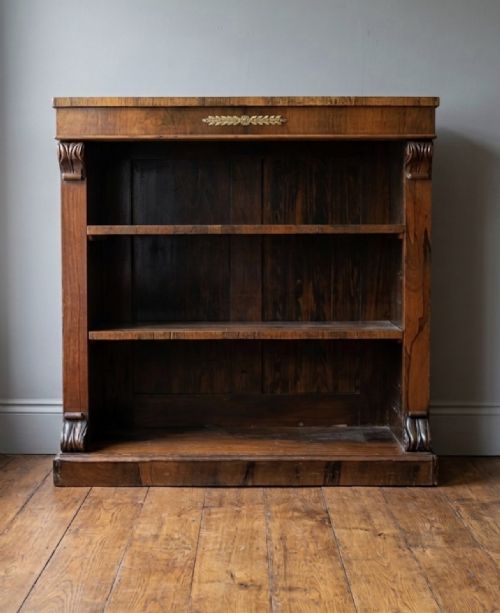
Regency Low Bookshelf
A regency low bookshelf brings compact linear storage to a room, offering open access to volumes while keeping sightlines clear above.
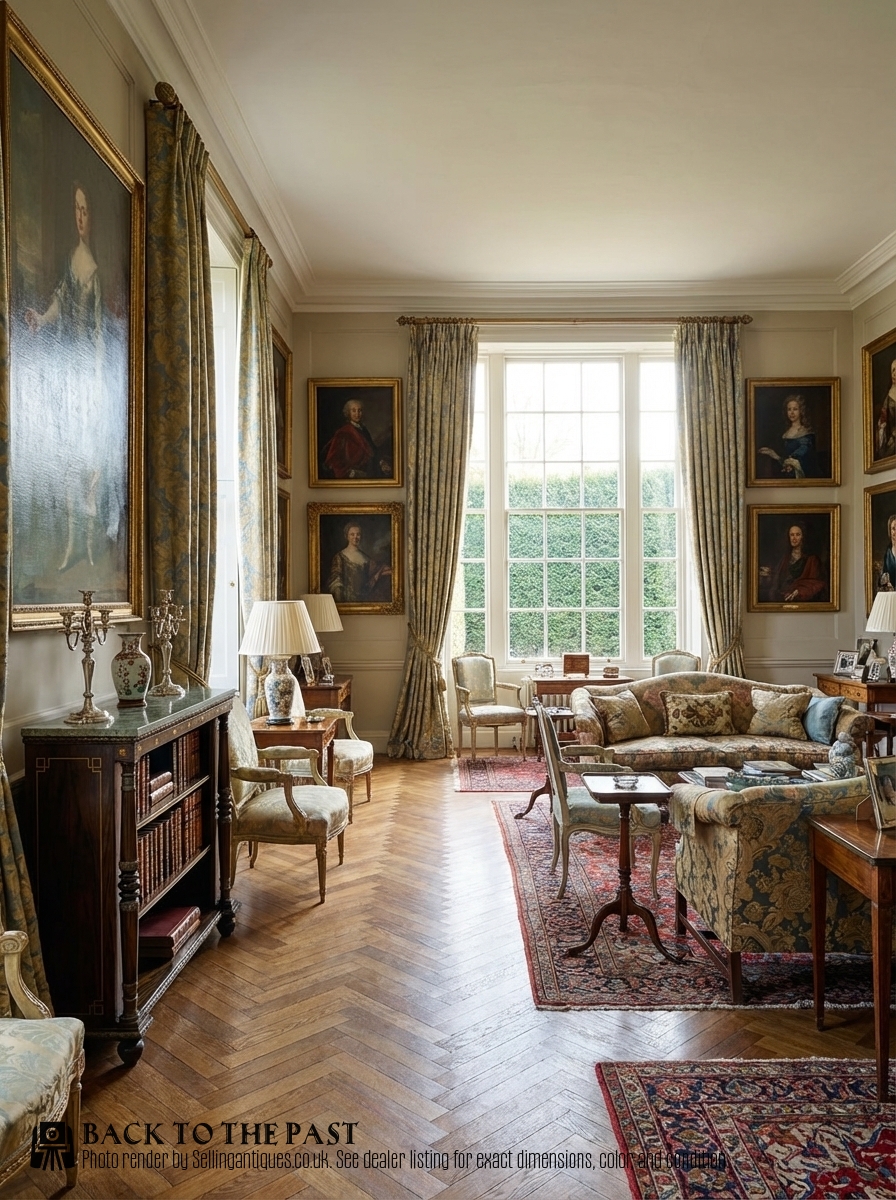
Regency Low Bookshelf
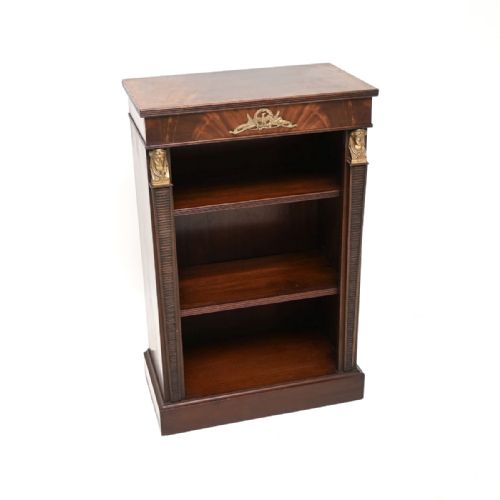
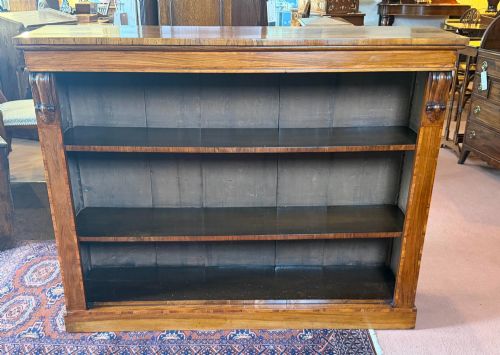
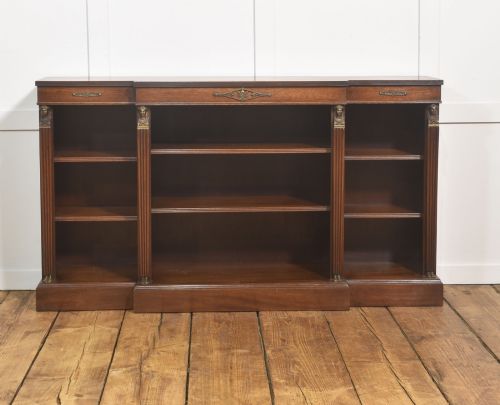
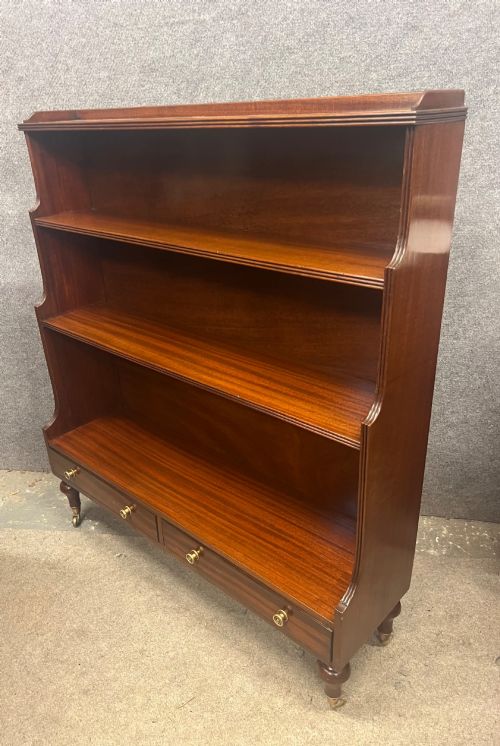
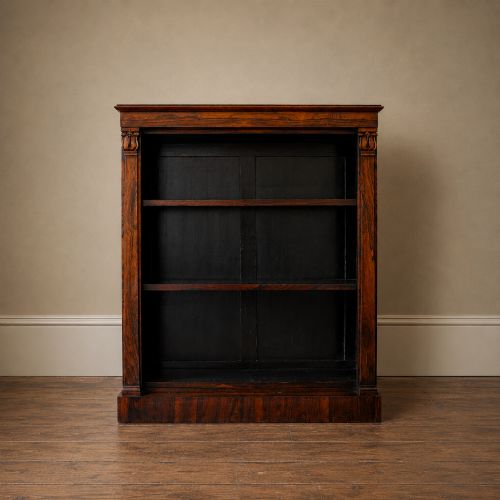
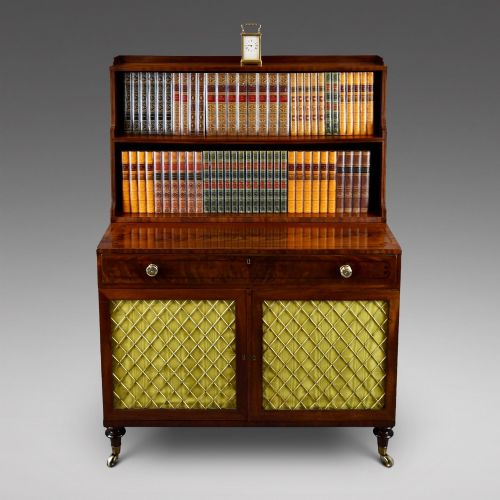
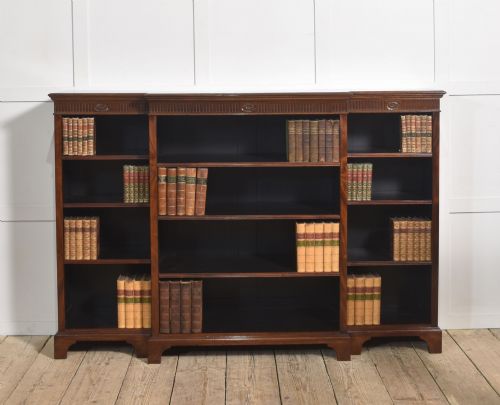
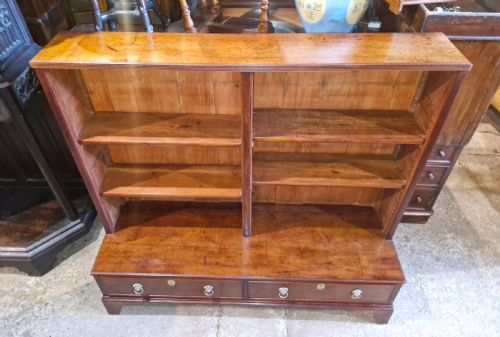
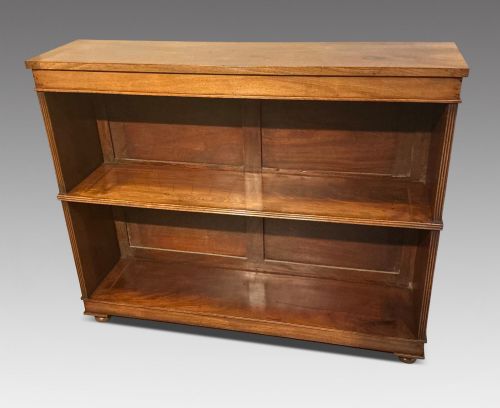
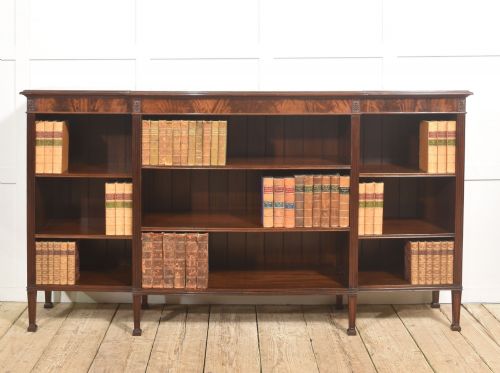
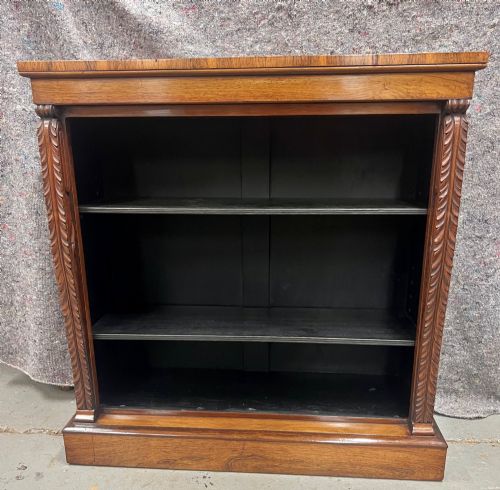
A regency low bookshelf sits low against the wall, often taking the form of an open bookcase or dwarf bookcase designed to hold modest volumes without dominating the interior. The selections here include low open shelves, waterfall tiers, and breakfront layouts originating from the nineteenth century alongside later revival pieces.
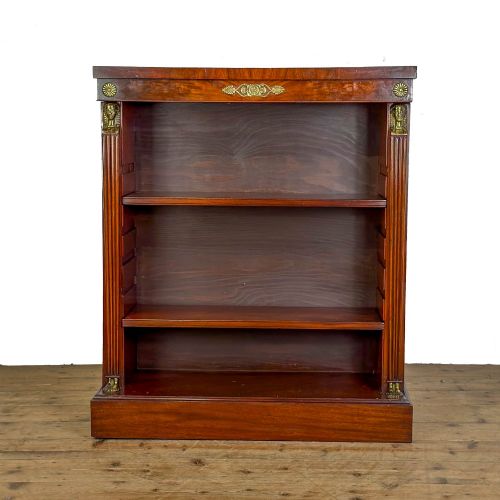
The standard examples in this category are constructed from rich timbers like mahogany and rosewood, frequently incorporating adjustable shelves or low display tiers. Makers of the period favoured clean architectural lines, sometimes enriched with brass or ormolu mounts to catch the light.
Many of these pieces function as freestanding units or low cabinets, offering a practical surface on top for decorative objects while keeping books within arm reach. The grouping reflects both authentic nineteenth-century examples and twentieth-century interpretations built in the same idiom.
Materials and construction methods
Cabinet makers relied primarily on solid mahogany and rosewood, often selecting flame mahogany veneers to create striking grain patterns across wider surfaces like breakfront fascias. Timber selection dictated the structural integrity, allowing slender uprights to support heavy rows of books without sagging.
Secondary elements include brass details, ormolu mounts, and leather accents which contrast against the dark polished wood. Joinery techniques from the period ensured that low bookcases remained stable despite seasonal changes in temperature and humidity.
Judging the standard of execution
Quality rests in the crispness of the timber preparation and the subtlety of the grain matching across the front elevation. Superior pieces display thoughtful proportion in the cornice and plinth, avoiding clumsy overhangs or heavy-handed mouldings.
The refinement of internal elements, such as smoothly functioning adjustable shelf mechanisms and neat corner joints, separates standard utility items from pieces destined for principal libraries and formal reception rooms.
The Regency Low Bookshelf Glossary
- Dwarf bookcase
- A low open bookshelf designed to sit below dado height, keeping the wall space above free for paintings or mirrors.
- Breakfront
- A cabinet or bookcase where the central section projects forward from the flanking wings, creating visual depth and architectural rhythm.
- Waterfall bookcase
- A set of open shelves stepped back progressively from bottom to top, creating a cascading profile popular in the nineteenth century and later revivals.
- Ormolu
- Gilt bronze mounts applied as decorative ornaments to furniture corners, friezes, and pilasters.
- Flame mahogany
- A veneer cut from the branch junction of the mahogany tree, showing a distinctive flickering flame pattern.
Regency Low Bookshelf: Frequently Asked Questions
How do I style a low bookshelf?
Place the unit against a clear stretch of wall where the low profile maintains an open feeling in the room. Use the top surface for lamps or ceramic objects while reserving the shelves for books arranged by height or subject.
Ensure books are pulled forward slightly rather than pushed deep into the shadows so the spines catch the light. Leave small gaps between groupings to keep the arrangement looking relaxed rather than packed.
Are the shelves usually adjustable?
Many period examples feature clever wooden ratchets or brass strip supports that allow individual shelves to move up or down. This adaptability accommodates volumes of varying heights without wasting vertical space.
When inspecting a piece, check whether the support pins or rack systems match the period of the carcass. Original adjustable mechanisms indicate a higher grade of workshop production.
Can these bookcases stand away from the wall?
Certain examples are finished on the reverse, allowing them to function as double-sided units or low room dividers. Most traditional bookcases, however, feature plain secondary timber backs designed to sit flush against a wall.
Check the finishing of the rear panel before placing a piece in an open-floor configuration. Freestanding double-sided variants offer unusual flexibility for zoning larger living spaces.