


Regency Inlaid Tea Table
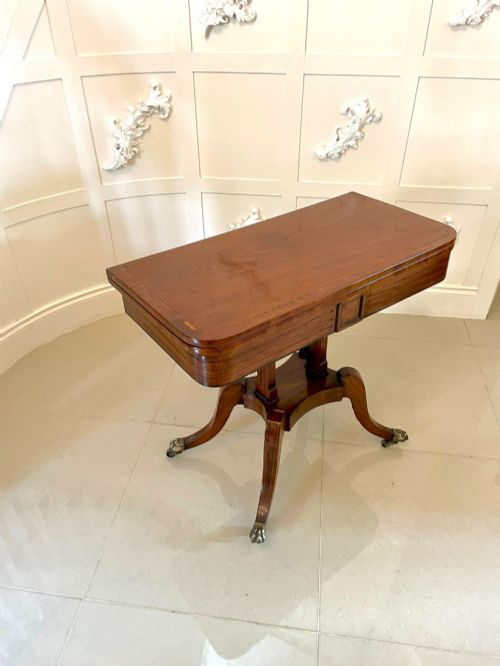
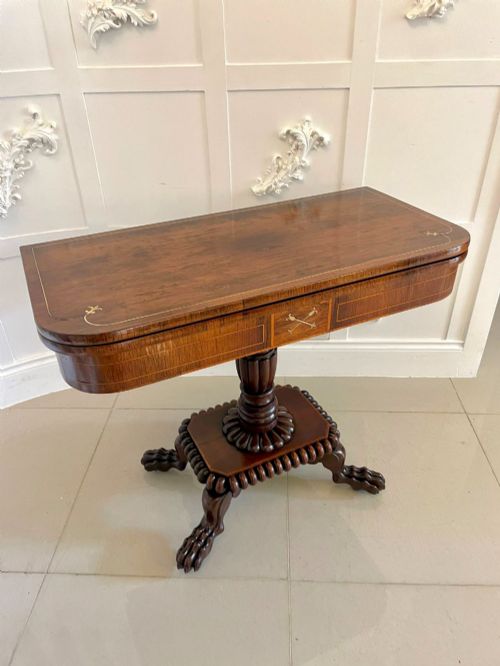
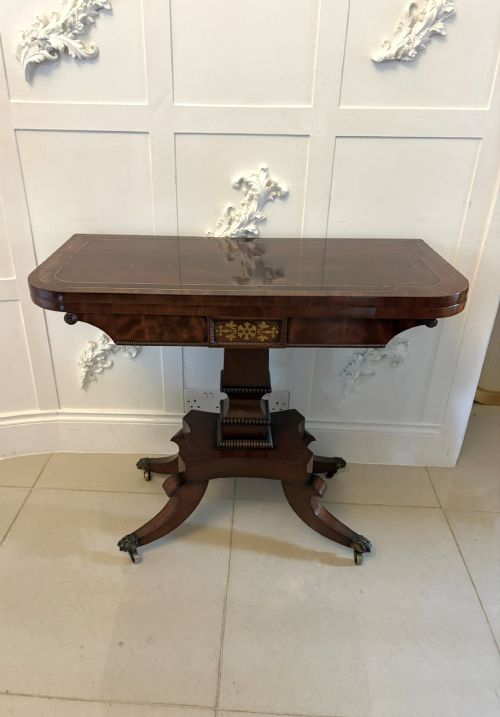
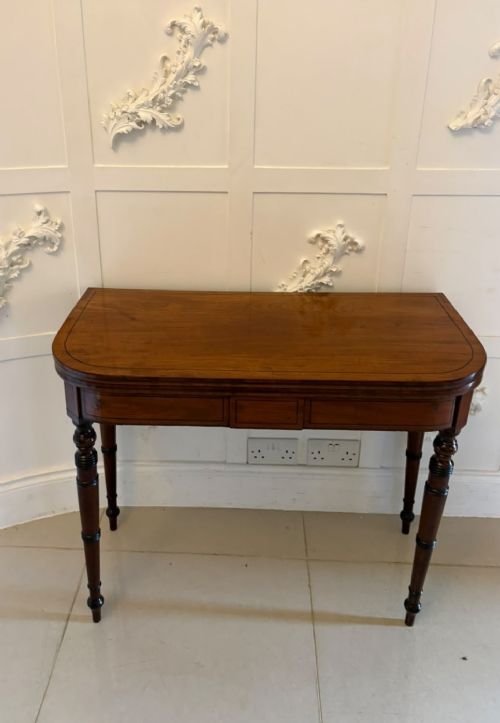
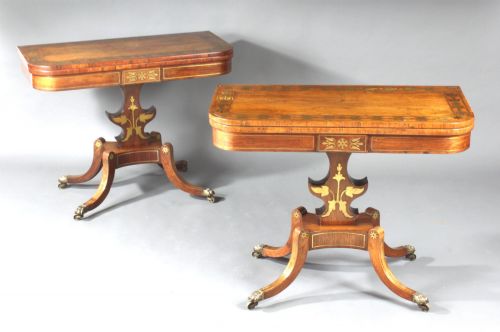
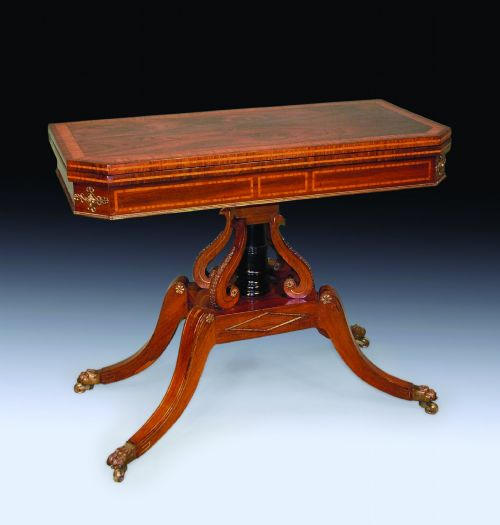
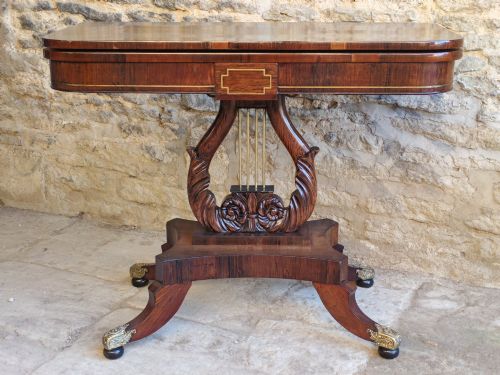
These pieces are a regency inlaid tea table, built to serve hospitality and social rooms with folding timber surfaces and precise decorative stringing.
Regency Inlaid Tea Table
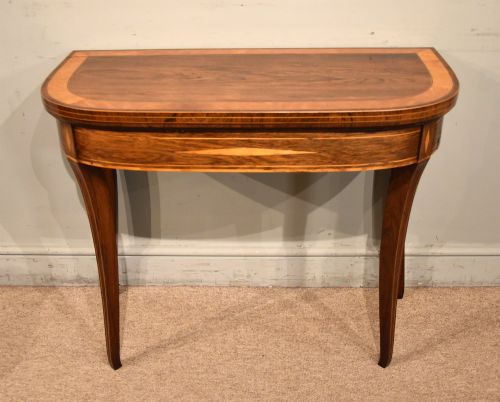
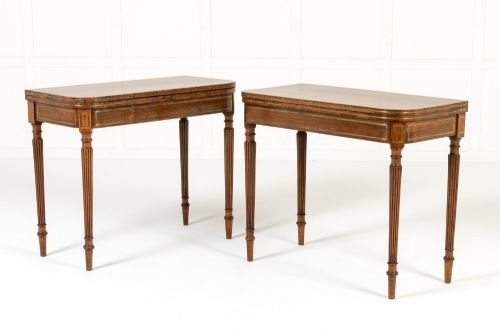
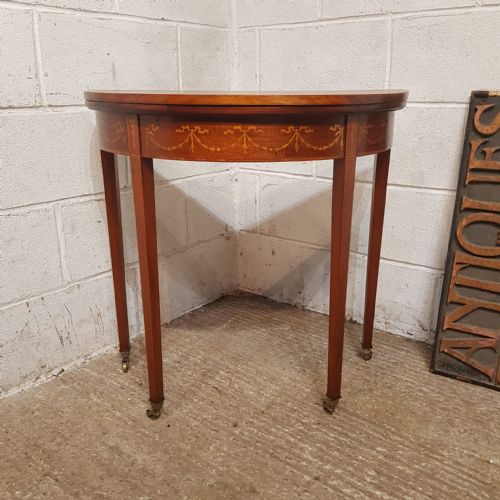
A regency inlaid tea table typically presents as a fold-over console, D-shaped, or demi-lune surface designed to expand for evening entertainment and tea service. These pieces emerge predominantly from the Regency and Georgian eras, alongside occasional later revivals.
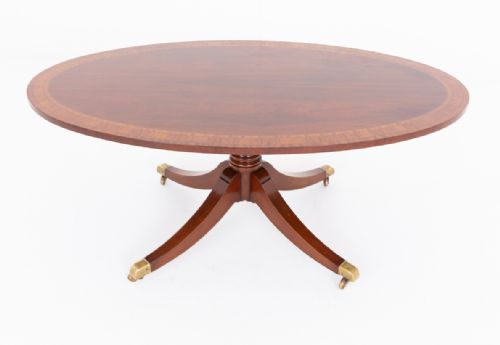
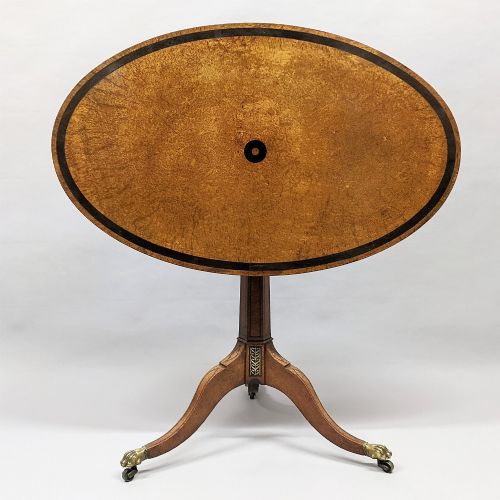
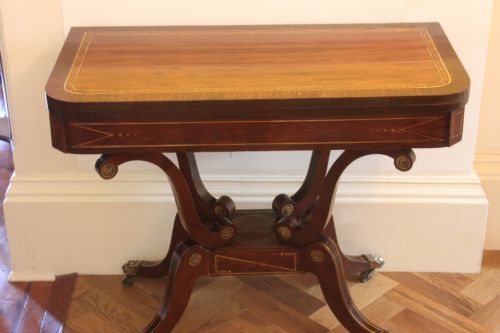
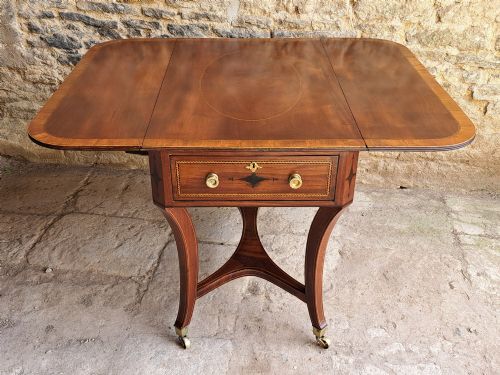
The materials span rich tropical hardwoods paired with contrasting lighter timbers, forming specific shapes that double as card and games tables when opened. Buyers meet variations featuring pedestal bases, scroll supports, or slender legs fitted with brass castors.
Materials and Construction
Cabinetmakers constructed these tables using solid and veneered mahogany, rosewood, and satinwood, often accentuating the timber grain with contrasting boxwood and ebony inlay. The joinery relies on precise hand-cut elements to support folding tops and pivoting leaves.
Many examples incorporate brass inlay, brass mountings, and cast brass sabots to edge the timber panels and protect the feet. Polished French finishes seal the wood to highlight the natural figuration beneath.
Some tea tables hide secret compartments beneath their folding tops, originally intended for stashing gaming counters or quiet letters.
Design and Execution
The standard of a regency inlaid tea table rests on the crispness of its stringing and the selection of figured veneers used across the top surface. Finer examples display meticulous hand-cut brass scrollwork integrated seamlessly into the wood rather than applied roughly.
Structural integrity during the action of folding and pivoting the top distinguishes superior workshops from standard output. The balance of the pedestal base and the proportional weight of the timber determine how firmly the table stands when open.
George Bullock
The Regency Inlaid Tea Table Glossary
- Demi-lune
- A half-moon shape used for table tops that sit flush against a wall when closed. This form allows the piece to occupy minimal space until opened for use.
- Crossbanding
- A border of veneer laid around the perimeter of a table top so that the grain runs at right angles to the central panel. This technique frames the primary timber.
- Stringing
- Thin lines of contrasting wood or light-coloured inlay inserted into channels cut into the surface. It defines the edges and geometric patterns on the timber.
- Sabot
- A protective metal sleeve fitted to the foot of a table leg. These are commonly cast in brass and match other hardware on the piece.
- Fold-over top
- A hinged wooden surface that doubles the usable area when swung open and supported by a pivoting leg or swinging frieze.
Regency Inlaid Tea Table: Frequently Asked Questions
What is a regency inlaid tea table used for?
These tables served primarily for serving tea and hosting evening card games in polite society during the early nineteenth century. The hinged top folded flat against the wall when not in use to save space in the parlour.
When unfolded, the felt-lined or polished wood interior provided a stable surface for social gatherings. Their dual function made them central items in Regency drawing rooms.
How do I identify a genuine period piece?
Look for hand-cut joinery, timber shrinkage appropriate to age, and traditional hand-applied polishing methods beneath the surface. The inlay should sit flush with the surrounding wood rather than appearing machine-routed.
Examine the pivot mechanisms and hinges under the folding top to confirm they reflect period construction techniques. Secondary woods inside the frame should also match the expected regional timbers of the era.
How do I care for rosewood and mahogany surfaces?
Keep these tables away from direct sunlight and central heating vents to prevent the timber veneers from drying and splitting. Regular dusting with a soft, dry cloth maintains the polish without chemical buildup.
Apply a microcrystalline wax sparingly when the wood appears dry to protect the finish. Avoid placing damp items directly onto the antique surface to prevent water rings.
What is the difference between a card table and a tea table?
While many examples served both purposes interchangeably, tea tables often feature plain or inlaid wooden interiors designed for hospitality. Card tables frequently incorporate baize or felt linings inside the folding top for playing games.
The leg and base construction also varied slightly to support different weights and uses during social events. Many surviving pieces combine both roles under the general term of games or console tables.