


Regency Inkstand Set
These regency inkstand set pieces are handsome desk accessories in porcelain, marble, silver, and rosewood that bring order and grace to a working surface.

Regency Inkstand Set
A regency inkstand set is a desktop writing accessory designed to hold inkwells, sanders, and pen trays during the Georgian and Regency periods. The examples on this page span the Regency, 19th Century, and Georgian periods, offering a glimpse into early nineteenth-century correspondence.
Most pieces you meet here take the form of portable inkwells, desk sets, and encriers fashioned from porcelain, rosewood, or marble. Forms range from compact single inkwells to substantial partner's desk sets fitted with brass inlay and Sheffield plate.
Origins stretch across English manufactories and continental workshops, incorporating Neoclassical, Empire, and Delftware styles. The assortment leans heavily toward porcelain items by makers such as Spode and Flight, Barr & Barr, alongside heavy stone bases.
Materials and construction
Makers utilised rich native and exotic timbers like rosewood and ebony, frequently embellishing them with intricate brass foliate inlay and stringing. These wooden bases provided a stable framework for glass or porcelain inkwells fitted with gilt bronze collars.
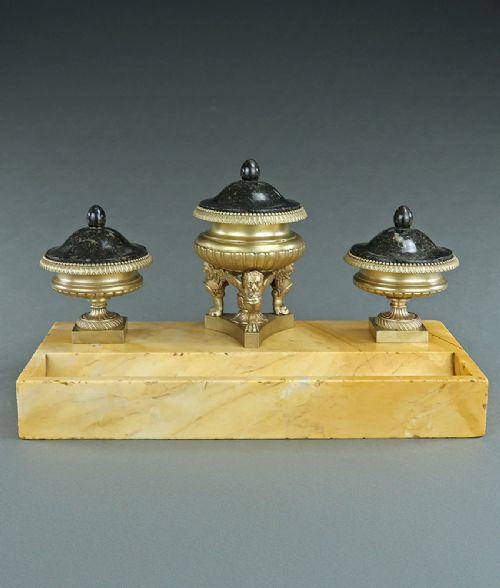
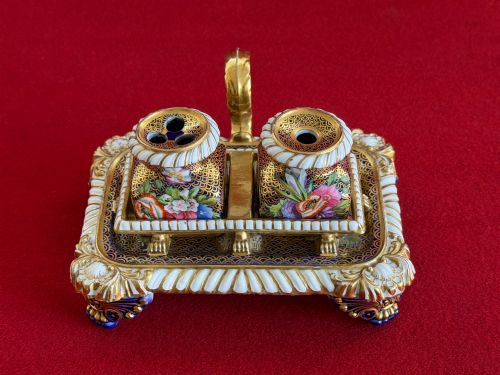
Porcelain components came from leading ceramic houses, hand-painted with detailed scenes or patterns and finished with touches of gold leaf. Heavy stone options relied on carved Sienna marble to provide weight and an imposing Neoclassical presence on the desktop.
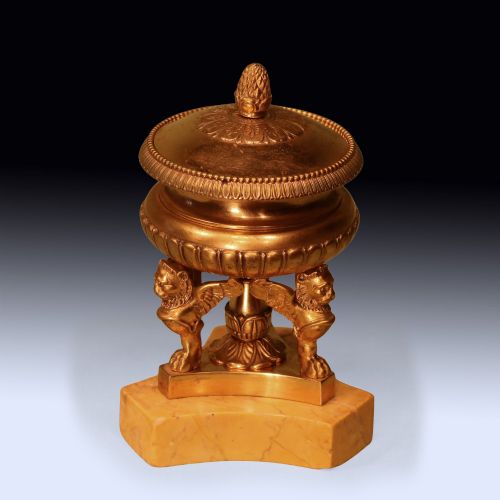
Metalwork featured cast ormolu, solid silver, and Sheffield plate, demonstrating high levels of metallurgical skill in the mounts and pen rests. These diverse materials were combined to create functional, decorative centerpieces for the writing desk.
Listings feature items from the Regency, Georgian, and wider nineteenth century, utilising materials such as Sienna marble, porcelain, and rosewood.
Judging quality and execution
The standard of a regency inkstand set rests largely on the crispness of its manufacture and the quality of its materials. Fine porcelain pieces show precise hand-painting and well-preserved gilding, while wooden sets display tight joinery and neatly fitted brass inlay.
Weight and substance also distinguish finer examples, particularly those employing solid silver, heavy ormolu mounts, or solid Sienna marble bases. The integration of matching components, such as original glass liners and well-matched inkwells, elevates a piece.
Flight Barr And Barr·Spode Porcelain
The Regency Inkstand Set Glossary
- Encrier
- A portable writing stand or inkstand designed to hold writing implements. It typically incorporates one or more inkwells and a compartment for sand or wafers.
- Ormolu
- Gilded bronze used widely for decorative mounts and furniture fittings during the period. The technique involves applying a gold amalgam to a bronze base.
- Sheffield plate
- A composite material made by fusing a thin sheet of silver to a copper base. This technique preceded modern electroplating and produced durable domestic items.
- Sienna marble
- A yellow-brown decorative marble from Italy featuring dark veining. It was favoured for high-status Neoclassical desk accessories and architectural ornaments.
- Partner's desk set
- A large writing accessory designed to be accessed from opposite sides. These substantial pieces often feature multiple inkwells and pen troughs.
Regency Inkstand Set: Frequently Asked Questions
What is a regency inkstand set?
A regency inkstand set is a desk accessory designed to hold ink, pens, and blotting sand during the early nineteenth century. These objects sat upon writing tables to keep correspondence materials organised and close at hand.
They combine utility with decorative appeal, incorporating materials like porcelain, rosewood, marble, and silver to suit the formal interiors of the period.
How were these inkstands used?
Writers dipped quill pens into the inkwell portion while using the accompanying sander to dry wet ink on paper. The tray kept stray drops from staining the desktop.
Such sets were essential fixtures in libraries, studies, and drawing rooms before the invention of the fountain pen.
How do I date a Regency inkstand?
Dating relies on stylistic markers such as Neoclassical or Empire motifs, alongside material choices like Sienna marble and brass-inlaid rosewood. Hallmarks on silver elements or maker marks on porcelain provide precise chronological anchors.
Construction techniques, including hand-cut dovetails and early brass inlay methods, also help establish the correct era.
Can I still use antique inkstands?
While many examples remain structurally sound, modern ink can stain porous ceramic wells or corrode historic metal liners. Collectors generally display them as decorative art objects rather than practical desk tools.
If used, gentle care is required to protect fragile gilt decoration and delicate marble or wooden surfaces.