



Regency Gilt Stool
Regency gilt stools bring sculptural Neoclassical elegance to a room, offering low seating crafted with gilded finishes and classic forms.
Regency Gilt Stool
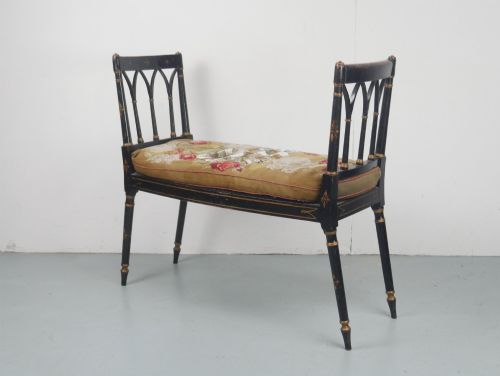
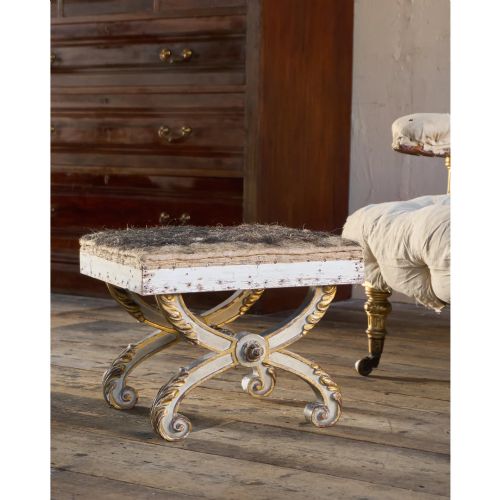
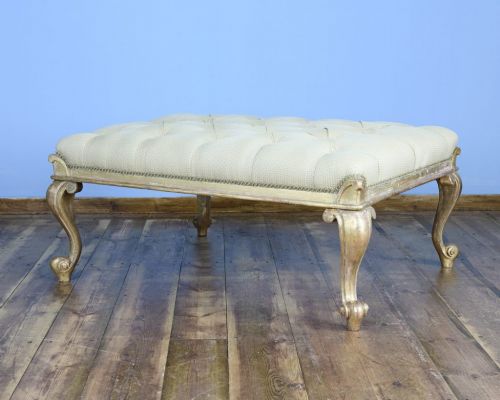
A regency gilt stool combines the formal vocabulary of the early nineteenth century with gilded wooden frames, taking forms such as X-frame curules, window seats, and piano stools. These pieces draw on Neoclassical, Empire, and Italian design influences, frequently featuring parcel gilt accents or complete gilding over gesso and wood.
Buyers encountering this group will frequently find nineteenth-century examples alongside Georgian, William IV, and Rococo Revival pieces. The selection spans compact footstools with beadwork and velvet upholstery to larger window seats and adjustable music stools.
Materials and construction methods
The foundation of a regency gilt stool is typically timber such as wood or satinwood, often prepared with a gesso layer before the application of leaf. This preparation allows artisans to carve crisp decorative details that catch the light.
Upholstery relies on historical textiles including fabric and velvet, sometimes enriched with beadwork. Structural variations include fixed frames, screw-top mechanisms for piano stools, and folding X-frame curule supports.
Regency Gilt Stool Retail Price Guide 2026
Typical asking prices for regency gilt stool among the pieces listed under this phrase on Sellingantiques today, from the lower quarter to the upper quarter. They describe what is for sale here now, not the wider market.
Materials recorded across the inventory include giltwood, satinwood, gesso, fabric, velvet, and beadwork.
Judging quality in gilded seating
The distinction between standard and superior pieces rests on the crispness of the carving and the depth of the gilding over the gesso base. Finer examples retain their original parcel gilt or full gilt surfaces with integrated decorative detailing.
Proportion and structural integrity further define the tier of a piece, particularly in complex forms like X-frame curules or adjustable screw-top mechanisms. Well-executed seating maintains balance and harmony across both frame and upholstery.
Miles & Edwards
The Regency Gilt Stool Glossary
- Curule stool
- A form of seating featuring intersecting X-shaped legs derived from ancient Roman magistrate chairs. This design provides both structural strength and a distinct architectural silhouette.
- Giltwood
- Timber that has been coated with gold leaf or powder over a preparation of gesso and size. It creates a luminous metallic finish characteristic of formal nineteenth-century seating.
- Parcel gilt
- A decoration technique where selected portions of a wooden object are gilded while the remaining areas display exposed wood or paint. This method highlights specific carved details on the frame.
- Gesso
- A plaster mixture applied to wood frames to provide a smooth, absorbent base for gilding and carving. It enables artisans to achieve sharp relief work before applying gold leaf.
- Window seat
- A long, narrow form of stool designed to fit within the recess of a window. These pieces often feature upholstered ends and decorative frames suited to principal rooms.
Regency Gilt Stool: Frequently Asked Questions
Where were regency gilt stools placed?
These decorative seats were typically positioned in principal reception rooms, parlours, or drawing rooms where formal entertaining took place. Their compact size allowed them to be moved easily around the perimeter of a room.
Larger variations such as window seats found permanent placement within bay windows, while adjustable music stools stood beside pianos or harpsichords.
How do I identify a curule frame?
A curule frame is distinguished by its intersecting X-shaped legs that support the central seat. This ancient architectural form was revived during the Neoclassical and Empire periods.
In surviving pieces, these intersecting members are frequently accented with gilding and carved details at the central pivot point.
What is parcel gilding?
Parcel gilding is a decorative method where only specific carved elements or raised details of a wooden frame receive a gold leaf finish. The rest of the surface is often painted, ebonised, or left as natural wood.
This technique creates a controlled contrast between the warm metallic sheen and the dark or painted background timber.
Are piano stools adjustable?
Certain nineteenth-century piano stools feature an internal screw-top mechanism that allows the seat height to be altered by turning the top. This practical adjustment suited musicians requiring a specific seating level.
Such examples combine functional engineering with decorative gilt or painted wood frames typical of the period.