

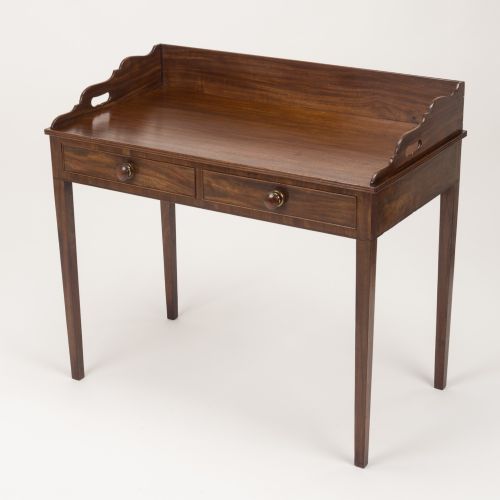
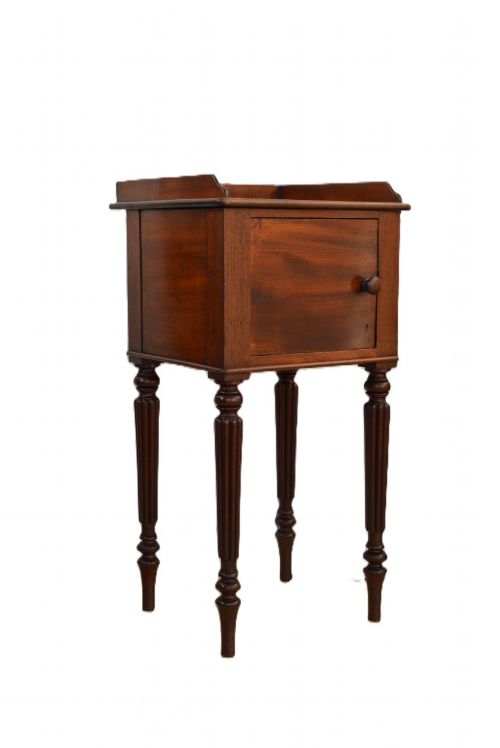


Regency Gallery Top Table
A regency gallery top table brings refined proportion and functional brass or timber surrounds to a room.
Regency Gallery Top Table
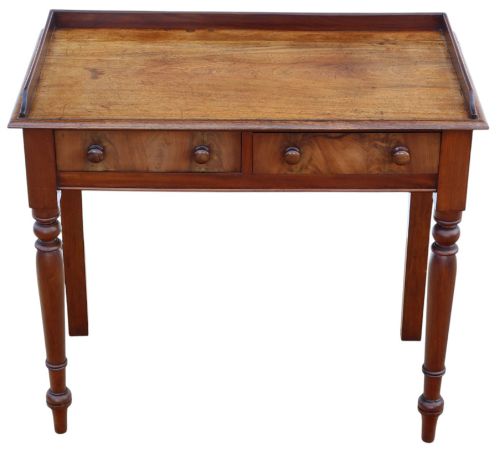
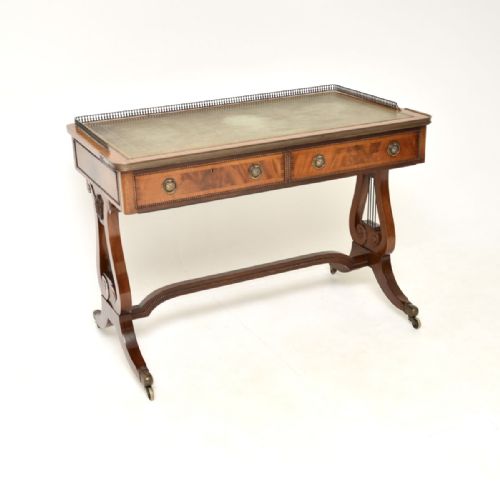
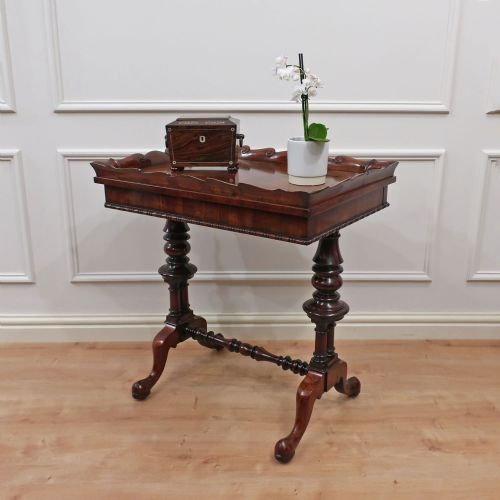
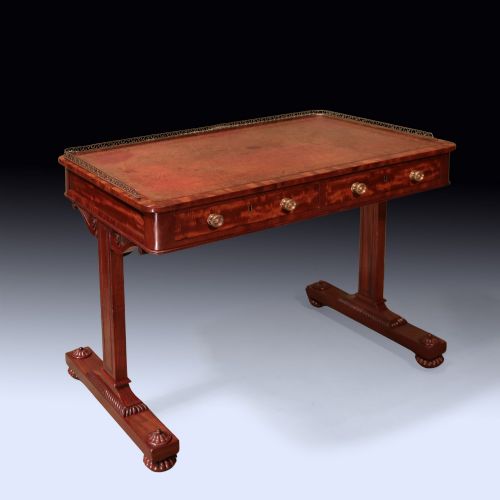
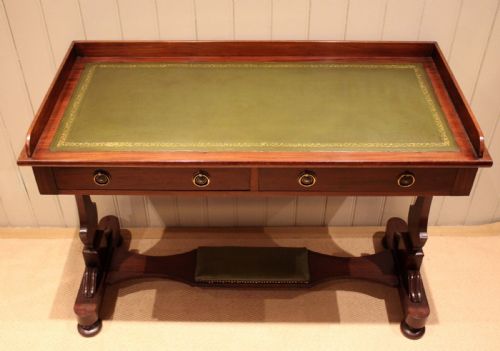
A regency gallery top table combines compact utility with formal elegance, most often appearing as a writing table, side table, or dressing table. You will frequently encounter mahogany and rosewood examples from the nineteenth century, alongside later revivals.
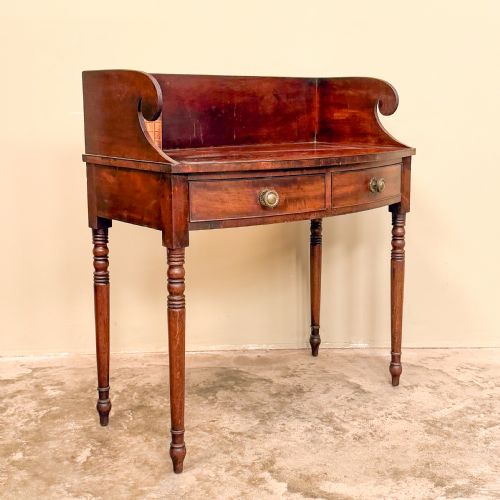
The defining feature is the raised gallery surrounding the upper surface, designed to keep items secure during daily use. These tables serve multiple functions across the home, from library desks to bedside cabinets and console tables.
Materials and Construction
Makers relied primarily on mahogany and rosewood timbers, frequently accented with brass gallery rails, leather writing inserts, and ormolu mounts. Secondary woods such as oak and pine appear in drawer linings and internal framing.
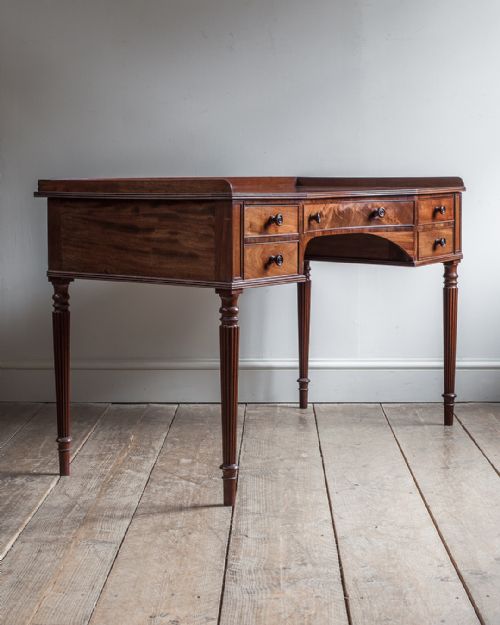
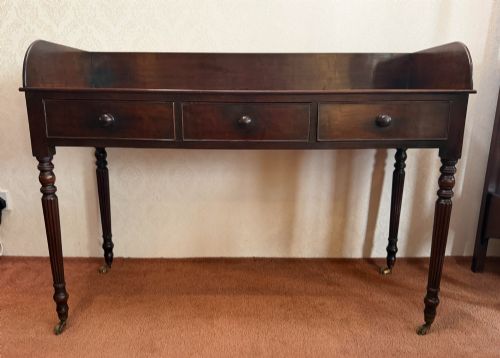
Construction techniques include finely turned reeded legs, tray-top surrounds, and serpentine fronts that demand precise woodworking skill. Brass fittings and leather surfaces are integrated directly into the upper structure to balance utility with decorative finish.
One tiny brass gallery kept a stray inkwell from rolling onto a lady's silk skirt back in eighteen-twenty.
Assessing Quality
Quality rests upon the crispness of the carving, the selection of timber grain, and the integrity of the gallery surround. Superior pieces display harmonious proportions and careful attention to secondary timbers.
The integration of brass work and the stability of the gallery structure indicate the level of craftsmanship involved. Maker attribution and period authenticity further distinguish exceptional examples from standard production.
Gillows of Lancaster·Gillows
The Regency Gallery Top Table Glossary
- Gallery
- A raised border or rail around the top of a table to prevent items from rolling off. It can be fashioned from brass, timber, or pierced metal.
- Reeded
- A decorative moulding consisting of parallel convex strips resembling bundled reeds. This finish appears frequently on table legs and upright supports.
- Serpentine
- A curved line or edge that undulates inward and outward in a gentle wave. This shape requires advanced skill to execute cleanly in solid timber.
- Ormolu
- Gilded bronze applied as a decorative mount or fitting on furniture. It adds metallic contrast to dark woods like mahogany and rosewood.
Regency Gallery Top Table: Frequently Asked Questions
How do I style a gallery table?
Place the table against a wall or behind a sofa to showcase its raised gallery surround. The compact footprint suits entryways, studies, and bedrooms.
Keep items placed on top minimal to let the timber grain and gallery detail remain visible. Use the surface for holding lamps, books, or writing accessories.
How do I date a table?
Examine the secondary woods, construction methods, and hardware to determine the period. Nineteenth-century examples often feature solid mahogany or rosewood with hand-cut dovetails.
Stylistic cues such as reeded legs and brass galleries help differentiate original pieces from later revivals. Checking for maker signatures or stamps can also clarify the origin.
What is the difference between styles?
Regency pieces focus on classical proportions, dark timbers, and refined metal accents. Later revivals adopt similar decorative motifs while reflecting nineteenth or twentieth-century production methods.
Regional variations, such as Irish tables, display distinct local carpentry traits. Understanding these nuances helps identify the specific era of manufacture.