

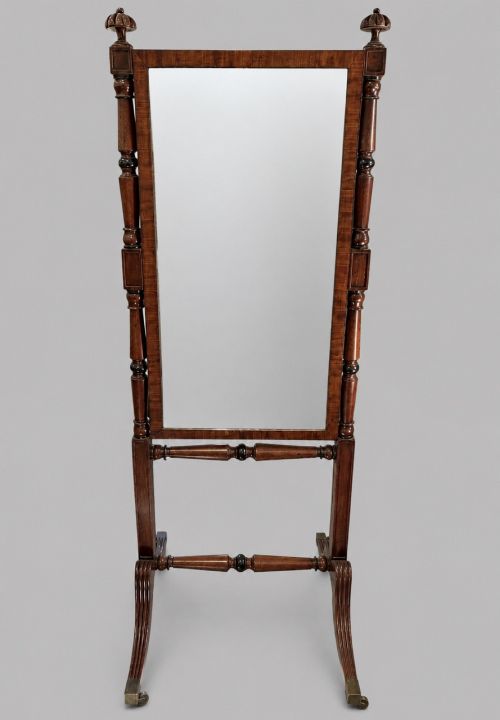


Regency Free Standing Glass
Regency free standing glass brings proportion and light to a room through pivoting frames of polished mahogany.
Regency Free Standing Glass
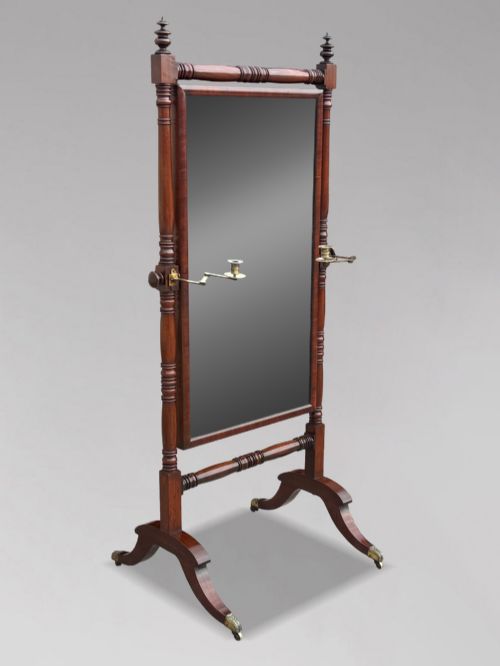
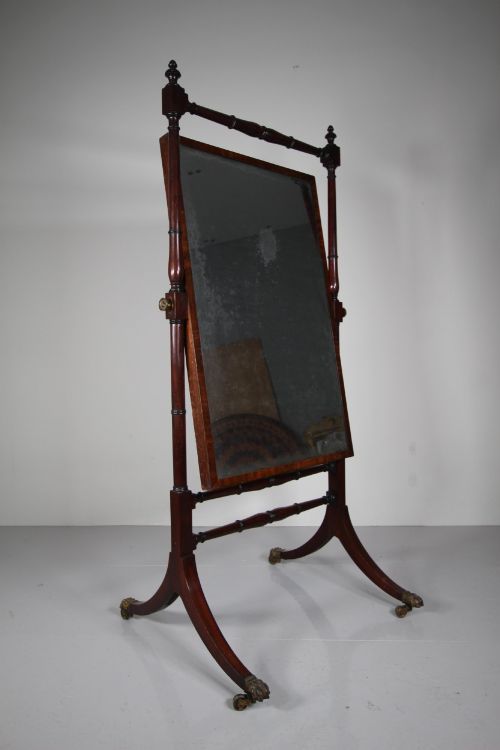
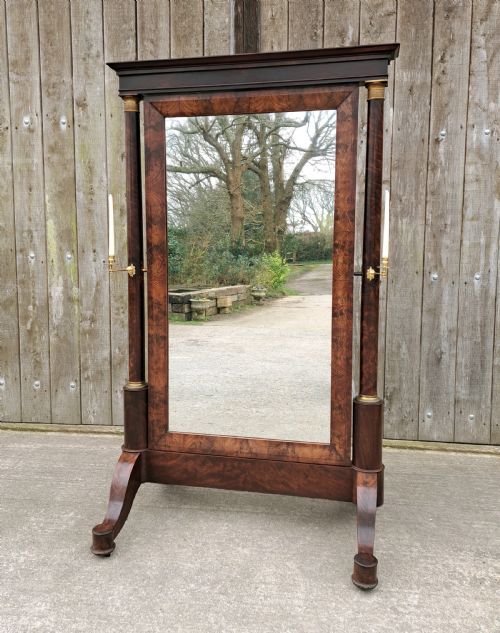
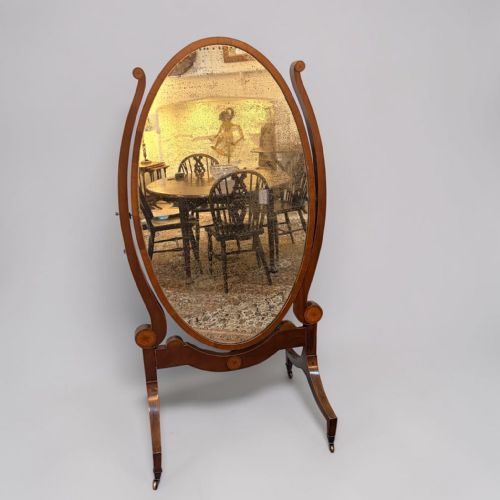
Regency free standing glass principally takes the form of cheval mirrors and dressing mirrors designed to tilt within stable wooden frames. These pieces span the nineteenth century, encompassing the Regency, William IV and Victorian periods.
The versions most frequently encountered here are large scale mahogany cheval mirrors, often featuring brass fittings and supported on substantial legs or trestle bases. They serve both a practical dressing function and an architectural role in expanding the visual space of a room.
How they were made
Cabinet makers utilised dense timbers like mahogany and satinwood for the structural frames, shaping them with turnings, scrolls and brass mounts. The timber was selected for grain and colour, then polished to a deep lustre.
Mirror glass was set into pivoting frames secured by brass pivots and tightening screws, allowing the user to adjust the angle of reflection. Marble and brass details sometimes reinforced the bases and fittings.
Regency Free Standing Glass Retail Price Guide 2026
Typical asking prices for regency free standing glass among the pieces listed under this phrase on Sellingantiques today, from the lower quarter to the upper quarter. They describe what is for sale here now, not the wider market.
Object types on this site span cheval mirrors, dressing mirrors, and hallway mirrors from the Regency, William IV, and Victorian eras.
What varies in quality
The distinction between standard examples and the finest work lies in the handling of the timber and the sophistication of the joinery. Superior pieces display refined proportions, thoughtful carving, and robust pivoting mechanisms that hold the glass steady at any angle.
Makers known for exceptional cabinet work integrated brass mounts and secondary timbers with rigorous precision, ensuring the frame remains rigid and balanced despite the weight of the glass.
Gillows
The Regency Free Standing Glass Glossary
- Cheval mirror
- A tall, free standing dressing glass mounted on a pivoting frame between two upright posts. This form allows a full length view of the user.
- Mahogany
- A durable, reddish brown tropical hardwood favoured by nineteenth century cabinet makers for its stability and fine grain. It takes a high polish.
- Satinwood
- A luminous, yellowish timber used for decorative veneers and inlay work on finer furniture pieces. Its contrasting grain catches the light.
- Pivots
- The metal pins or screws set into the sides of the mirror frame that connect it to the upright supports. They permit the glass to tilt forward or backward.
- Dressing mirror
- A smaller mirror designed to stand upon a table or chest of drawers rather than directly on the floor. Some versions sit on short platforms.
Regency Free Standing Glass: Frequently Asked Questions
What is a cheval mirror?
A cheval mirror is a full length looking glass suspended on a pivoting frame between two upright posts, allowing it to tilt.
Originally designed for dressing rooms, these tall mirrors became prominent furniture pieces in nineteenth century bedrooms and hallways.
How do I date a Regency mirror?
Dating relies on examining the timber species, the style of the frame supports, and the construction methods used in the base. Cabinet work from the early nineteenth century often displays specific proportions and brass hardware characteristic of the period.
Secondary woods and the clarity or bevel of the glass further help distinguish Regency examples from later Victorian reproductions.
Where should I place a free standing mirror?
These mirrors suit bedrooms, dressing rooms, and spacious hallways where their height and pivoting frame can be fully utilised. Position them near natural light sources to brighten darker corners of the room.
Ensure the floor is reasonably level so the heavy frame remains stable when the glass is adjusted.
How do the pivots work?
The mirror plate hangs on threaded metal screws or pins set into the upright posts, secured by thumb screws or decorative nuts. Tightening these fittings holds the glass at the chosen angle.
Lubricating or adjusting the hardware carefully prevents undue strain on the wooden frame around the pivot points.